Department of Hematology, Sun Yat‑sen Institute of Hematology, The Third Affiliated Hospital, Sun Yat‑sen University, Guangzhou, Guangdong 510630, P.R. China.
Department of Blood Transfusion, The Third Affiliated Hospital, Sun Yat‑sen University, Guangzhou, Guangdong 510630, P.R. China.
Mol Med Rep. 2017 Oct;16(4):4603-4612. doi: 10.3892/mmr.2017.7215. Epub 2017 Aug 10.
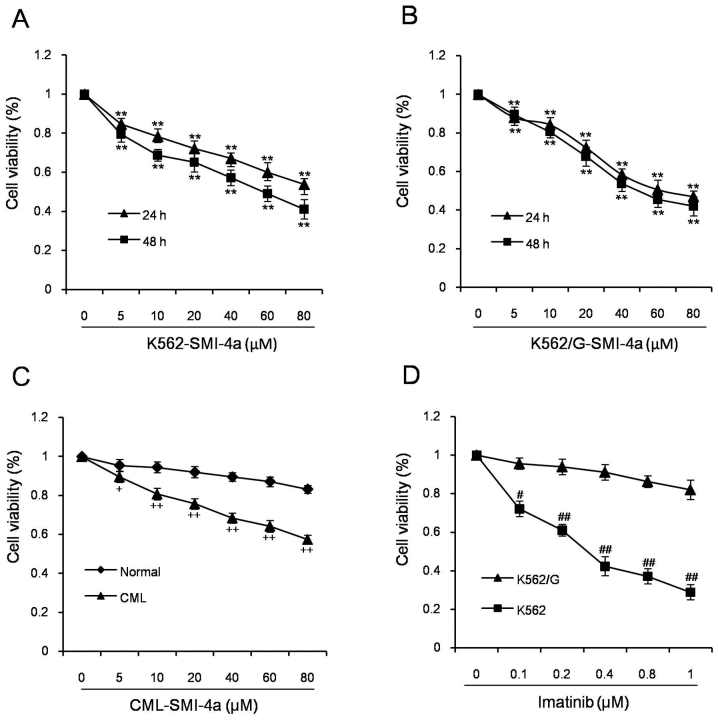
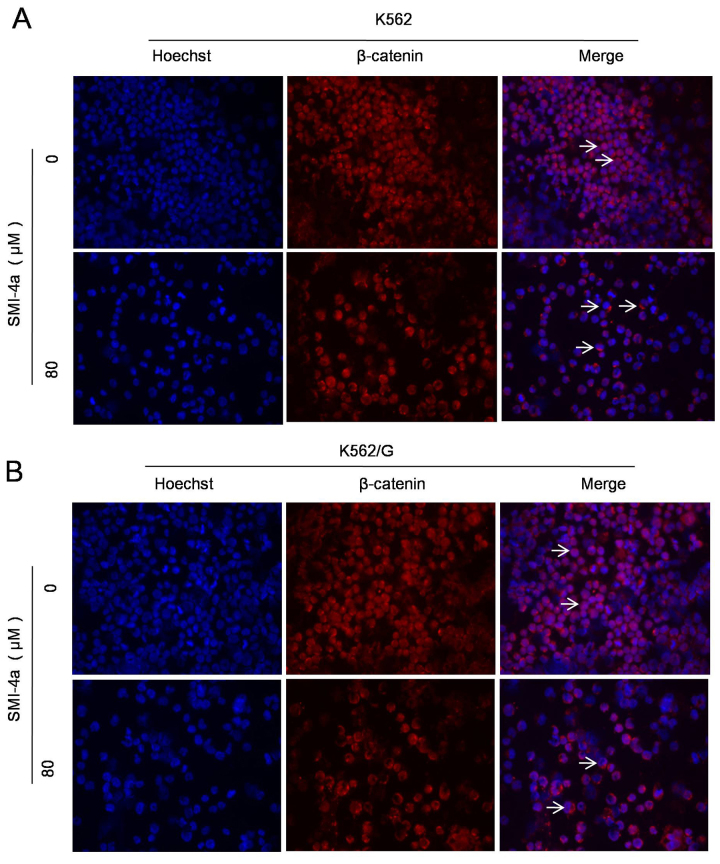
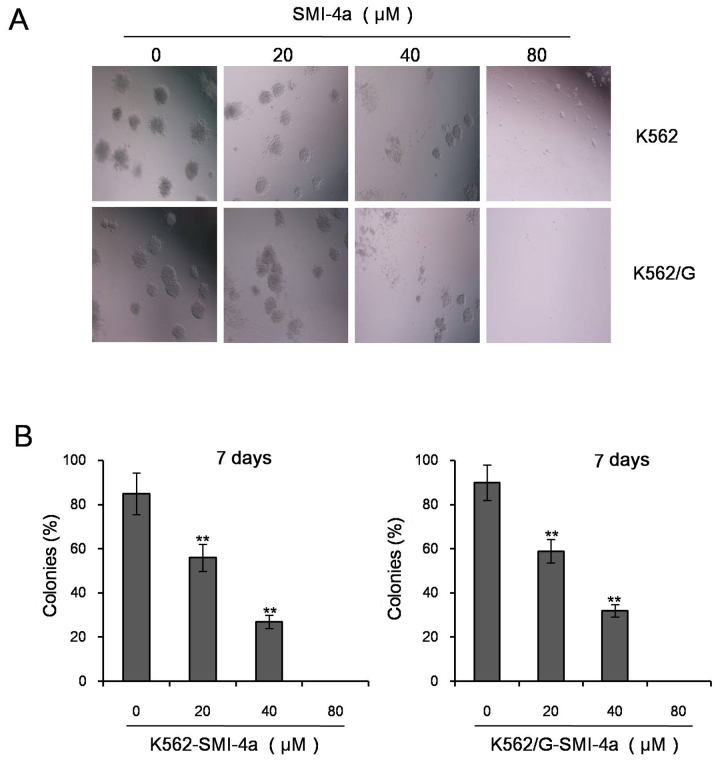
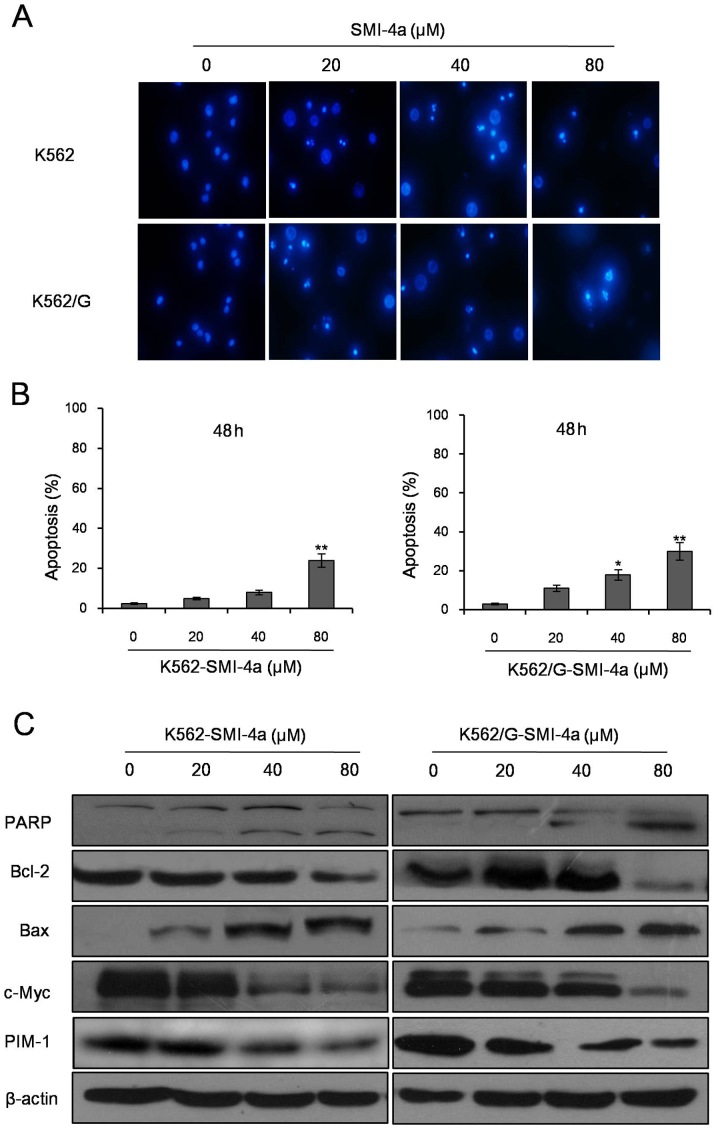
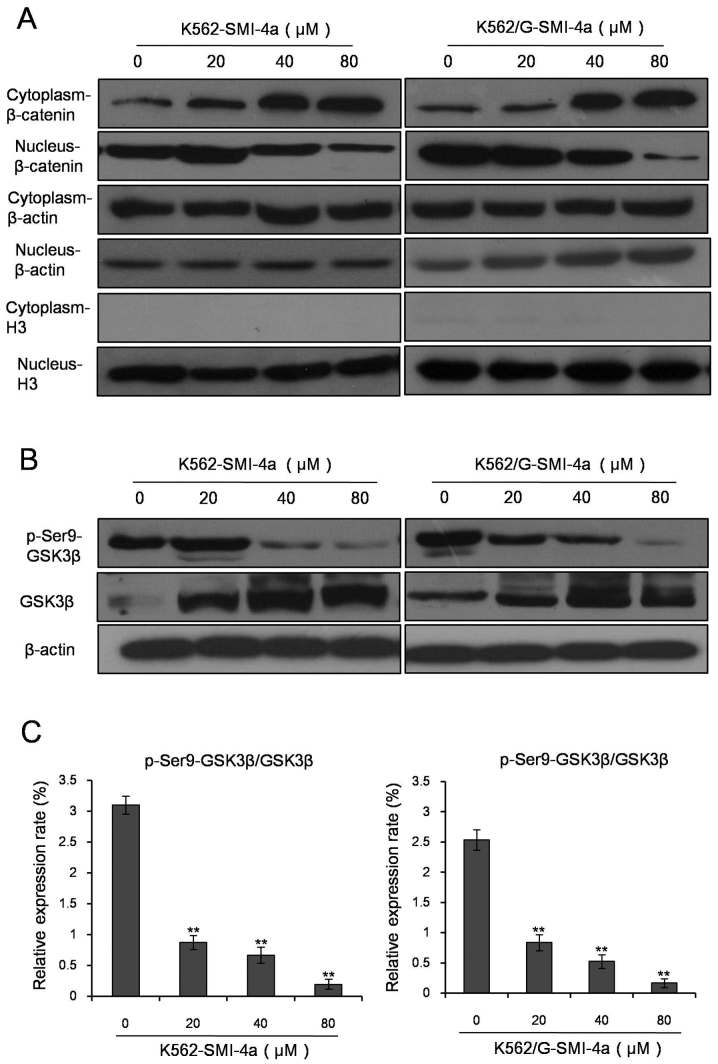
The development of targeted tyrosine kinase inhibitors (TKIs) has succeeded in altering the course of chronic myeloid leukemia (CML). However, a number of patients have failed to respond or experienced disease relapse following TKI treatment. Proviral integration site for moloney murine leukemia virus‑1 (PIM‑1) is a serine/threonine kinase that participates in regulating apoptosis, cell cycle, signal transduction and transcriptional pathways, which are associated with tumor progression, and poor prognosis. SMI‑4a is a selective PIM‑1 kinase inhibitor that inhibits PIM‑1 kinase activity in vivo and in vitro. The present study aimed to explore the mechanism underlying the antitumor effect of SMI‑4a in K562 and imatinib‑resistant K562 (K562/G) cell lines. It was demonstrated that SMI‑4a inhibited the proliferation of K562 and K562/G cells using a WST‑8 assay. The Annexin V‑propidium iodide assay demonstrated that SMI‑4a induced apoptosis of K562 and K562/G cells in a dose‑, and time‑dependent manner. Furthermore, Hoechst 33342 staining was used to verify the apoptosis rate. The clone formation assay revealed that SMI‑4a significantly inhibited the colony formation capacity of K562 and K562/G cells. Western blot analysis demonstrated that SMI‑4a decreased phosphorylated (p)‑Ser9‑glycogen synthase kinase (GSK) 3β/pGSK3β and inhibited the translocation of β‑catenin. In addition, the downstream gene expression of apoptosis regulator Bax and poly(ADP‑ribose) polymerase‑1 was upregulated, and apoptosis regulator Bcl‑2 and Myc proto‑oncogene protein expression levels were downregulated. Immunofluorescence results demonstrated changes in the expression level of β‑catenin in the plasma and nucleus. The results of the present study suggest that SMI‑4a is an effective drug to use in combination with current chemotherapeutics for the treatment of imatinib-resistant CML.
靶向酪氨酸激酶抑制剂(TKI)的发展成功改变了慢性髓性白血病(CML)的病程。然而,一些患者在 TKI 治疗后未能应答或出现疾病复发。莫洛尼鼠白血病病毒整合位点 1(PIM-1)是一种丝氨酸/苏氨酸激酶,参与调节细胞凋亡、细胞周期、信号转导和转录途径,与肿瘤进展和不良预后有关。SMI-4a 是一种选择性 PIM-1 激酶抑制剂,可在体内和体外抑制 PIM-1 激酶活性。本研究旨在探讨 SMI-4a 在 K562 和伊马替尼耐药 K562(K562/G)细胞系中的抗肿瘤作用机制。结果表明,SMI-4a 通过 WST-8 测定抑制 K562 和 K562/G 细胞的增殖。Annexin V-碘化丙啶检测表明,SMI-4a 以剂量和时间依赖性方式诱导 K562 和 K562/G 细胞凋亡。此外,Hoechst 33342 染色用于验证凋亡率。克隆形成试验表明,SMI-4a 显著抑制 K562 和 K562/G 细胞的集落形成能力。Western blot 分析表明,SMI-4a 降低磷酸化(p)-Ser9-糖原合酶激酶(GSK)3β/pGSK3β水平,并抑制β-连环蛋白易位。此外,凋亡调节因子 Bax 和多聚(ADP-核糖)聚合酶-1 的下游基因表达上调,凋亡调节因子 Bcl-2 和 Myc 原癌基因蛋白表达水平下调。免疫荧光结果表明β-连环蛋白在血浆和核中的表达水平发生变化。本研究结果表明,SMI-4a 是一种与当前化疗药物联合用于治疗伊马替尼耐药 CML 的有效药物。