Tsukuba Research Center for Interdisciplinary Materials Science, University of Tsukuba, Tsukuba, 305-8571, Japan.
Graduate School of Pure and Applied Sciences, University of Tsukuba, Tsukuba, 305-8571, Japan.
Sci Rep. 2017 Aug 29;7(1):9703. doi: 10.1038/s41598-017-10309-x.
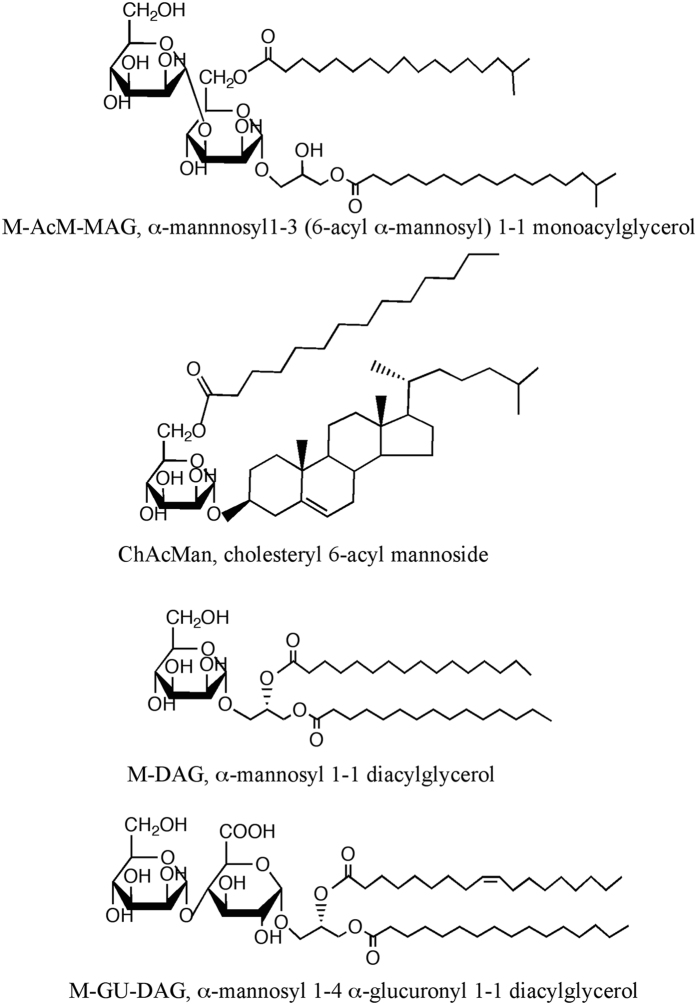
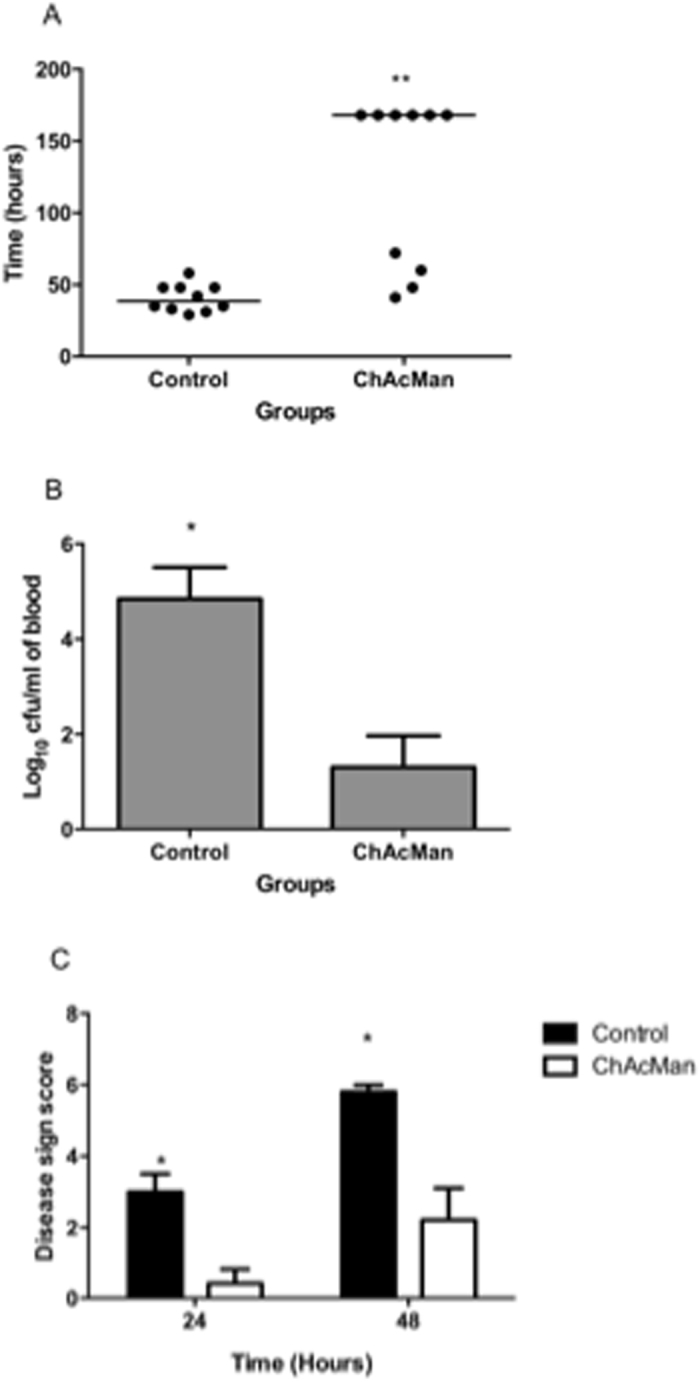
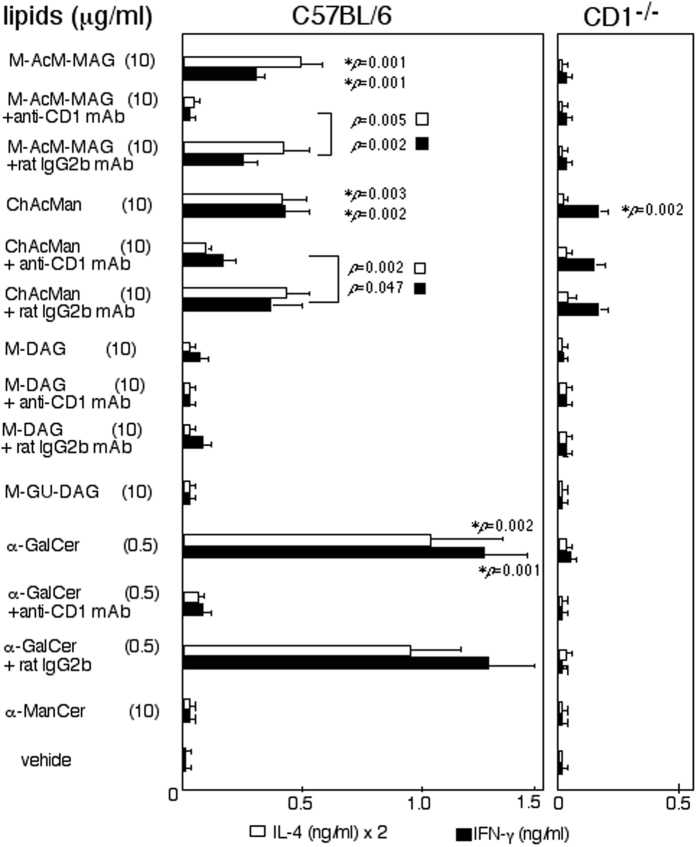
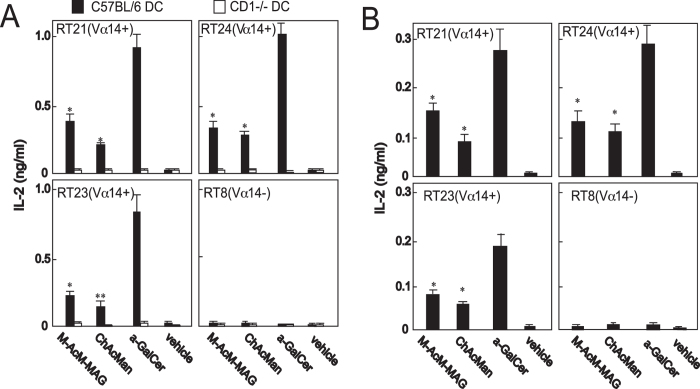
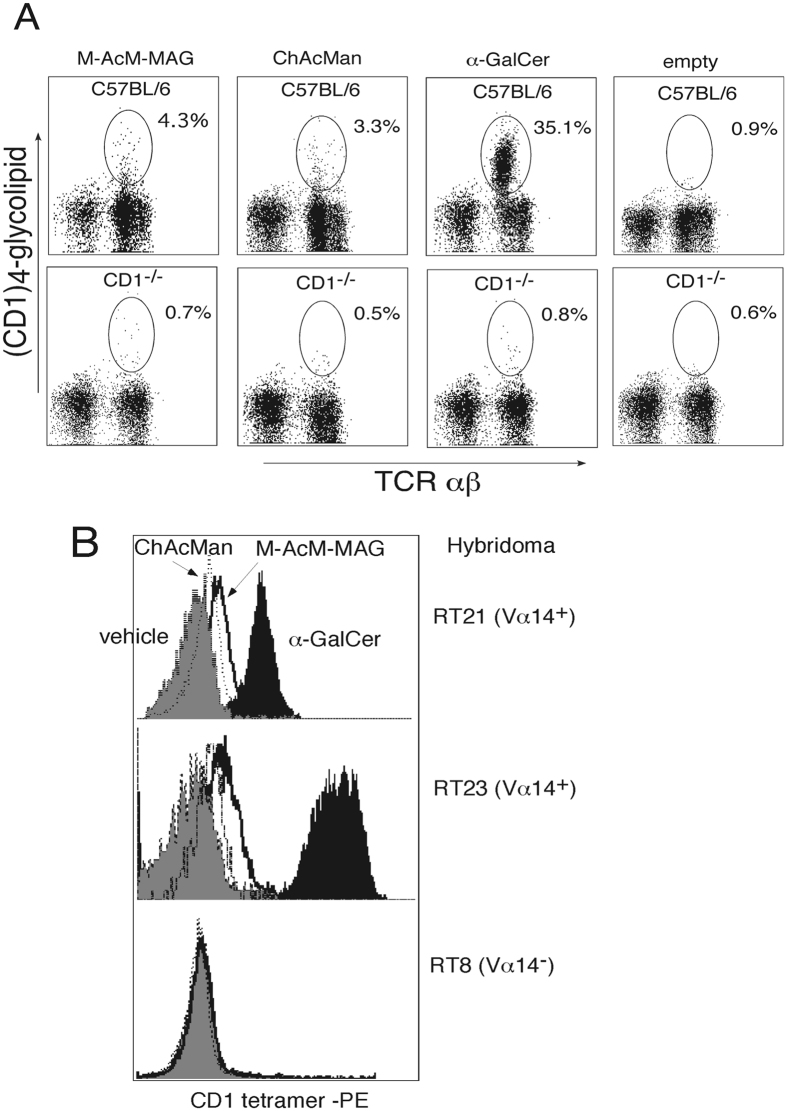
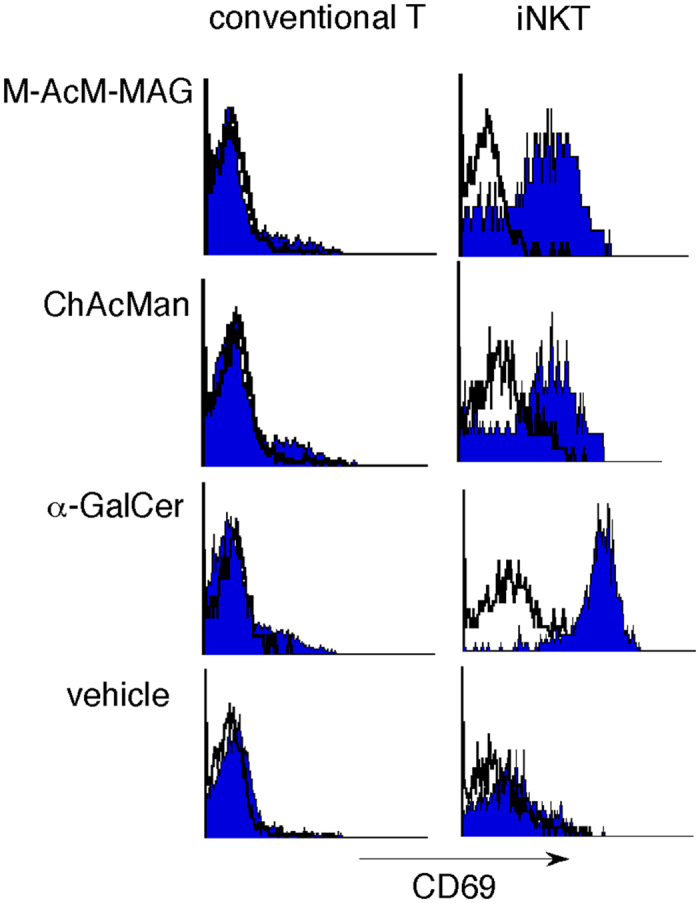
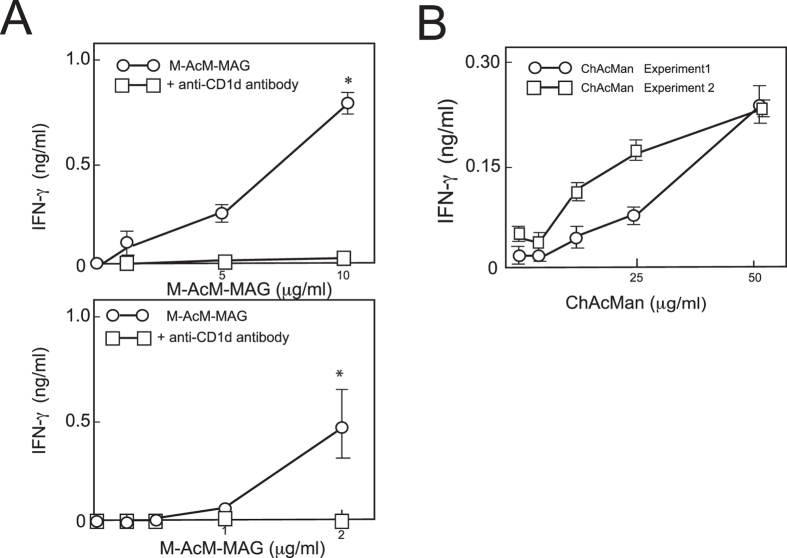
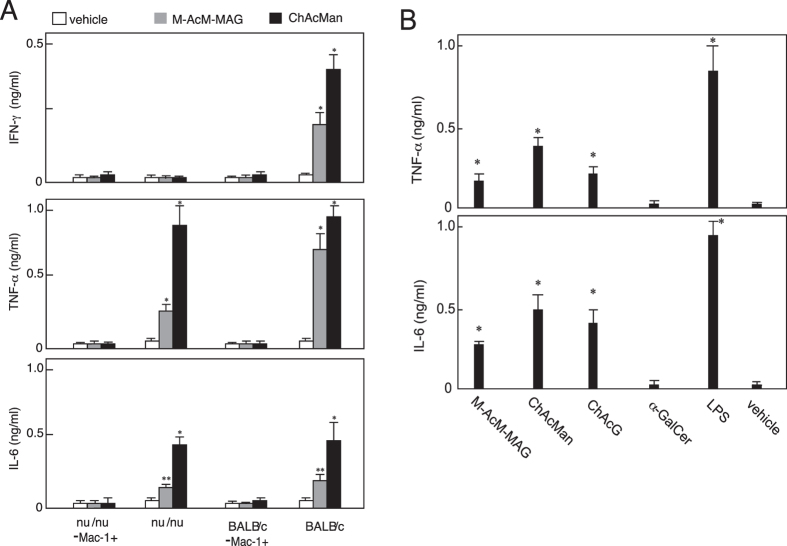
Some synthetic and bacterial glycolipids presented by CD1d specifically activate invariant NKT (iNKT) cells bearing an invariant Vα14-Jα18 (mouse) or Vα24-Jα18 (human) TCR. The antigenic glycolipids identified to date consist of two hydrophobic chains and an α-glycoside in which the 2'-OH group is in the cis orientation toward the anomeric group, namely, either an α-galactoside or an α-glucoside. Several microbial α-mannosyl glycolipids, in which the 2'-OH group is in the trans orientation, were herein examined to establish whether they have potential to activate iNKT cells. We found that α-mannnosyl1-3 (6'-O-acyl α-mannosyl)-1-1 monoacylglycerol and cholesteryl 6'-O-acyl α-mannoside, found in Saccharopolyspora and Candida albicans, respectively, induced the activation of iNKT cells, dependent on CD1d. In contrast, α-mannosyldiacylglycerol found in Streptococcus suis or α-mannosylceramide demonstrated markedly less antigenicity for iNKT cells. The potentially antigenic α-mannosyl glycolipids contributed to the protection of mice against infection with S. pneumoniae in which iNKT cells have previously been found to participate. Furthermore, these glycolipids induced the production of proinflammatory cytokines by macrophages, thereby suggesting their recognition by specific pattern recognition receptors (PRRs). Collectively, these results suggest that these microbial α-mannosyl glycolipids are capable of being recognized by both the invariant TCR and PRRs and inducing immune responses.
一些合成的和细菌糖脂通过 CD1d 特异性地激活具有不变的 Vα14-Jα18(小鼠)或 Vα24-Jα18(人类)TCR 的不变自然杀伤 T(iNKT)细胞。迄今为止鉴定的抗原糖脂由两个疏水性链和一个α-糖苷组成,其中 2'-OH 基团相对于糖苷基处于顺式取向,即α-半乳糖苷或α-葡萄糖苷。本文检查了几种微生物α-甘露糖基糖脂,其中 2'-OH 基团处于反式取向,以确定它们是否具有激活 iNKT 细胞的潜力。我们发现,分别在链霉菌属和白色念珠菌中发现的α-甘露糖基 1-3(6'-O-酰基α-甘露糖基)-1-1 单酰基甘油和胆甾醇 6'-O-酰基α-甘露糖苷,依赖于 CD1d 诱导 iNKT 细胞的激活。相比之下,在猪链球菌或α-甘露糖基神经酰胺中发现的α-甘露二酰基甘油对 iNKT 细胞的抗原性明显较低。潜在的抗原性α-甘露糖基糖脂有助于保护小鼠免受肺炎链球菌感染,此前已发现 iNKT 细胞参与了这种感染。此外,这些糖脂诱导巨噬细胞产生促炎细胞因子,表明它们被特定的模式识别受体(PRR)识别。总之,这些结果表明,这些微生物α-甘露糖基糖脂能够被不变的 TCR 和 PRR 识别并诱导免疫反应。