Ladds Monique A, Slip David J, Harcourt Robert G
Marine Predator Research Group, Department of Biological Sciences, Macquarie University, North Ryde, NSW 2113, Australia.
Taronga Conservation Society Australia, Bradley's Head Road, Mosman, NSW 2088, Australia.
Conserv Physiol. 2017 Feb 21;5(1):cow074. doi: 10.1093/conphys/cow074. eCollection 2017.
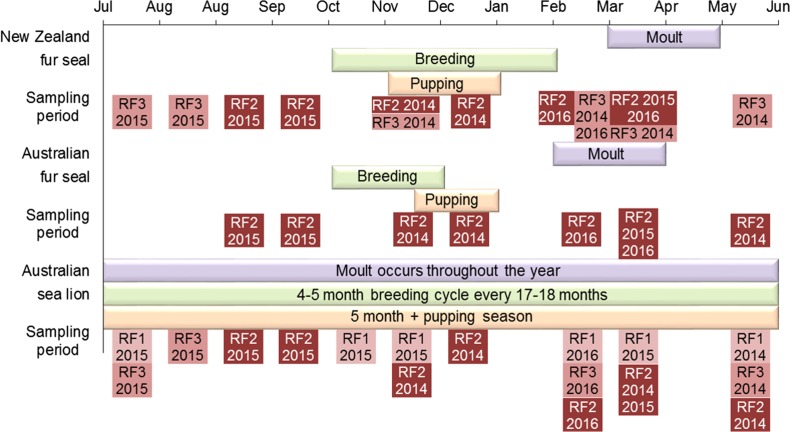
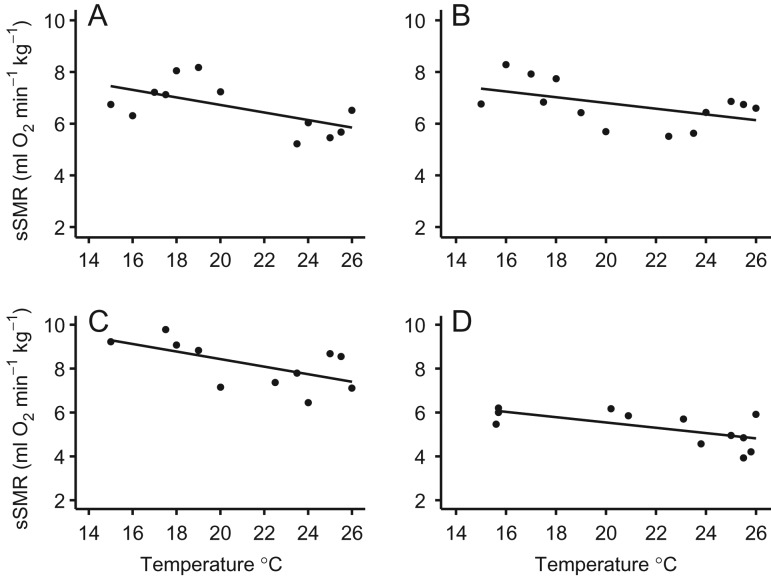
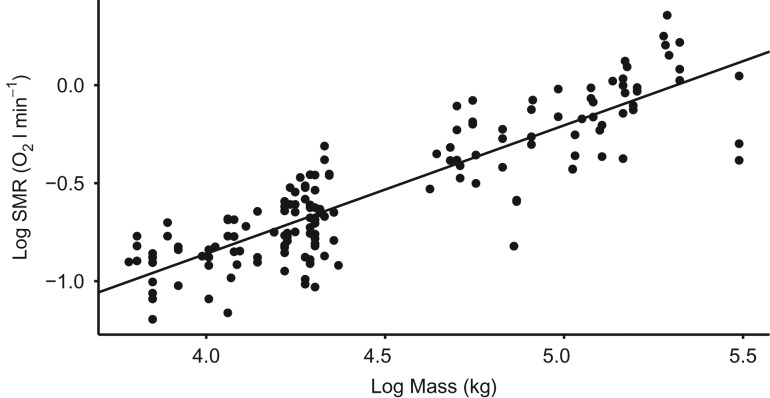
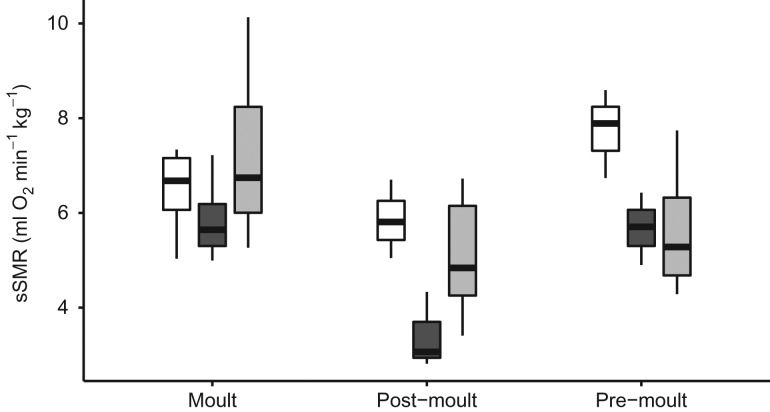
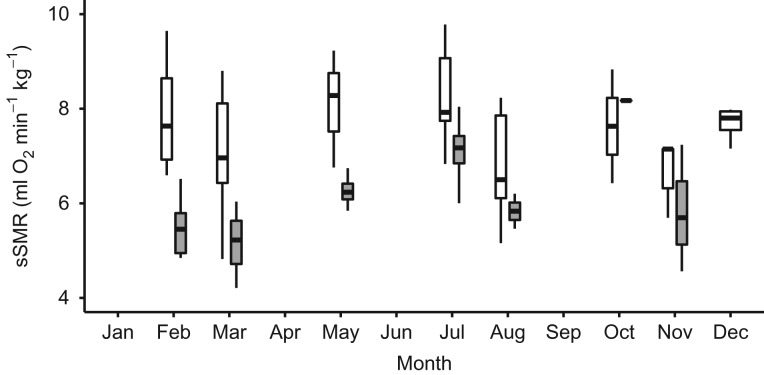
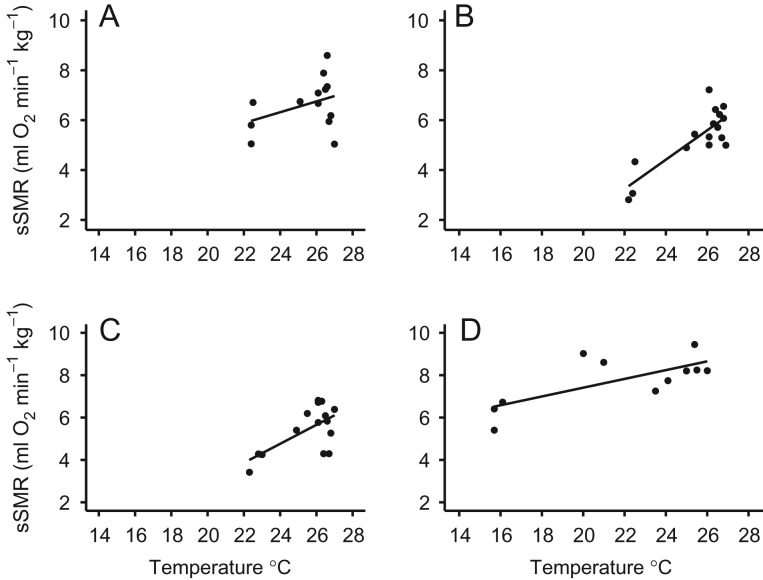
The study of marine mammal energetics can shed light on how these animals might adapt to changing environments. Their physiological potential to adapt will be influenced by extrinsic factors, such as temperature, and by intrinsic factors, such as sex and reproduction. We measured the standard metabolic rate (SMR) of males and females of three Australian otariid species (two Australian fur seals, three New Zealand fur seals and seven Australian sea lions). Mean SMR ranged from 0.47 to 1.05 l O min, which when adjusted for mass was from 5.33 to 7.44 ml O min kg. We found that Australian sea lion mass-specific SMR (sSMR; in millilitres of oxygen per minute per kilogram) varied little in response to time of year or moult, but was significantly influenced by sex and water temperature. Likewise, sSMR of Australian and New Zealand fur seals was also influenced by sex and water temperature, but also by time of year (pre-moult, moult or post-moult). During the moult, fur seals had significantly higher sSMR than at other times of the year, whereas there was no discernible effect of moult for sea lions. For both groups, females had higher sSMR than males, but sea lions and fur seals showed different responses to changes in water temperature. The sSMR of fur seals increased with increasing water temperature, whereas sSMR of sea lions decreased with increasing water temperature. There were no species differences when comparing animals of the same sex. Our study suggests that fur seals have more flexibility in their physiology than sea lions, perhaps implying that they will be more resilient in a changing environment.
对海洋哺乳动物能量学的研究可以揭示这些动物如何适应不断变化的环境。它们适应环境的生理潜力将受到外部因素(如温度)和内部因素(如性别和繁殖)的影响。我们测量了三种澳大利亚海狗科动物(两种澳大利亚海狗、三种新西兰海狗和七种澳大利亚海狮)雄性和雌性的标准代谢率(SMR)。平均SMR范围为0.47至1.05升氧/分钟,经体重校正后为5.33至7.44毫升氧/分钟·千克。我们发现,澳大利亚海狮的质量比代谢率(sSMR;每分钟每千克的氧气毫升数)对一年中的时间或换毛的反应变化不大,但受到性别和水温的显著影响。同样,澳大利亚和新西兰海狗的sSMR也受到性别和水温的影响,但也受到一年中的时间(换毛前、换毛期或换毛后)的影响。在换毛期间,海狗的sSMR明显高于一年中的其他时间,而换毛对海狮没有明显影响。对于这两个群体,雌性的sSMR都高于雄性,但海狮和海狗对水温变化的反应不同。海狗的sSMR随着水温的升高而增加,而海狮的sSMR随着水温的升高而降低。比较同性动物时没有物种差异。我们的研究表明,海狗在生理上比海狮更具灵活性,这可能意味着它们在不断变化的环境中更具适应力。