Welch Christopher J
Welch Innovation, LLC, Cranbury, New Jersey 08512, United States.
ACS Cent Sci. 2017 Aug 23;3(8):823-829. doi: 10.1021/acscentsci.7b00250. Epub 2017 Aug 7.
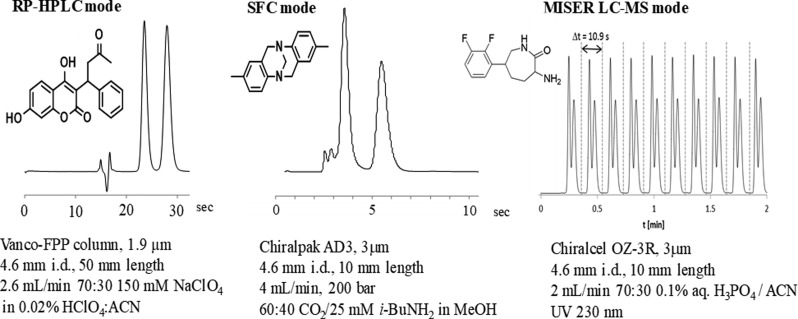
As the speed of chromatographic enantioseparations advances to the point where the enantiomers of most chiral compounds can be resolved in less than a minute, some in less than a second, we pose the question of how this field is likely to develop over the next few years. Are we approaching a fundamental speed limit, or will further technological advances continue to deliver faster and faster separations? Are faster separations even needed for chemical research, and if so, how will they help? We herein examine this trend, investigating the barriers that currently limit speed and offering some insights into the continued evolution of fast chromatographic enantioseparations.
随着色谱对映体分离速度提升至多数手性化合物的对映体可在不到一分钟内实现分离,有些甚至不到一秒,我们提出一个问题:在未来几年该领域可能如何发展?我们是正在接近一个基本速度极限,还是进一步的技术进步将继续带来越来越快的分离速度?化学研究是否真的需要更快的分离速度,如果是,它们将如何发挥作用?我们在此审视这一趋势,研究当前限制速度的障碍,并对快速色谱对映体分离的持续发展提供一些见解。