Sharbrough Joel, Havird Justin C, Noe Gregory R, Warren Jessica M, Sloan Daniel B
Department of Biology, Colorado State University, Fort Collins, CO.
Genome Biol Evol. 2017 Jun 1;9(6):1567-1581. doi: 10.1093/gbe/evx114.
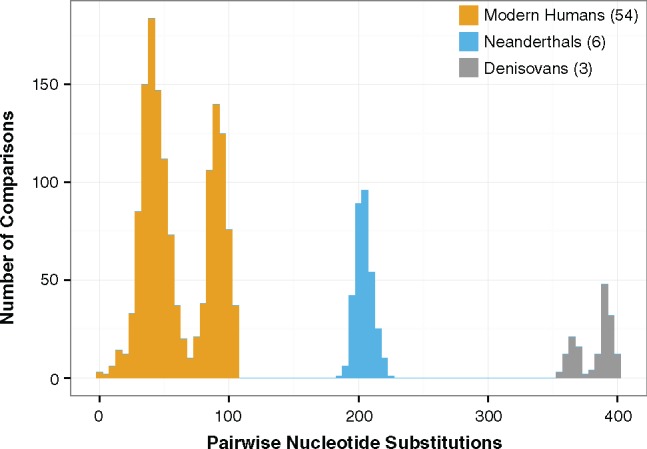
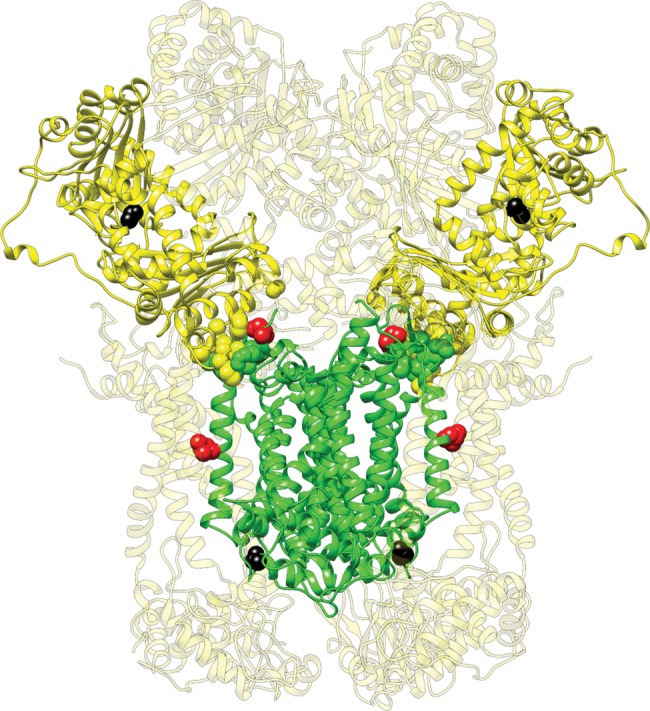
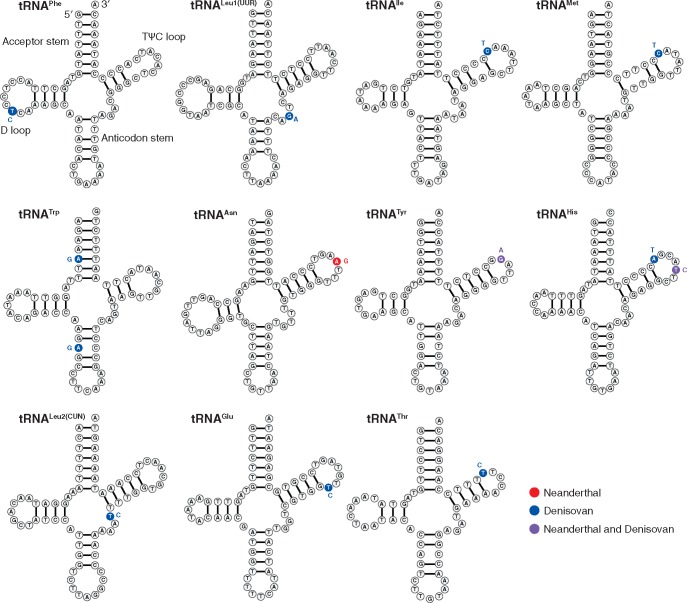
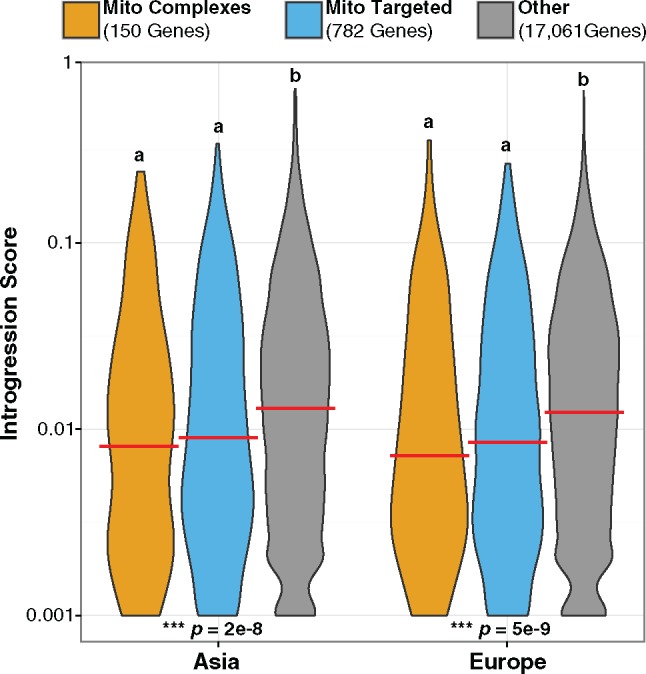
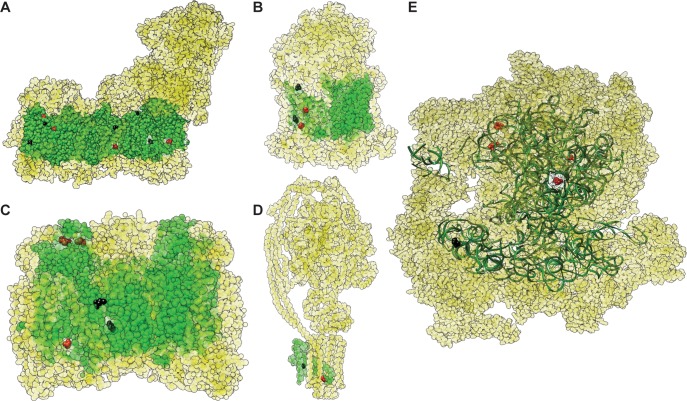
Some human populations interbred with Neanderthals and Denisovans, resulting in substantial contributions to modern-human genomes. Therefore, it is now possible to use genomic data to investigate mechanisms that shaped historical gene flow between humans and our closest hominin relatives. More generally, in eukaryotes, mitonuclear interactions have been argued to play a disproportionate role in generating reproductive isolation. There is no evidence of mtDNA introgression into modern human populations, which means that all introgressed nuclear alleles from archaic hominins must function on a modern-human mitochondrial background. Therefore, mitonuclear interactions are also potentially relevant to hominin evolution. We performed a detailed accounting of mtDNA divergence among hominin lineages and used population-genomic data to test the hypothesis that mitonuclear incompatibilities have preferentially restricted the introgression of nuclear genes with mitochondrial functions. We found a small but significant underrepresentation of introgressed Neanderthal alleles at such nuclear loci. Structural analyses of mitochondrial enzyme complexes revealed that these effects are unlikely to be mediated by physically interacting sites in mitochondrial and nuclear gene products. We did not detect any underrepresentation of introgressed Denisovan alleles at mitochondrial-targeted loci, but this may reflect reduced power because locus-specific estimates of Denisovan introgression are more conservative. Overall, we conclude that genes involved in mitochondrial function may have been subject to distinct selection pressures during the history of introgression from archaic hominins but that mitonuclear incompatibilities have had, at most, a small role in shaping genome-wide introgression patterns, perhaps because of limited functional divergence in mtDNA and interacting nuclear genes.
一些人类群体与尼安德特人和丹尼索瓦人杂交,这为现代人类基因组做出了巨大贡献。因此,现在可以利用基因组数据来研究塑造人类与我们最近的人族亲属之间历史基因流动的机制。更一般地说,在真核生物中,有观点认为线粒体-核相互作用在产生生殖隔离方面发挥了不成比例的作用。没有证据表明线粒体DNA渗入现代人类群体,这意味着来自古代人族的所有渗入核等位基因都必须在现代人类线粒体背景上发挥作用。因此,线粒体-核相互作用也可能与人族进化相关。我们详细计算了人族谱系中的线粒体DNA差异,并利用群体基因组数据来检验这一假设,即线粒体-核不相容性优先限制了具有线粒体功能的核基因的渗入。我们发现在此类核基因座上,渗入的尼安德特人等位基因存在少量但显著的代表性不足。线粒体酶复合物的结构分析表明,这些影响不太可能由线粒体和核基因产物中的物理相互作用位点介导。我们在靶向线粒体的基因座上未检测到渗入的丹尼索瓦人等位基因有任何代表性不足的情况,但这可能反映了统计效力的降低,因为丹尼索瓦人渗入的基因座特异性估计更为保守。总体而言,我们得出结论,在从古代人族渗入的历史过程中,参与线粒体功能的基因可能受到了不同的选择压力,但线粒体-核不相容性在塑造全基因组渗入模式方面至多只起到了很小的作用,这可能是因为线粒体DNA和相互作用的核基因的功能差异有限。