Sanchez Nicholas E, Harty Breanne L, O'Reilly-Pol Thomas, Ackerman Sarah D, Herbert Amy L, Holmgren Melanie, Johnson Stephen L, Gray Ryan S, Monk Kelly R
Department of Developmental Biology, Washington University School of Medicine, St. Louis, Missouri 63110.
Department of Genetics, Washington University School of Medicine, St. Louis, Missouri 63110.
G3 (Bethesda). 2017 Oct 5;7(10):3415-3425. doi: 10.1534/g3.117.300212.
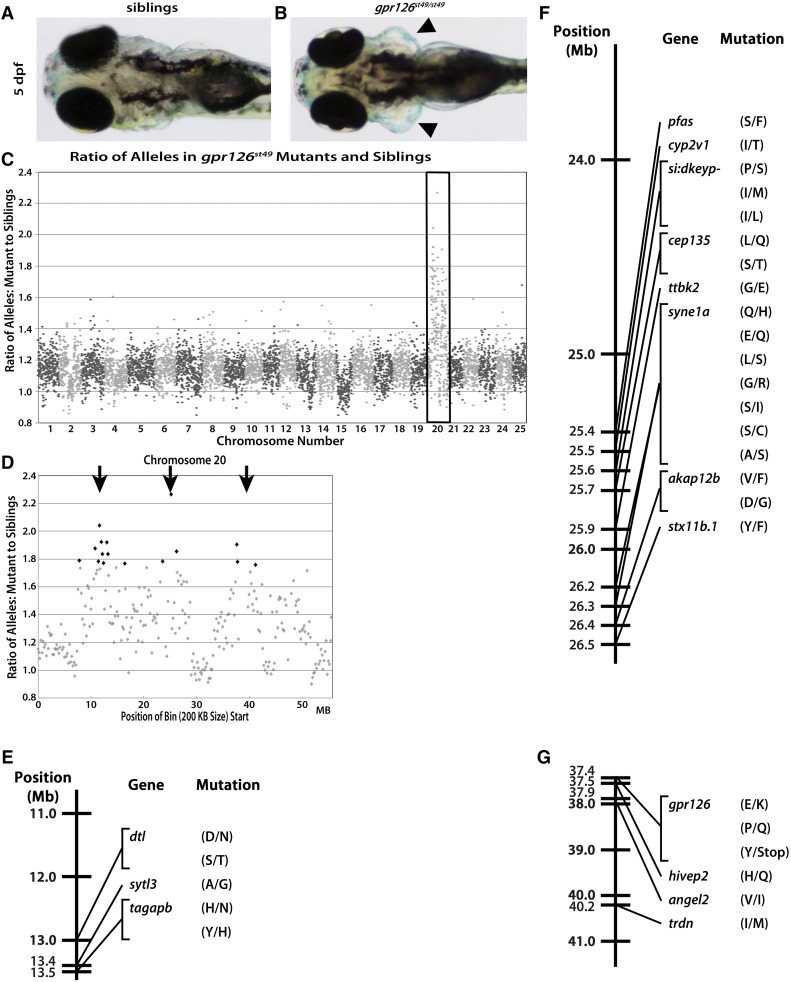
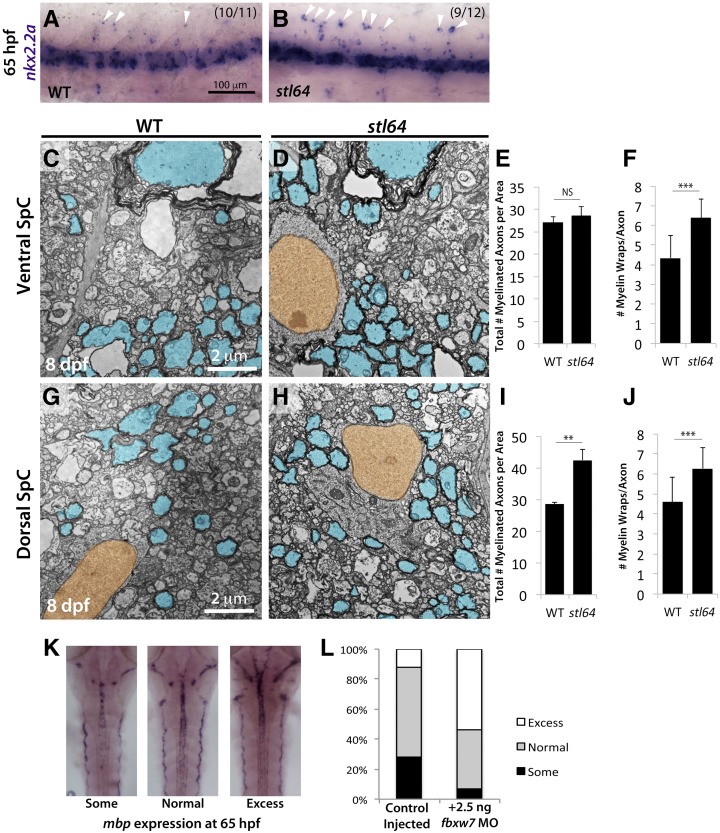
As forward genetic screens in zebrafish become more common, the number of mutants that cannot be identified by gross morphology or through transgenic approaches, such as many nervous system defects, has also increased. Screening for these difficult-to-visualize phenotypes demands techniques such as whole-mount hybridization (WISH) or antibody staining, which require tissue fixation. To date, fixed tissue has not been amenable for generating libraries for whole genome sequencing (WGS). Here, we describe a method for using genomic DNA from fixed tissue and a bioinformatics suite for WGS-based mapping of zebrafish mutants. We tested our protocol using two known zebrafish mutant alleles, and , both of which cause myelin defects. As further proof of concept we mapped a novel mutation, , identified in a zebrafish WISH screen for myelination defects. We linked to chromosome 1 and identified a candidate nonsense mutation in the () gene. Importantly, mutants phenocopy previously described mutants, and knockdown of in wild-type animals produced similar defects, demonstrating that disrupts Together, these data show that our mapping protocol can map and identify causative lesions in mutant screens that require tissue fixation for phenotypic analysis.
随着斑马鱼正向遗传筛选变得越来越普遍,那些无法通过大体形态或转基因方法(如许多神经系统缺陷)鉴定的突变体数量也有所增加。针对这些难以观察到的表型进行筛选需要诸如全胚胎原位杂交(WISH)或抗体染色等技术,而这些技术需要组织固定。迄今为止,固定组织并不适合用于构建全基因组测序(WGS)文库。在此,我们描述了一种使用固定组织中的基因组DNA以及一套生物信息学工具来基于WGS对斑马鱼突变体进行定位的方法。我们使用两个已知的斑马鱼突变等位基因 和 对我们的方案进行了测试,这两个等位基因都会导致髓鞘缺陷。作为概念的进一步验证,我们定位了一个在斑马鱼WISH髓鞘形成缺陷筛选中鉴定出的新突变 。我们将 与1号染色体连锁,并在 ()基因中鉴定出一个候选无义突变。重要的是, 突变体表现出与先前描述的 突变体相似的表型,并且在野生型动物中敲低 会产生类似的缺陷,这表明 破坏了 。总之,这些数据表明我们的定位方案能够在需要组织固定进行表型分析的突变体筛选中定位并鉴定致病损伤。