Liu Duan, Ho Ming-Fen, Schaid Daniel J, Scherer Steven E, Kalari Krishna, Liu Mohan, Biernacka Joanna, Yee Vivien, Evans Jared, Carlson Erin, Goetz Matthew P, Kubo Michiaki, Wickerham D Lawrence, Wang Liewei, Ingle James N, Weinshilboum Richard M
Division of Clinical Pharmacology, Department of Molecular Pharmacology and Experimental Therapeutics, Mayo Clinic, Rochester, MN USA.
Division of Biomedical Statistics and Informatics, Department of Health Sciences Research, Mayo Clinic, Rochester, MN USA.
NPJ Breast Cancer. 2017 Aug 21;3:30. doi: 10.1038/s41523-017-0036-4. eCollection 2017.
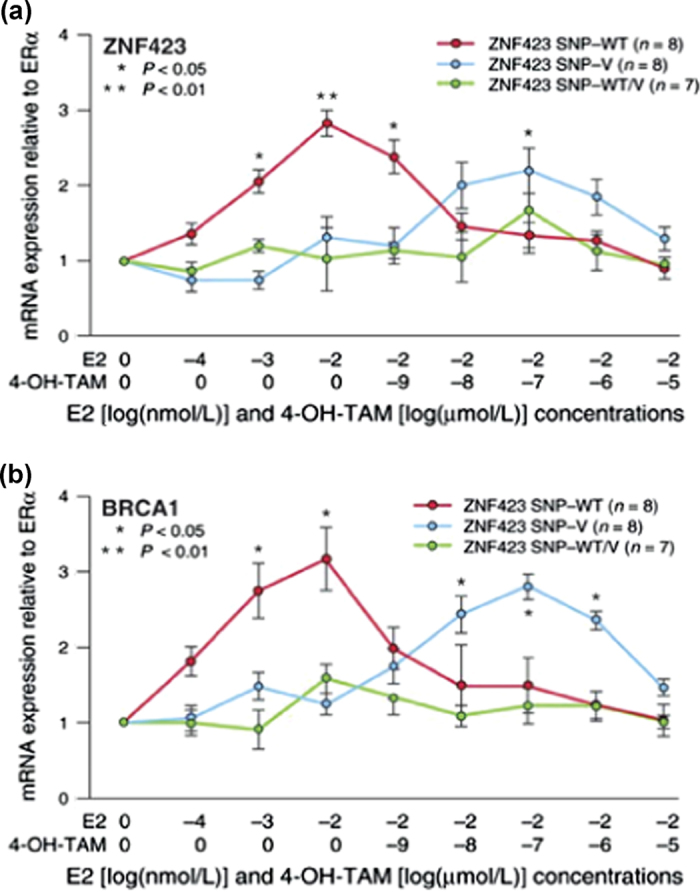
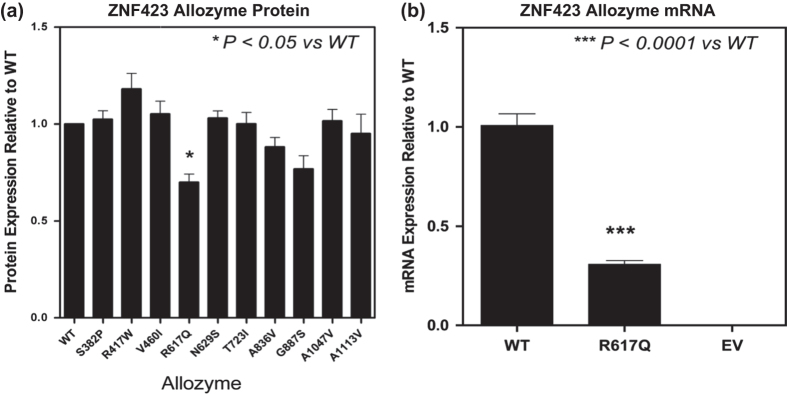
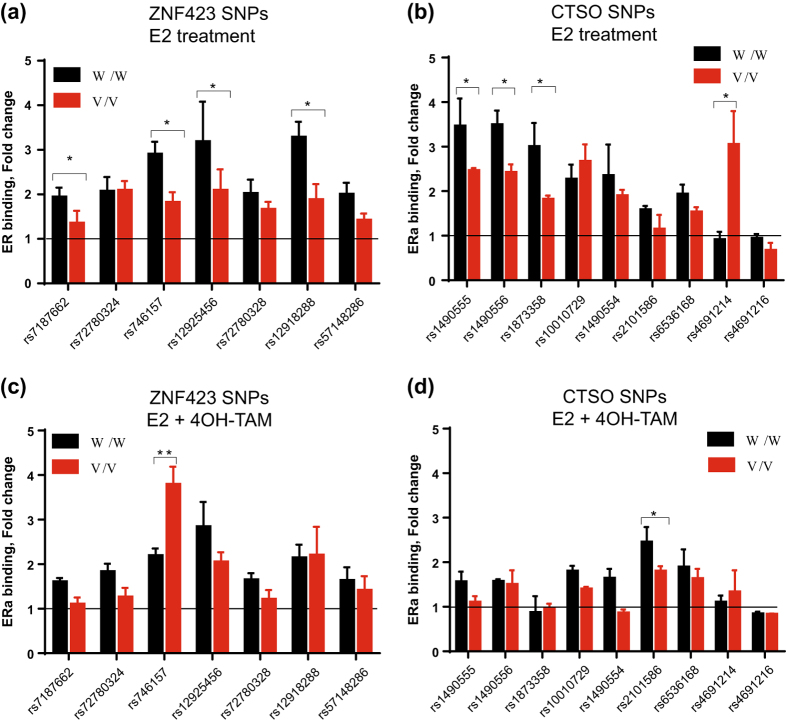
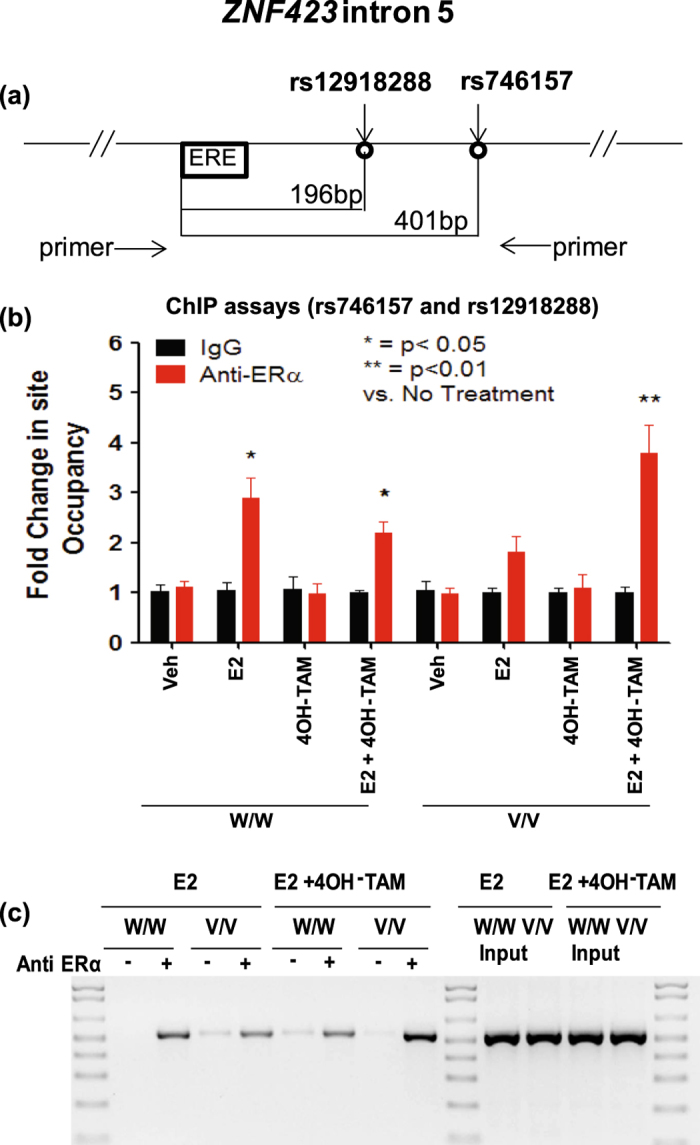
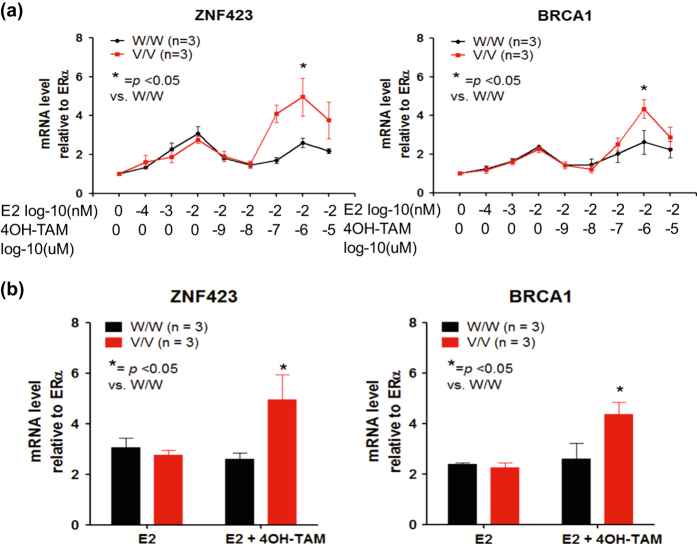
Our previous GWAS using samples from the NSABP P-1 and P-2 selective estrogen receptor modulator (SERM) breast cancer prevention trials identified SNPs in and near that were associated with breast cancer risk during SERM chemoprevention. We have now performed Next Generation DNA sequencing to identify additional SNPs that might contribute to breast cancer risk and to extend our observation that SNPs located hundreds of bp from estrogen response elements (EREs) can alter estrogen receptor alpha (ERα) binding in a SERM-dependent fashion. Our study utilized a nested case-control cohort selected from patients enrolled in the original GWAS, with 199 cases who developed breast cancer during SERM therapy and 201 matched controls who did not. We resequenced approximately 500 kb across both and , followed by functional genomic studies. We identified 4079 SNPs across and 3876 across , with 9 SNPs in and 12 in with < 1E-02 that were within 500 bp of an ERE motif. The rs746157 ( = 8.44E-04) and rs12918288 SNPs ( = 3.43E-03) in intron 5 of , were in linkage equilibrium and were associated with alterations in ER-binding to an ERE motif distant from these SNPs. We also studied all nonsynonymous SNPs in both genes and observed that one nsSNP in displayed decreased protein expression. In conclusion, we identified additional functional SNPs in that were associated with SNP and SERM-dependent alternations in ER binding and transcriptional regulation for an ERE at a distance from the SNPs, thus providing novel insight into mechanisms of SERM effect.
我们之前利用NSABP P-1和P-2选择性雌激素受体调节剂(SERM)乳腺癌预防试验的样本进行的全基因组关联研究(GWAS),在[基因名称1]及其附近鉴定出了与SERM化学预防期间乳腺癌风险相关的单核苷酸多态性(SNP)。我们现在进行了新一代DNA测序,以鉴定可能导致乳腺癌风险的其他SNP,并扩展我们的观察结果,即距离雌激素反应元件(ERE)数百个碱基对的SNP可以以SERM依赖的方式改变雌激素受体α(ERα)的结合。我们的研究利用了从最初GWAS中纳入的患者中选择的巢式病例对照队列,其中199例在SERM治疗期间患乳腺癌,201例匹配的未患乳腺癌的对照。我们对[基因名称1]和[基因名称2]总共约500 kb的区域进行了重测序,随后进行了功能基因组学研究。我们在[基因名称1]中鉴定出4079个SNP,在[基因名称2]中鉴定出3876个SNP,其中[基因名称1]中有9个SNP和[基因名称2]中有12个SNP,其P值<1E-02,位于ERE基序的500 bp范围内。[基因名称1]内含子5中的rs746157(P = 8.44E-04)和rs12918288 SNP(P = 3.43E-03)处于连锁平衡状态,并且与ER与远离这些SNP的ERE基序的结合改变有关。我们还研究了这两个基因中的所有非同义SNP,观察到[基因名称1]中的一个非同义SNP显示蛋白质表达降低。总之,我们在[基因名称1]中鉴定出了其他功能性SNP,这些SNP与远离SNP的ERE的ER结合和转录调控中的SNP和SERM依赖性改变相关,从而为SERM作用机制提供了新的见解。