Cao Aqin, Jin Jie, Li Shaoqing, Wang Jianbo
State Key Laboratory of Hybrid Rice, College of Life Sciences, Wuhan University, Wuhan, China.
PLoS One. 2017 Aug 31;12(8):e0184106. doi: 10.1371/journal.pone.0184106. eCollection 2017.
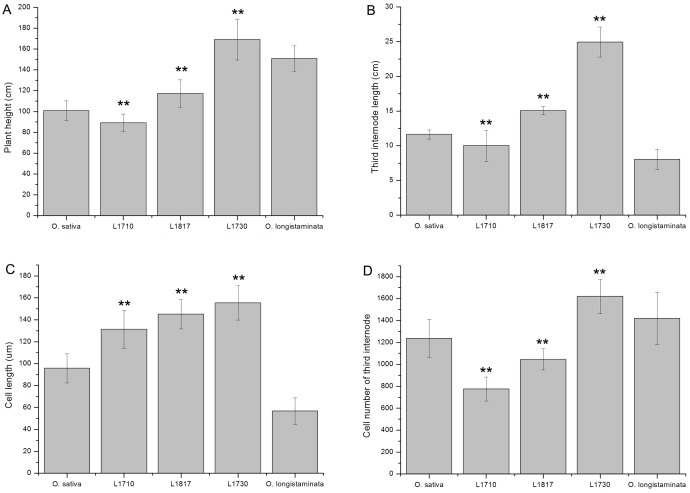
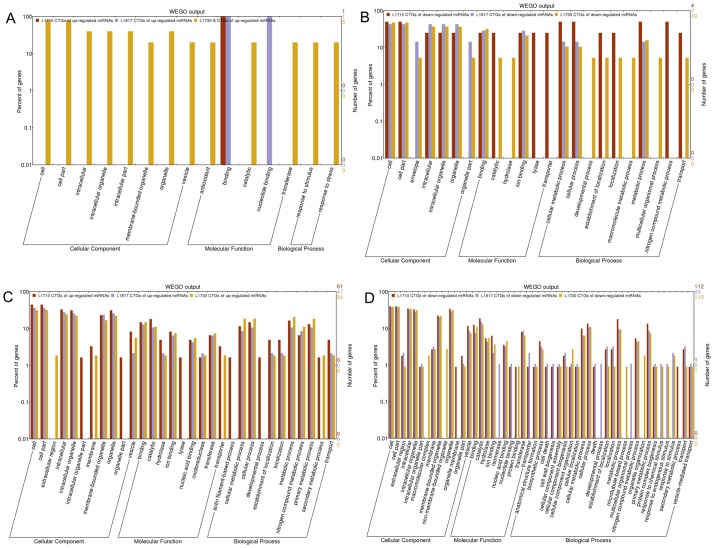
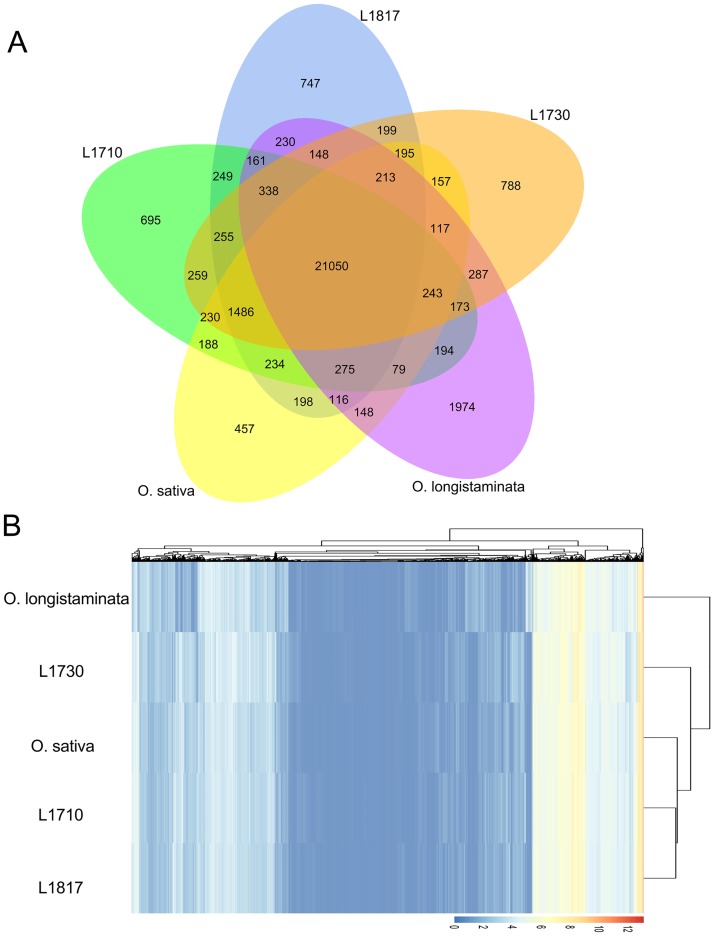
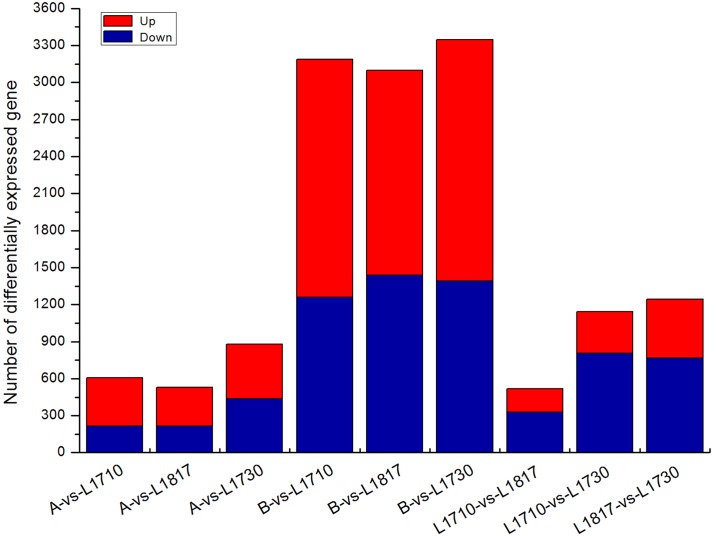
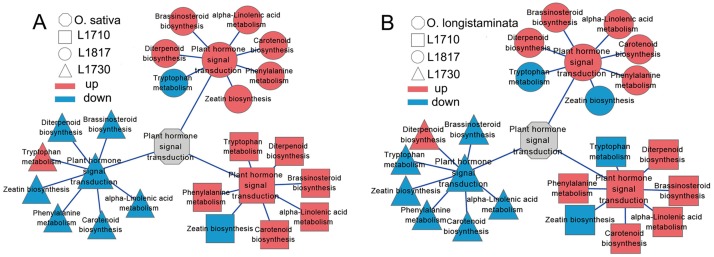
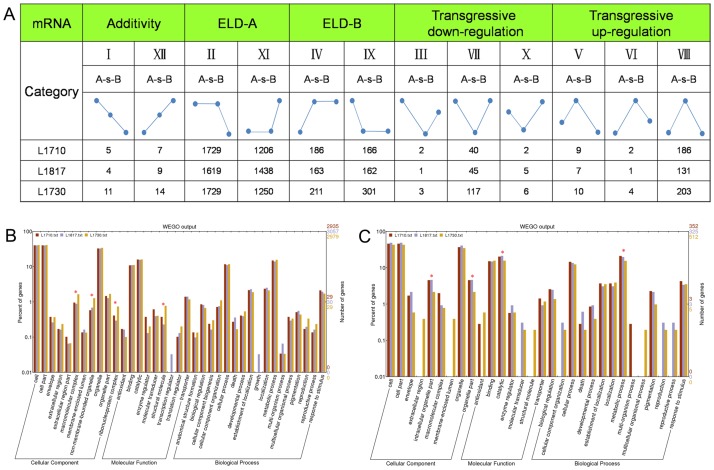
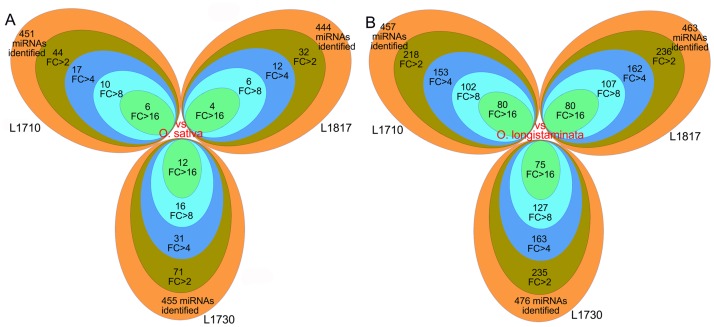
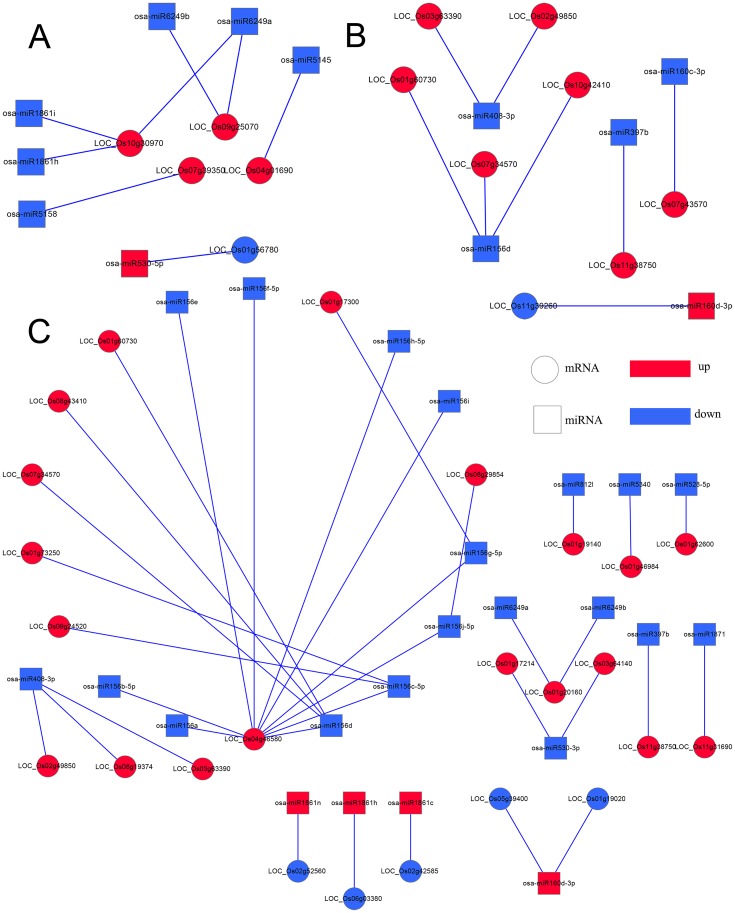
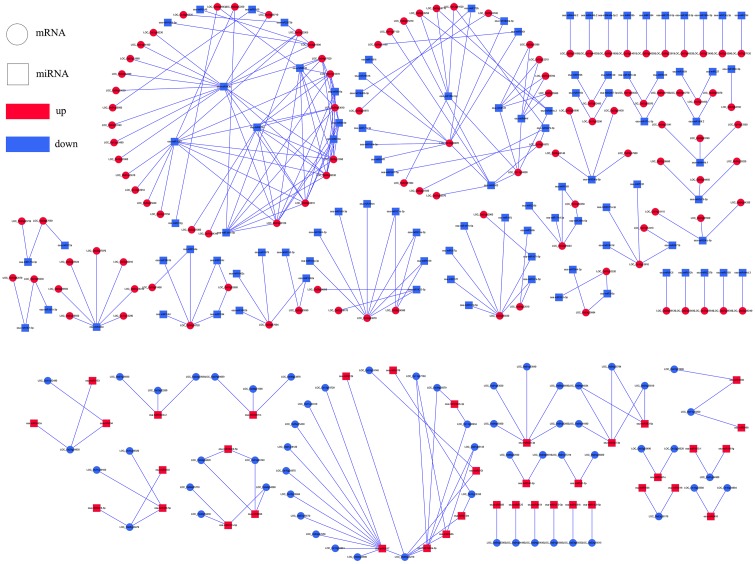
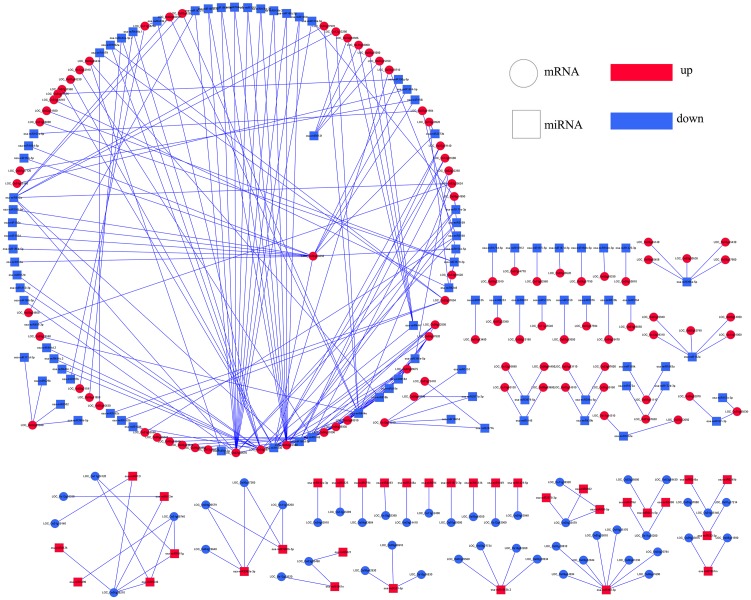
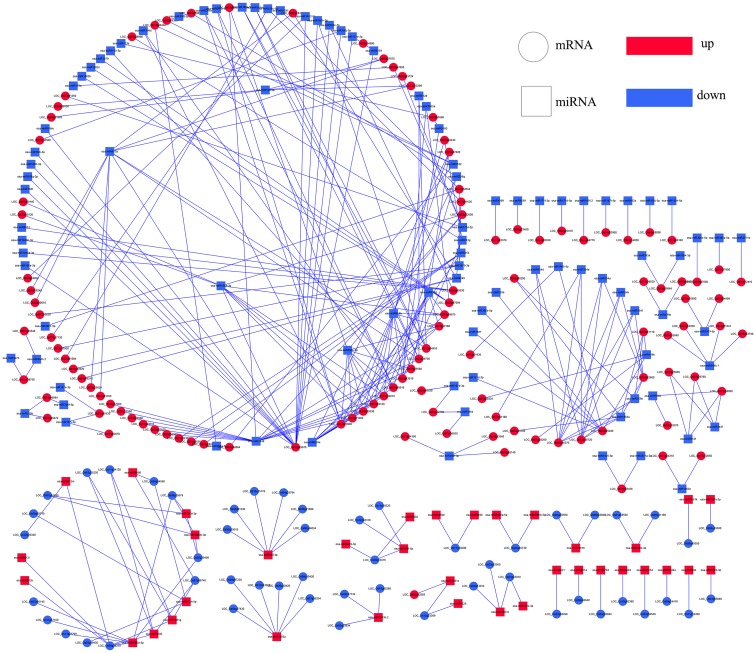
Inter-specific hybridization and backcrossing commonly occur in plants. The use of progeny generated from inter-specific hybridization and backcrossing has been developed as a novel model system to explore gene expression divergence. The present study investigated the analysis of gene expression and miRNA regulation in backcrossed introgression lines constructed from cultivated and wild rice. High-throughput sequencing was used to compare gene and miRNA expression profiles in three progeny lines (L1710, L1817 and L1730), with different plant heights resulting from the backcrossing of introgression lines (BC2F12) and their parents (O. sativa and O. longistaminata). A total of 25,387 to 26,139 mRNAs and 379 to 419 miRNAs were obtained in these rice lines. More differentially expressed genes and miRNAs were detected in progeny/O. longistaminata comparison groups than in progeny/O. sativa comparison groups. Approximately 80% of the genes and miRNAs showed expression level dominance to O. sativa, indicating that three progeny lines were closer to the recurrent parent, which might be influenced by their parental genome dosage. Approximately 16% to 64% of the differentially expressed miRNAs possessing coherent target genes were predicted, and many of these miRNAs regulated multiple target genes. Most genes were up-regulated in progeny lines compared with their parents, but down-regulated in the higher plant height line in the comparison groups among the three progeny lines. Moreover, certain genes related to cell walls and plant hormones might play crucial roles in the plant height variations of the three progeny lines. Taken together, these results provided valuable information on the molecular mechanisms of hybrid backcrossing and plant height variations based on the gene and miRNA expression levels in the three progeny lines.
种间杂交和回交在植物中普遍发生。利用种间杂交和回交产生的后代已被开发为一种探索基因表达差异的新型模型系统。本研究调查了由栽培稻和野生稻构建的回交渐渗系中的基因表达分析和miRNA调控。采用高通量测序比较了三个后代系(L1710、L1817和L1730)及其亲本(栽培稻和长花药野生稻)因回交渐渗系(BC2F12)而产生的不同株高的基因和miRNA表达谱。在这些水稻品系中总共获得了25387至26139个mRNA和379至419个miRNA。在后代/长花药野生稻比较组中检测到的差异表达基因和miRNA比后代/栽培稻比较组更多。大约80%的基因和miRNA在表达水平上对栽培稻呈显性,表明三个后代系更接近轮回亲本,这可能受其亲本基因组剂量的影响。预测了约16%至64%具有一致靶基因的差异表达miRNA,其中许多miRNA调控多个靶基因。与亲本相比,大多数基因在后代系中上调,但在三个后代系的比较组中,在株高较高的品系中下调。此外,某些与细胞壁和植物激素相关的基因可能在三个后代系的株高变异中起关键作用。综上所述,这些结果基于三个后代系中的基因和miRNA表达水平,为杂交回交和株高变异的分子机制提供了有价值的信息。