Deschamps Jacqueline, Duboule Denis
Hubrecht Institute, University Medical Center Utrecht, 3584 CT Utrecht, the Netherlands.
School of Life Sciences, Ecole Polytechnique Fédérale, Lausanne, 1015 Lausanne, Switzerland.
Genes Dev. 2017 Jul 15;31(14):1406-1416. doi: 10.1101/gad.303123.117.
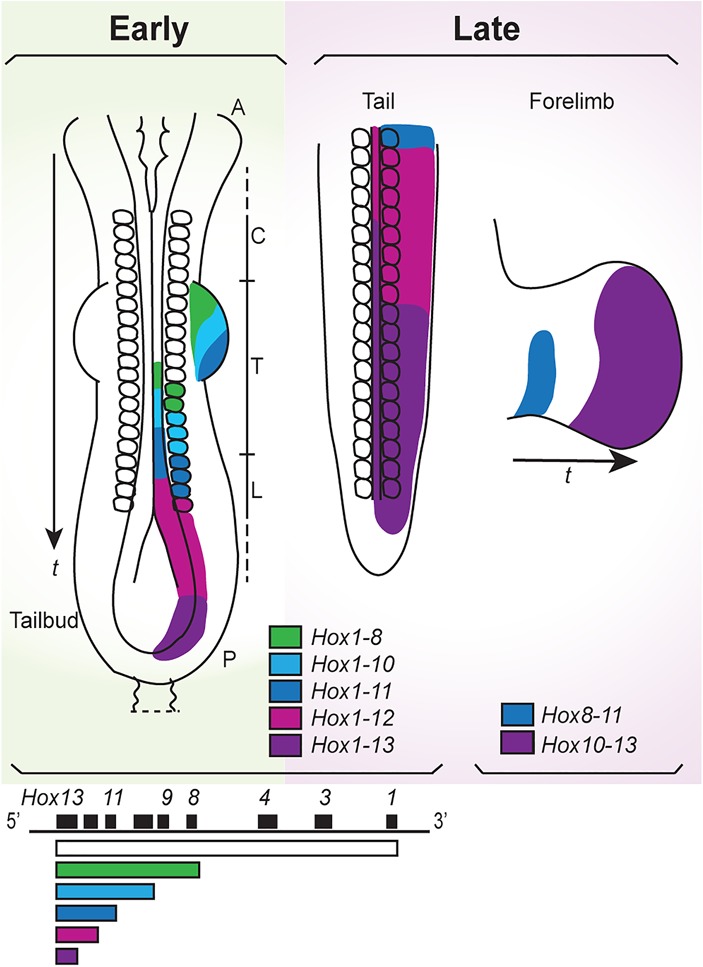
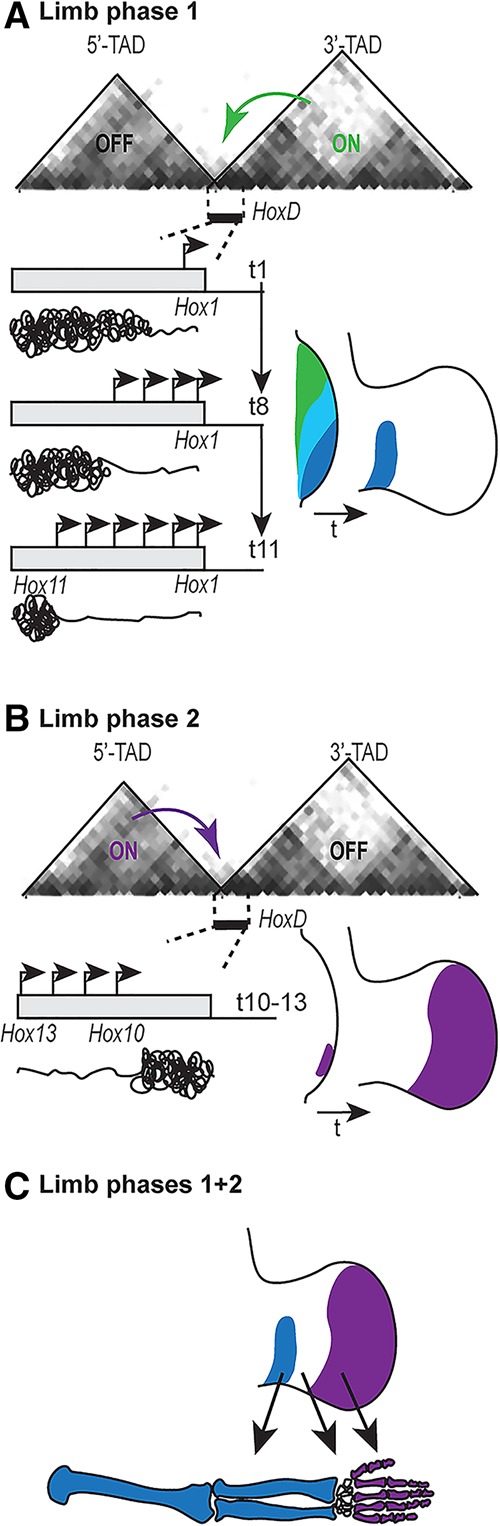
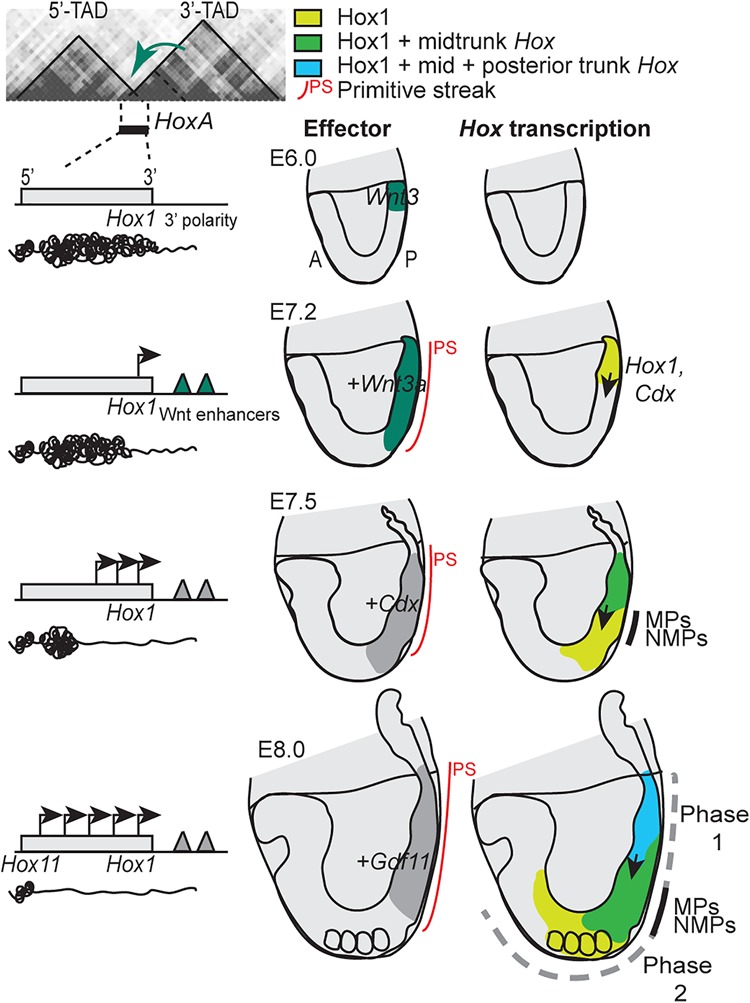
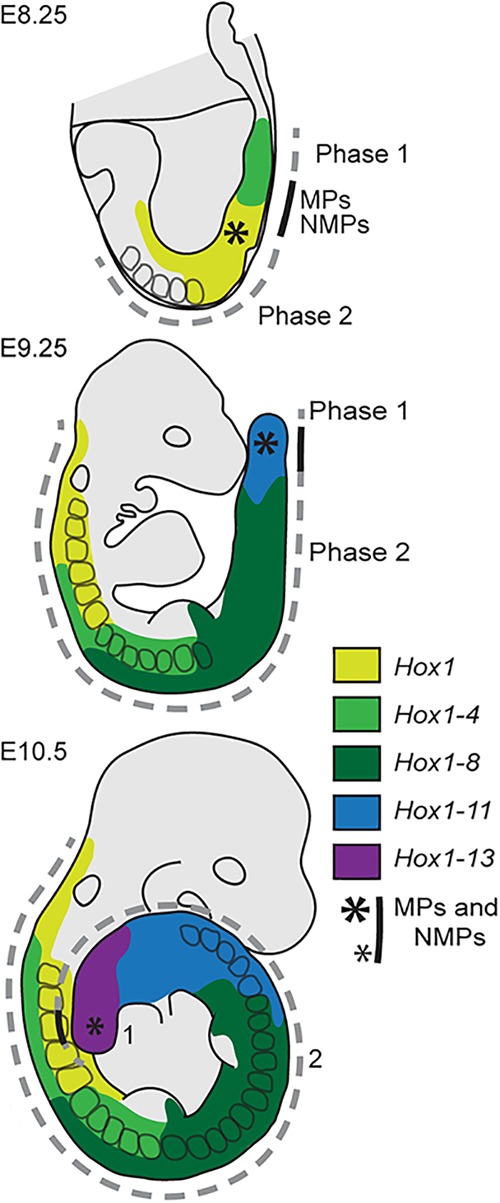
Collinear regulation of genes in space and time has been an outstanding question ever since the initial work of Ed Lewis in 1978. Here we discuss recent advances in our understanding of this phenomenon in relation to novel concepts associated with large-scale regulation and chromatin structure during the development of both axial and limb patterns. We further discuss how this sequential transcriptional activation marks embryonic stem cell-like axial progenitors in mammals and, consequently, how a temporal genetic system is further translated into spatial coordinates via the fate of these progenitors. In this context, we argue the benefit and necessity of implementing this unique mechanism as well as the difficulty in evolving an alternative strategy to deliver this critical positional information.
自1978年埃德·刘易斯的开创性工作以来,基因在空间和时间上的共线性调控一直是一个悬而未决的重要问题。本文将探讨我们对这一现象理解的最新进展,这些进展与轴向和肢体模式发育过程中大规模调控及染色质结构相关的新概念有关。我们还将进一步讨论这种顺序性转录激活如何标记哺乳动物中胚胎干细胞样的轴向祖细胞,以及由此,一个时间性遗传系统如何通过这些祖细胞的命运进一步转化为空间坐标。在此背景下,我们阐述了实施这一独特机制的益处和必要性,以及演化出替代策略来传递这一关键位置信息的困难。