• 文献检索
  • 文档翻译
  • 深度研究
  • 学术资讯
  • Suppr Zotero 插件Zotero 插件
  • 邀请有礼
  • 套餐&价格
  • 历史记录
应用&插件
Suppr Zotero 插件Zotero 插件浏览器插件Mac 客户端Windows 客户端微信小程序
定价
高级版会员购买积分包购买API积分包
服务
文献检索文档翻译深度研究API 文档MCP 服务
关于我们
关于 Suppr公司介绍联系我们用户协议隐私条款
关注我们

Suppr 超能文献

核心技术专利:CN118964589B侵权必究
粤ICP备2023148730 号-1Suppr @ 2026

文献检索

告别复杂PubMed语法,用中文像聊天一样搜索,搜遍4000万医学文献。AI智能推荐,让科研检索更轻松。

立即免费搜索

文件翻译

保留排版,准确专业,支持PDF/Word/PPT等文件格式,支持 12+语言互译。

免费翻译文档

深度研究

AI帮你快速写综述,25分钟生成高质量综述,智能提取关键信息,辅助科研写作。

立即免费体验

旧石器时代桦树皮干馏的实验方法:对尼安德特人黏合技术起源和发展的启示。

Experimental methods for the Palaeolithic dry distillation of birch bark: implications for the origin and development of Neandertal adhesive technology.

机构信息

Faculty of Archaeology, Leiden University, Leiden, The Netherlands.

Het Stenen Tijdperk, Wezep, The Netherlands.

出版信息

Sci Rep. 2017 Aug 31;7(1):8033. doi: 10.1038/s41598-017-08106-7.

DOI:10.1038/s41598-017-08106-7
PMID:28860591
原文链接:https://pmc.ncbi.nlm.nih.gov/articles/PMC5579016/
Abstract

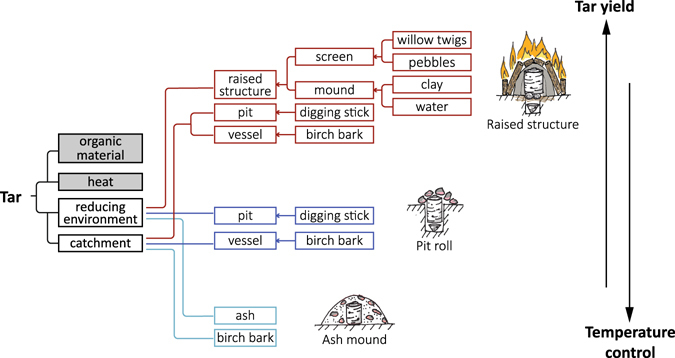
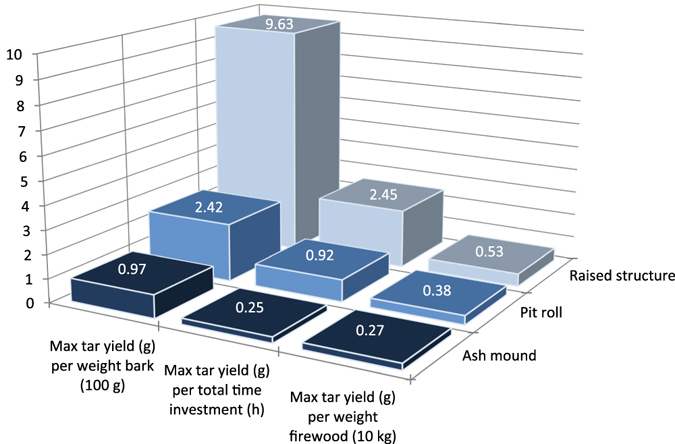
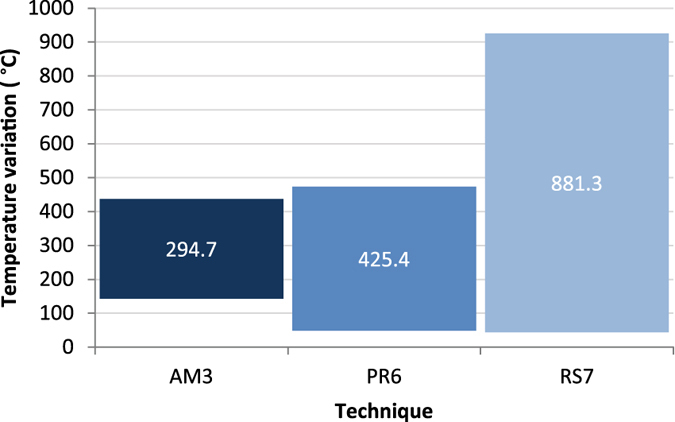
The destructive distillation of birch bark to produce tar has recently featured in debates about the technological and cognitive abilities of Neandertals and modern humans. The abilities to precisely control fire temperatures and to manipulate adhesive properties are believed to require advanced mental traits. However, the significance given to adhesive technology in these debates has quickly outgrown our understanding of birch bark tar and its manufacture using aceramic techniques. In this paper, we detail three experimental methods of Palaeolithic tar production ranging from simple to complex. We recorded the fuel, time, materials, temperatures, and tar yield for each method and compared them with the tar known from the Palaeolithic. Our results indicate that it is possible to obtain useful amounts of tar by combining materials and technology already in use by Neandertals. A ceramic container is not required, and temperature control need not be as precise as previously thought. However, Neandertals must have been able to recognize certain material properties, such as adhesive tack and viscosity. In this way, they could develop the technology from producing small traces of tar on partially burned bark to techniques capable of manufacturing quantities of tar equal to those found in the Middle Palaeolithic archaeological record.

摘要

桦树皮的干馏生产焦油,这一技术最近在尼安德特人和现代人的技术和认知能力的争论中出现。精确控制火温以及操纵粘性属性的能力被认为需要先进的心理特征。然而,在这些争论中,对粘性技术的重视已经迅速超出了我们对桦树皮焦油及其使用无陶瓷技术制造的理解。在本文中,我们详细介绍了三种从简单到复杂的旧石器时代焦油生产的实验方法。我们记录了每种方法的燃料、时间、材料、温度和焦油产量,并将其与旧石器时代的焦油进行了比较。我们的结果表明,通过结合尼安德特人已经使用的材料和技术,有可能获得有用数量的焦油。不需要陶瓷容器,而且温度控制不需要像以前认为的那样精确。然而,尼安德特人必须能够识别某些材料特性,例如粘性和粘度。通过这种方式,他们可以将技术从部分燃烧的桦树皮上产生少量焦油发展到能够制造与中石器时代考古记录中发现的焦油等量的技术。

https://cdn.ncbi.nlm.nih.gov/pmc/blobs/9c0a/5579016/fdd3fe331371/41598_2017_8106_Fig4_HTML.jpg
https://cdn.ncbi.nlm.nih.gov/pmc/blobs/9c0a/5579016/aec8c2b4938c/41598_2017_8106_Fig1_HTML.jpg
https://cdn.ncbi.nlm.nih.gov/pmc/blobs/9c0a/5579016/acd631f25588/41598_2017_8106_Fig2_HTML.jpg
https://cdn.ncbi.nlm.nih.gov/pmc/blobs/9c0a/5579016/17001322f8a0/41598_2017_8106_Fig3_HTML.jpg
https://cdn.ncbi.nlm.nih.gov/pmc/blobs/9c0a/5579016/fdd3fe331371/41598_2017_8106_Fig4_HTML.jpg
https://cdn.ncbi.nlm.nih.gov/pmc/blobs/9c0a/5579016/aec8c2b4938c/41598_2017_8106_Fig1_HTML.jpg
https://cdn.ncbi.nlm.nih.gov/pmc/blobs/9c0a/5579016/acd631f25588/41598_2017_8106_Fig2_HTML.jpg
https://cdn.ncbi.nlm.nih.gov/pmc/blobs/9c0a/5579016/17001322f8a0/41598_2017_8106_Fig3_HTML.jpg
https://cdn.ncbi.nlm.nih.gov/pmc/blobs/9c0a/5579016/fdd3fe331371/41598_2017_8106_Fig4_HTML.jpg

相似文献

1
Experimental methods for the Palaeolithic dry distillation of birch bark: implications for the origin and development of Neandertal adhesive technology.旧石器时代桦树皮干馏的实验方法:对尼安德特人黏合技术起源和发展的启示。
Sci Rep. 2017 Aug 31;7(1):8033. doi: 10.1038/s41598-017-08106-7.
2
Identifying Palaeolithic birch tar production techniques: challenges from an experimental biomolecular approach.鉴定旧石器时代桦树焦油生产技术:实验生物分子方法面临的挑战。
Sci Rep. 2023 Sep 7;13(1):14727. doi: 10.1038/s41598-023-41898-5.
3
Molecular characterisation of birch bark tar by headspace solid-phase microextraction gas chromatography-mass spectrometry: a new way for identifying archaeological glues.顶空固相微萃取气相色谱 - 质谱联用对桦树皮焦油的分子表征:一种鉴定考古胶水的新方法
J Chromatogr A. 2006 Jan 6;1101(1-2):245-53. doi: 10.1016/j.chroma.2005.09.070. Epub 2005 Oct 19.
4
Scaling Palaeolithic tar production processes exponentially increases behavioural complexity.大规模复制旧石器时代焦油制作工艺会使行为复杂度呈指数级增长。
Sci Rep. 2023 Sep 7;13(1):14709. doi: 10.1038/s41598-023-41963-z.
5
Birch tar production does not prove Neanderthal behavioral complexity.桦焦油的生产并不能证明尼安德特人的行为复杂性。
Proc Natl Acad Sci U S A. 2019 Sep 3;116(36):17707-17711. doi: 10.1073/pnas.1911137116. Epub 2019 Aug 19.
6
A new experimental methodology for assessing adhesive properties shows that Neandertals used the most suitable material available.一种新的评估黏附性能的实验方法表明,尼安德特人使用了最适合的材料。
J Hum Evol. 2019 Dec;137:102664. doi: 10.1016/j.jhevol.2019.102664. Epub 2019 Oct 29.
7
Birch bark tar in early Medieval England - Continuity of tradition or technological revival?中世纪早期英格兰的桦树皮焦油——传统的延续还是技术的复兴?
J Archaeol Sci Rep. 2020 Feb;29:102118. doi: 10.1016/j.jasrep.2019.102118.
8
A new method for birch tar making with materials available in the Stone Age.一种利用石器时代可用材料制作桦焦油的新方法。
Sci Rep. 2022 Jan 10;12(1):413. doi: 10.1038/s41598-021-04161-3.
9
Middle Paleolithic complex technology and a Neandertal tar-backed tool from the Dutch North Sea.中更新世复合技术与来自荷兰北海的尼安德特人焦油背衬工具。
Proc Natl Acad Sci U S A. 2019 Oct 29;116(44):22081-22087. doi: 10.1073/pnas.1907828116. Epub 2019 Oct 21.
10
Differences in birch tar composition are explained by adhesive function in the central European Iron Age.中欧铁器时代黏附功能解释了桦焦油成分的差异。
PLoS One. 2024 Apr 3;19(4):e0301103. doi: 10.1371/journal.pone.0301103. eCollection 2024.

引用本文的文献

1
Differences in birch tar composition are explained by adhesive function in the central European Iron Age.中欧铁器时代黏附功能解释了桦焦油成分的差异。
PLoS One. 2024 Apr 3;19(4):e0301103. doi: 10.1371/journal.pone.0301103. eCollection 2024.
2
Ochre-based compound adhesives at the Mousterian type-site document complex cognition and high investment.奥尔德沃文化类型遗址出土的含矿黏土黏合材料表明当时已经出现了复杂认知和高投入的行为。
Sci Adv. 2024 Feb 23;10(8):eadl0822. doi: 10.1126/sciadv.adl0822. Epub 2024 Feb 21.
3
Measuring ancient technological complexity and its cognitive implications using Petri nets.

本文引用的文献

1
Neandertals revised.尼安德特人(已修订)
Proc Natl Acad Sci U S A. 2016 Jun 7;113(23):6372-9. doi: 10.1073/pnas.1521269113.
2
Lap Shear and Impact Testing of Ochre and Beeswax in Experimental Middle Stone Age Compound Adhesives.赭石与蜂蜡在实验性中石器时代复合粘合剂中的搭接剪切和冲击测试
PLoS One. 2016 Mar 16;11(3):e0150436. doi: 10.1371/journal.pone.0150436. eCollection 2016.
3
Selection and Use of Manganese Dioxide by Neanderthals.尼安德特人对二氧化锰的选择与使用。
使用 Petri 网测量古代技术的复杂性及其认知意义。
Sci Rep. 2023 Sep 22;13(1):14961. doi: 10.1038/s41598-023-42078-1.
4
Identifying Palaeolithic birch tar production techniques: challenges from an experimental biomolecular approach.鉴定旧石器时代桦树焦油生产技术:实验生物分子方法面临的挑战。
Sci Rep. 2023 Sep 7;13(1):14727. doi: 10.1038/s41598-023-41898-5.
5
Scaling Palaeolithic tar production processes exponentially increases behavioural complexity.大规模复制旧石器时代焦油制作工艺会使行为复杂度呈指数级增长。
Sci Rep. 2023 Sep 7;13(1):14709. doi: 10.1038/s41598-023-41963-z.
6
Production method of the Königsaue birch tar documents cumulative culture in Neanderthals.柯尼希绍桦木焦油的生产方法证明了尼安德特人的累积文化。
Archaeol Anthropol Sci. 2023;15(6):84. doi: 10.1007/s12520-023-01789-2. Epub 2023 May 22.
7
Adhesives free bark panels: An alternative application for a waste material.无胶单板层积材:一种废料的替代应用。
PLoS One. 2023 Jan 23;18(1):e0280721. doi: 10.1371/journal.pone.0280721. eCollection 2023.
8
Archaeological evidence for thinking about possibilities in hominin evolution.考古证据对人属进化中可能性的思考。
Philos Trans R Soc Lond B Biol Sci. 2022 Dec 19;377(1866):20210350. doi: 10.1098/rstb.2021.0350. Epub 2022 Oct 31.
9
Archaeological adhesives made from document innovative potential in the African Middle Stone Age.从考古胶水中发现的文献揭示了非洲中石器时代的创新潜力。
Proc Natl Acad Sci U S A. 2022 Oct 4;119(40):e2209592119. doi: 10.1073/pnas.2209592119. Epub 2022 Sep 26.
10
A new method for birch tar making with materials available in the Stone Age.一种利用石器时代可用材料制作桦焦油的新方法。
Sci Rep. 2022 Jan 10;12(1):413. doi: 10.1038/s41598-021-04161-3.
Sci Rep. 2016 Feb 29;6:22159. doi: 10.1038/srep22159.
4
Environmental reconstruction and biostratigraphy of late Middle Pleistocene lakeshore deposits at Schöningen.舍宁根中更新世晚期湖岸沉积物的环境重建与生物地层学
J Hum Evol. 2015 Dec;89:57-70. doi: 10.1016/j.jhevol.2015.10.002. Epub 2015 Nov 27.
5
New insights on the wooden weapons from the Paleolithic site of Schöningen.来自舍宁根旧石器时代遗址木质武器的新见解。
J Hum Evol. 2015 Dec;89:214-25. doi: 10.1016/j.jhevol.2015.08.004. Epub 2015 Oct 9.
6
Residue and microwear analyses of the stone artifacts from Schöningen.施宁根石器的残留物与微痕分析。
J Hum Evol. 2015 Dec;89:298-308. doi: 10.1016/j.jhevol.2015.07.005. Epub 2015 Sep 16.
7
Neandertal demise: an archaeological analysis of the modern human superiority complex.尼安德特人的灭亡:对现代人类优越感的考古学分析
PLoS One. 2014 Apr 30;9(4):e96424. doi: 10.1371/journal.pone.0096424. eCollection 2014.
8
Evidence for early hafted hunting technology.有证据表明早期就出现了装柄的狩猎技术。
Science. 2012 Nov 16;338(6109):942-6. doi: 10.1126/science.1227608.
9
Neanderthal use of fish, mammals, birds, starchy plants and wood 125-250,000 years ago.尼安德特人在 12.5 万至 25 万年前使用鱼类、哺乳动物、鸟类、含淀粉植物和木材。
PLoS One. 2011;6(8):e23768. doi: 10.1371/journal.pone.0023768. Epub 2011 Aug 24.
10
Timing of the appearance of habitual fire use.习惯性用火出现的时间。
Proc Natl Acad Sci U S A. 2011 Jul 19;108(29):E298; author reply E299. doi: 10.1073/pnas.1106759108. Epub 2011 Jul 8.