Lim Hyun-Woo, Park Ji-Hoon, Park Hyun-Hee, Lee Shin-Jae
Department of Dentistry, Seoul National University School of Dentistry, Seoul, Korea.
Department of Orthodontics, Graduate School, Seoul National University, Seoul, Korea.
Korean J Orthod. 2017 Sep;47(5):298-305. doi: 10.4041/kjod.2017.47.5.298. Epub 2017 Jul 27.
This paper describes changes in the characteristics of patients seeking orthodontic treatment over the past decade and the treatment they received, to identify any seasonal variations or trends.
This single-center retrospective cohort study included all patients who presented to Seoul National University Dental Hospital for orthodontic diagnosis and treatment between January 1, 2005 and December 31, 2015. The study analyzed a set of heterogeneous variables grouped into the following categories: demographic (age, gender, and address), clinical (Angle Classification, anomaly, mode of orthodontic treatment, removable appliances for Phase 1 treatment, fixed appliances for Phase 2 treatment, orthognathic surgery, extraction, mini-plate, mini-implant, and patient transfer) and time-related variables (date of first visit and orthodontic treatment time). Time series analysis was applied to each variable.
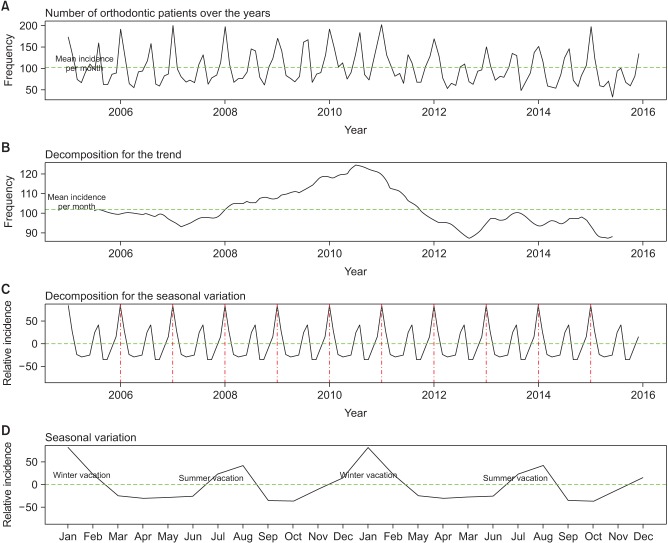
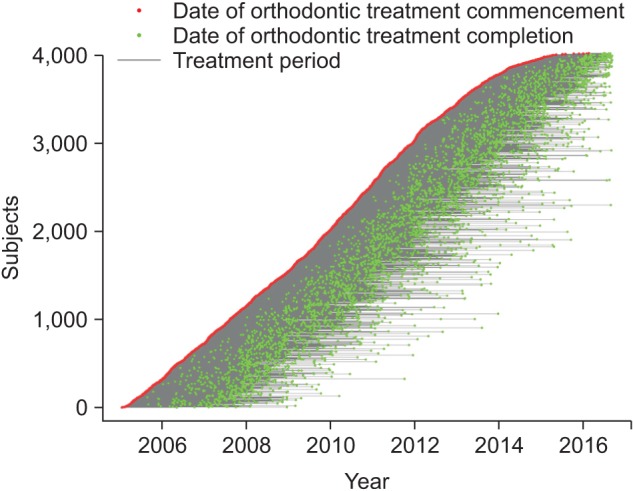
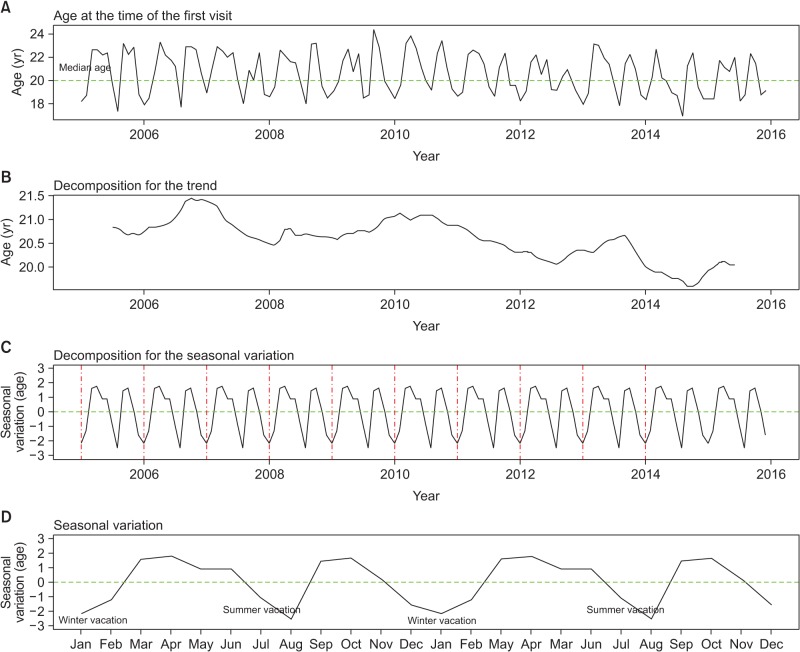
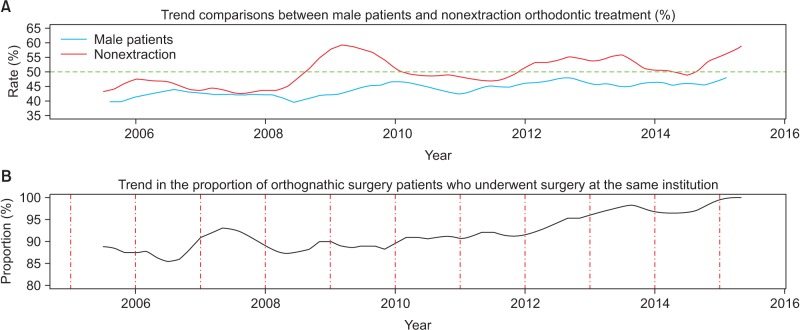
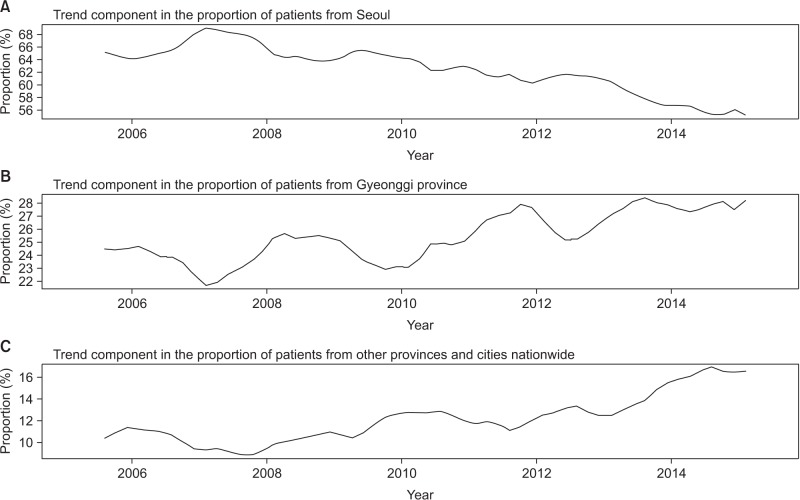
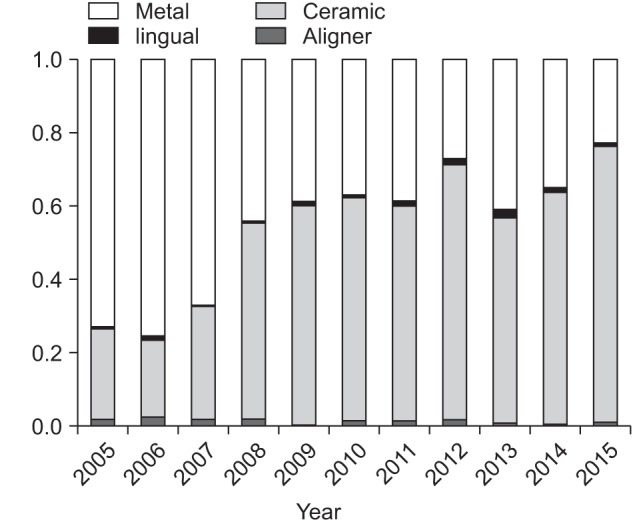
The sample included 14,510 patients with a median age of 19.5 years. The number of patients and their ages demonstrated a clear seasonal variation, which peaked in the summer and winter. Increasing trends were observed for the proportion of male patients, use of non-extraction treatment modality, use of ceramic brackets, patients from provinces outside the Seoul region at large, patients transferred from private practitioners, and patients who underwent orthognathic surgery performed by university surgeons. Decreasing trends included the use of metal brackets and orthodontic treatment time.
Time series analysis revealed a seasonal variation in some characteristics, and several variables showed changing trends over the past decade.
本文描述了过去十年中寻求正畸治疗的患者特征变化以及他们接受的治疗情况,以确定是否存在季节性变化或趋势。
这项单中心回顾性队列研究纳入了2005年1月1日至2015年12月31日期间到首尔国立大学牙科医院进行正畸诊断和治疗的所有患者。该研究分析了一组异质性变量,分为以下几类:人口统计学变量(年龄、性别和地址)、临床变量(安氏分类、异常情况、正畸治疗方式、一期治疗的可摘矫治器、二期治疗的固定矫治器、正颌手术、拔牙、微型钛板、微型种植体和患者转诊)以及时间相关变量(首次就诊日期和正畸治疗时间)。对每个变量应用时间序列分析。
样本包括14510名患者,中位年龄为19.5岁。患者数量及其年龄呈现出明显的季节性变化,在夏季和冬季达到峰值。男性患者比例、非拔牙治疗方式的使用、陶瓷托槽的使用、来自首尔地区以外省份的患者、从私人执业医生处转诊的患者以及接受大学外科医生进行正颌手术的患者比例呈上升趋势。下降趋势包括金属托槽的使用和正畸治疗时间。
时间序列分析揭示了某些特征的季节性变化,并且在过去十年中几个变量呈现出变化趋势。