Division of Dermatology, Department of Medicine, University of California, Los Angeles, California.
David Geffen School of Medicine, University of California, Los Angeles, California.
Cancer Discov. 2017 Nov;7(11):1248-1265. doi: 10.1158/2159-8290.CD-17-0401. Epub 2017 Sep 1.
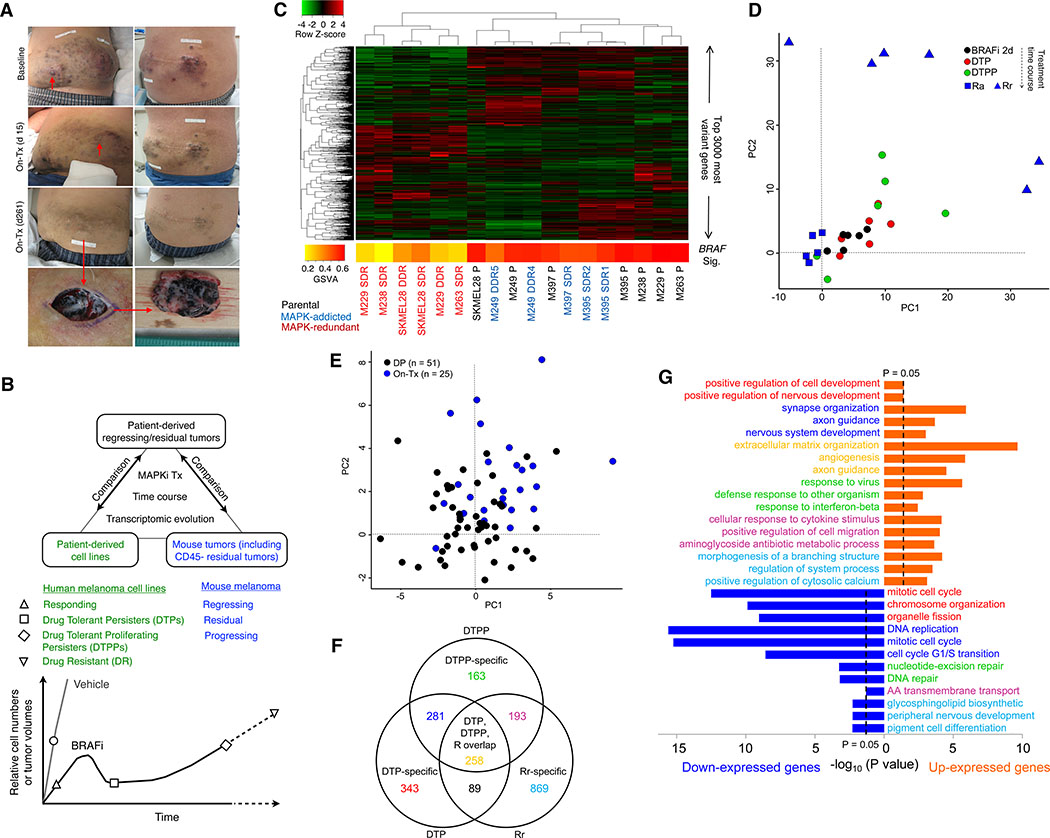
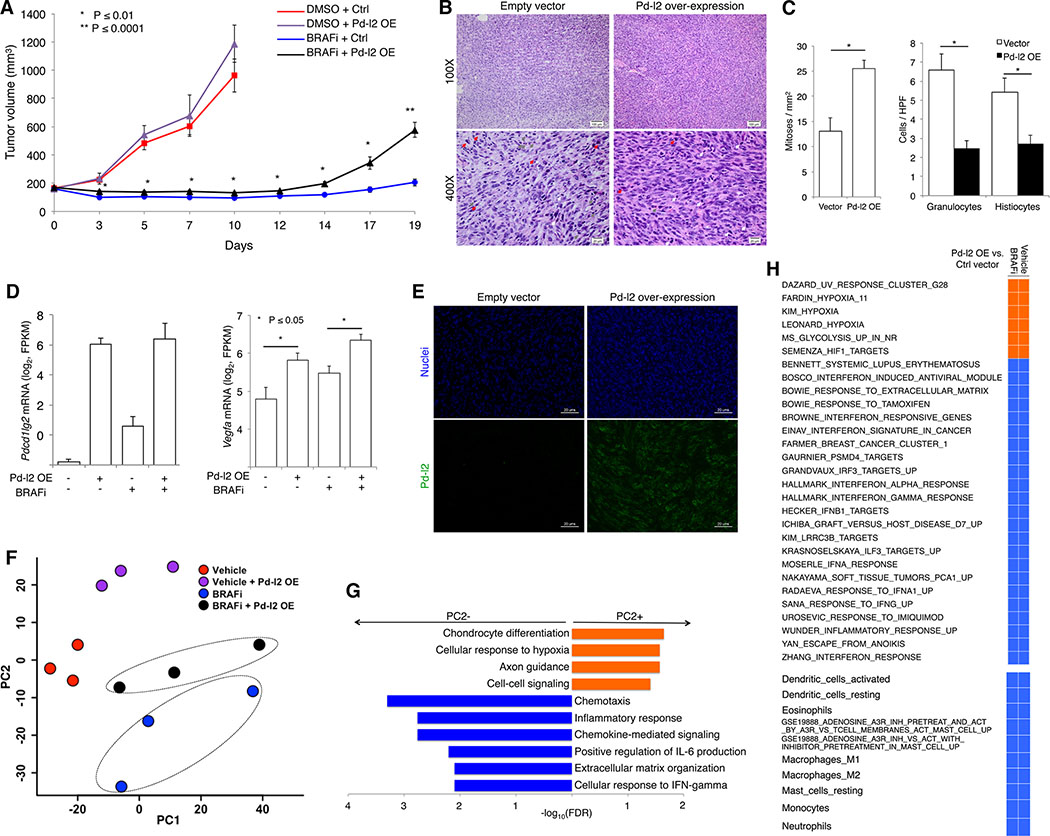
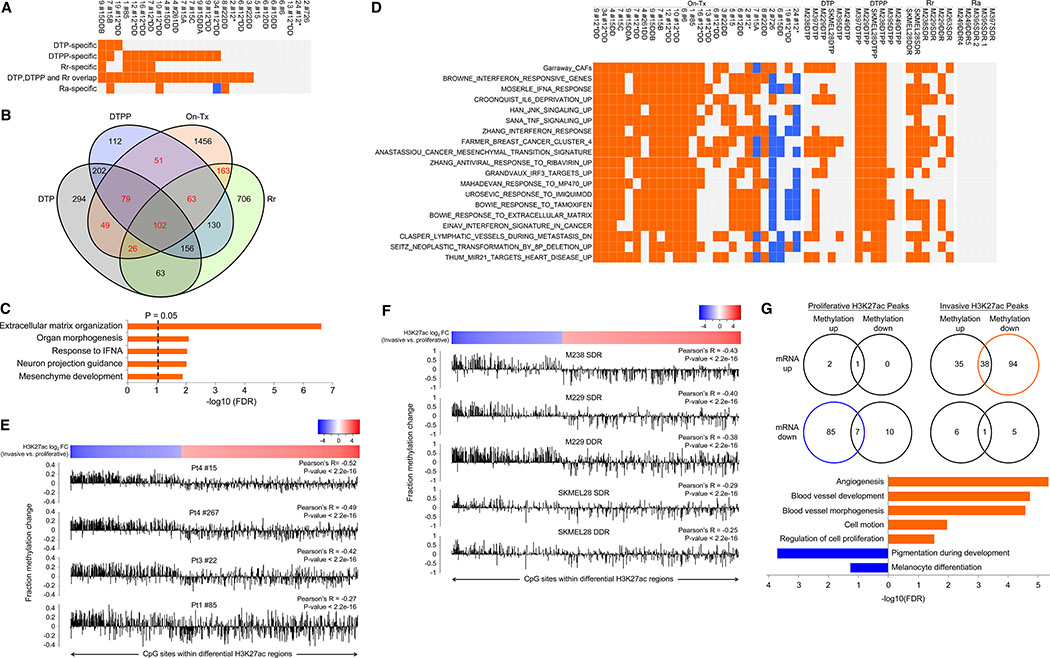
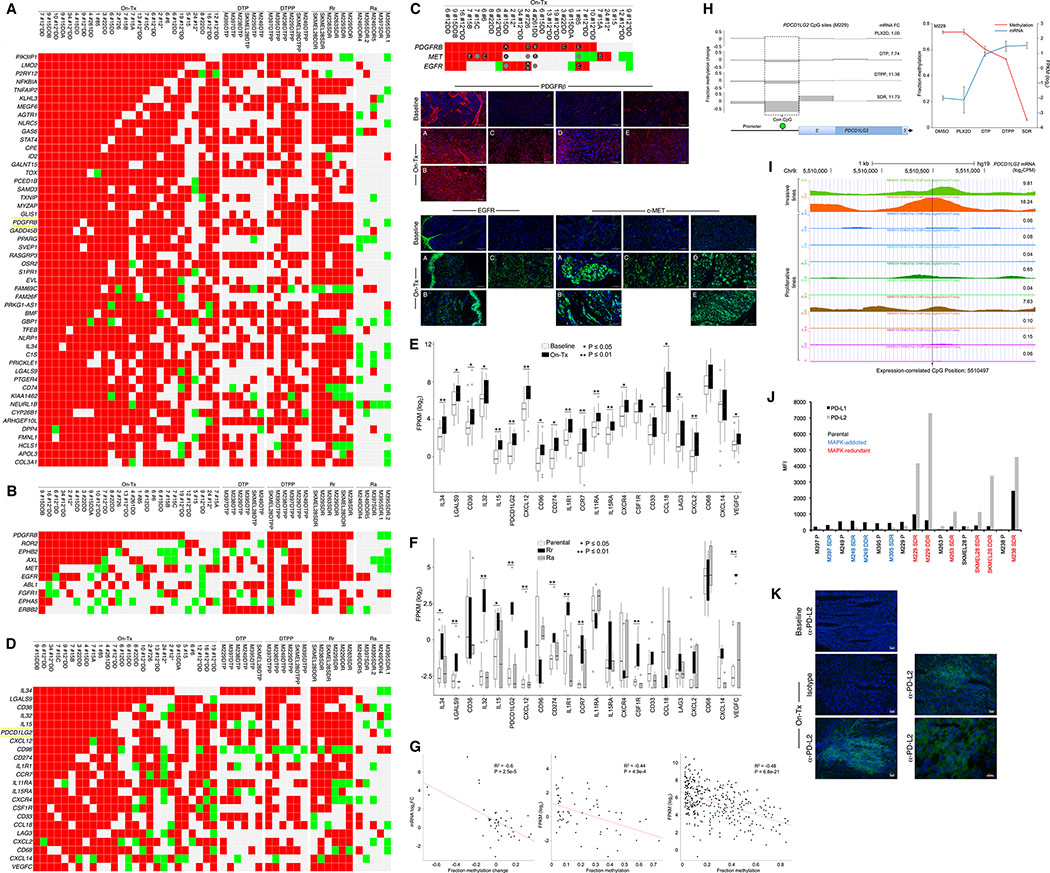
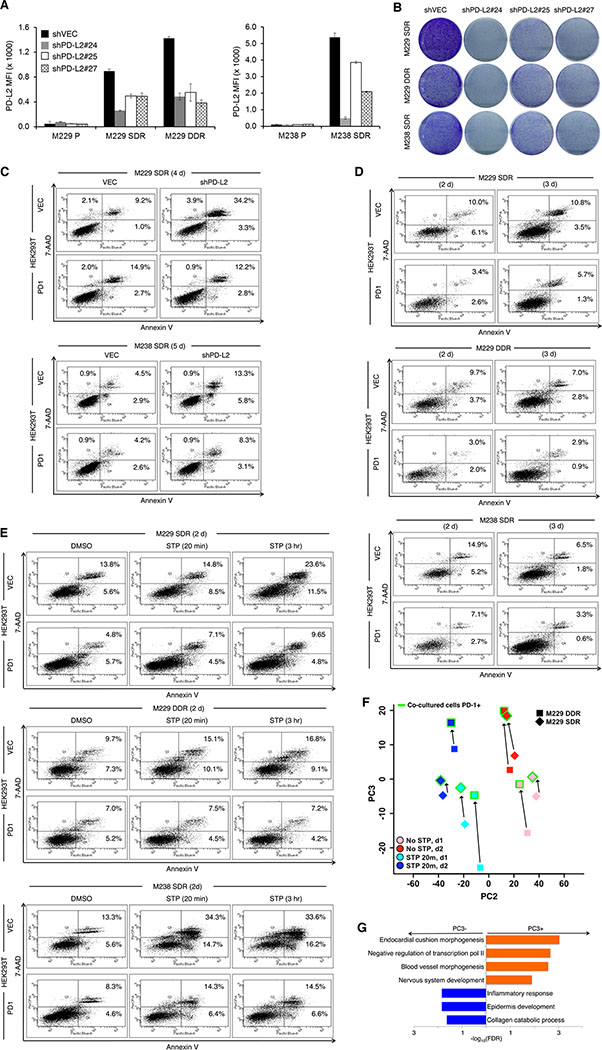
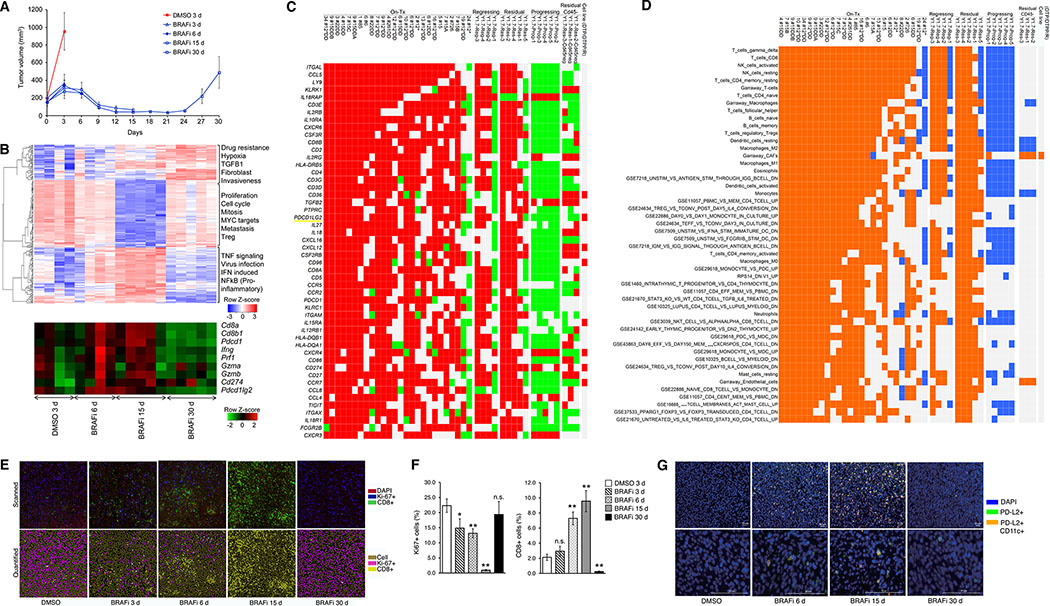
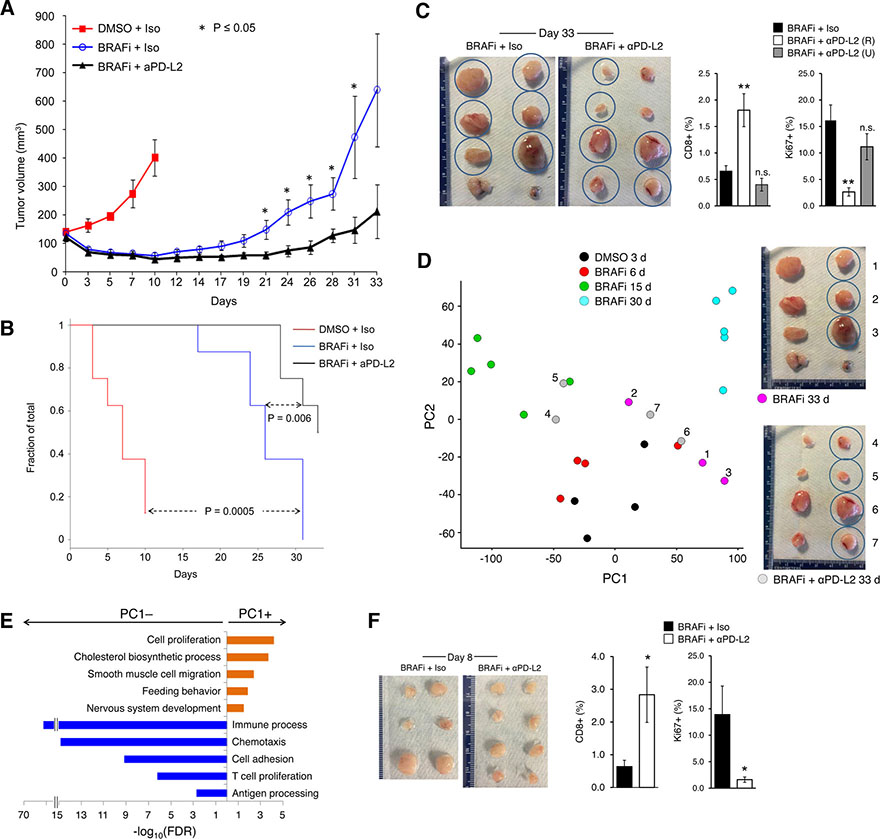
Treatment of advanced -mutant melanoma using a BRAF inhibitor or its combination with a MEK inhibitor typically elicits partial responses. We compared the transcriptomes of patient-derived tumors regressing on MAPK inhibitor (MAPKi) therapy against MAPKi-induced temporal transcriptomic states in human melanoma cell lines or murine melanoma in immune-competent mice. Despite heterogeneous dynamics of clinical tumor regression, residual tumors displayed highly recurrent transcriptomic alterations and enriched processes, which were also observed in MAPKi-selected cell lines (implying tumor cell-intrinsic reprogramming) or in bulk mouse tumors (and the CD45-negative or CD45-positive fractions, implying tumor cell-intrinsic or stromal/immune alterations, respectively). Tumor cell-intrinsic reprogramming attenuated MAPK dependency, while enhancing mesenchymal, angiogenic, and IFN-inflammatory features and growth/survival dependence on multi-RTKs and PD-L2. In the immune compartment, PD-L2 upregulation in CD11c immunocytes drove the loss of T-cell inflammation and promoted BRAFi resistance. Thus, residual melanoma early on MAPKi therapy already displays potentially exploitable adaptive transcriptomic, epigenomic, immune-regulomic alterations. Incomplete MAPKi-induced melanoma regression results in transcriptome/methylome-wide reprogramming and MAPK-redundant escape. Although regressing/residual melanoma is highly T cell-inflamed, stromal adaptations, many of which are tumor cell-driven, could suppress/eliminate intratumoral T cells, reversing tumor regression. This catalog of recurrent alterations helps identify adaptations such as PD-L2 operative tumor cell intrinsically and/or extrinsically early on therapy. .
使用 BRAF 抑制剂或其与 MEK 抑制剂的联合治疗晚期突变型黑色素瘤通常会引起部分反应。我们比较了在 MAPK 抑制剂(MAPKi)治疗下消退的患者来源肿瘤的转录组,与 MAPKi 在人类黑色素瘤细胞系或免疫功能正常的小鼠的黑素瘤中诱导的时间转录组状态。尽管临床肿瘤消退的动态存在异质性,但残留肿瘤显示出高度反复的转录组改变和富集的过程,这些改变也在 MAPKi 选择的细胞系中观察到(暗示肿瘤细胞内在的重编程)或在大块小鼠肿瘤中观察到(以及 CD45-阴性或 CD45-阳性分数,分别暗示肿瘤细胞内在或基质/免疫改变)。肿瘤细胞内在的重编程减弱了 MAPK 的依赖性,同时增强了间充质、血管生成和 IFN-炎症特征以及对多 RTK 和 PD-L2 的生长/存活依赖性。在免疫区室中,CD11c 免疫细胞中 PD-L2 的上调驱动了 T 细胞炎症的丧失,并促进了 BRAFi 耐药性。因此,残留黑色素瘤在早期接受 MAPKi 治疗时已经显示出潜在可利用的适应性转录组、表观基因组和免疫调节组改变。不完全的 MAPKi 诱导的黑色素瘤消退导致转录组/甲基组广泛的重编程和 MAPK 冗余逃逸。尽管消退/残留的黑色素瘤高度 T 细胞浸润,但基质的适应性,其中许多是肿瘤细胞驱动的,可能会抑制/消除肿瘤内的 T 细胞,从而逆转肿瘤的消退。这种反复出现的改变有助于识别适应现象,如 PD-L2 在治疗早期内在和/或外在地作用于肿瘤细胞。