Kostrhon Sebastian, Kontaxis Georg, Kaufmann Tanja, Schirghuber Erika, Kubicek Stefan, Konrat Robert, Slade Dea
From the Department of Biochemistry, Max F. Perutz Laboratories, University of Vienna, Campus Vienna Biocenter, Dr. Bohr-Gasse 9, 1030 Vienna, Austria.
the Department of Structural and Computational Biology, Max F. Perutz Laboratories, University of Vienna, Campus Vienna Biocenter 5, 1030 Vienna, Austria.
J Biol Chem. 2017 Oct 27;292(43):17643-17657. doi: 10.1074/jbc.M117.801464. Epub 2017 Sep 1.
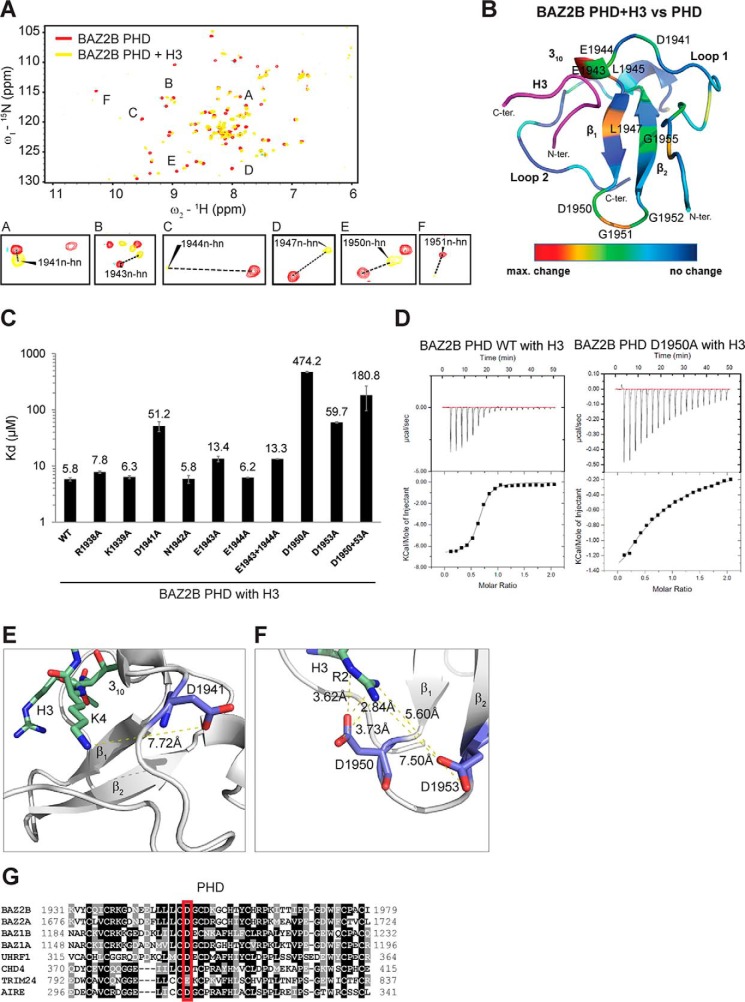
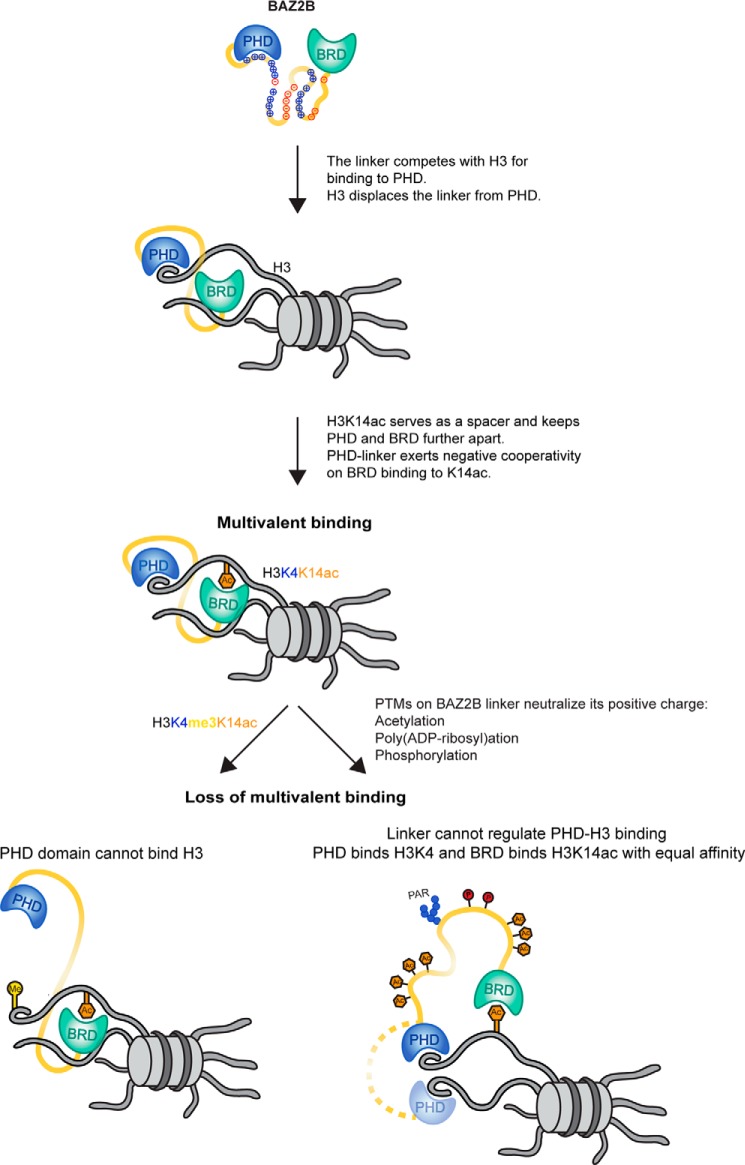
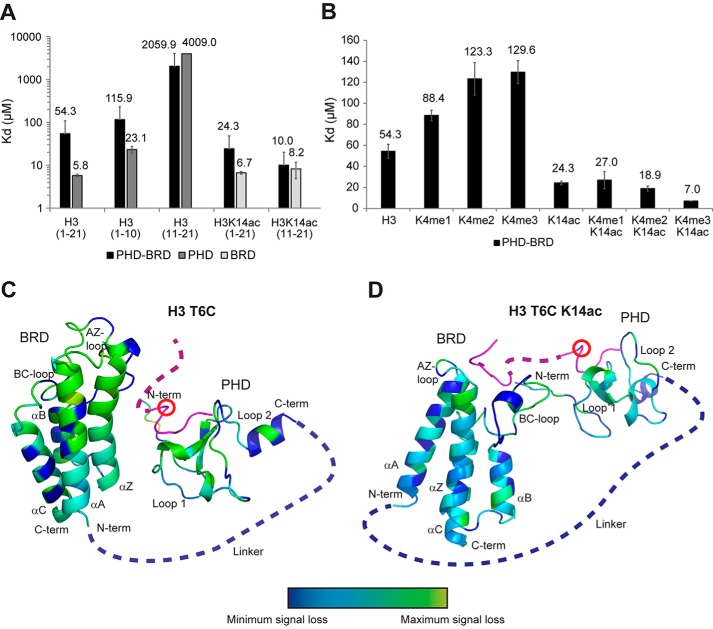
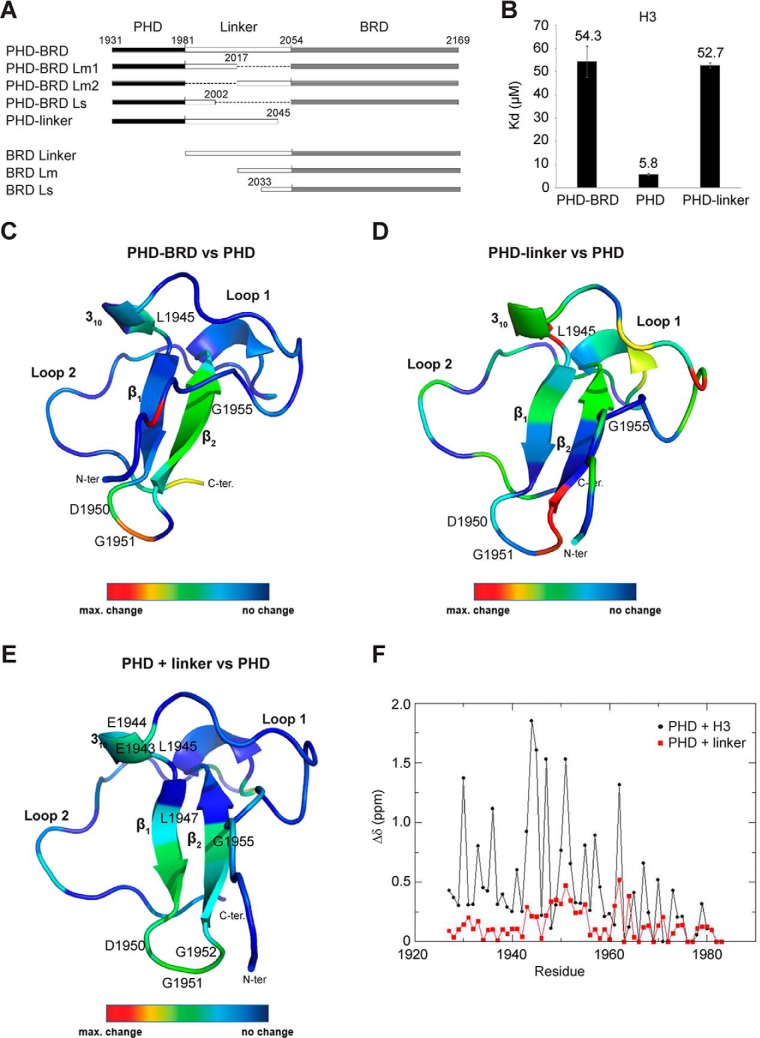
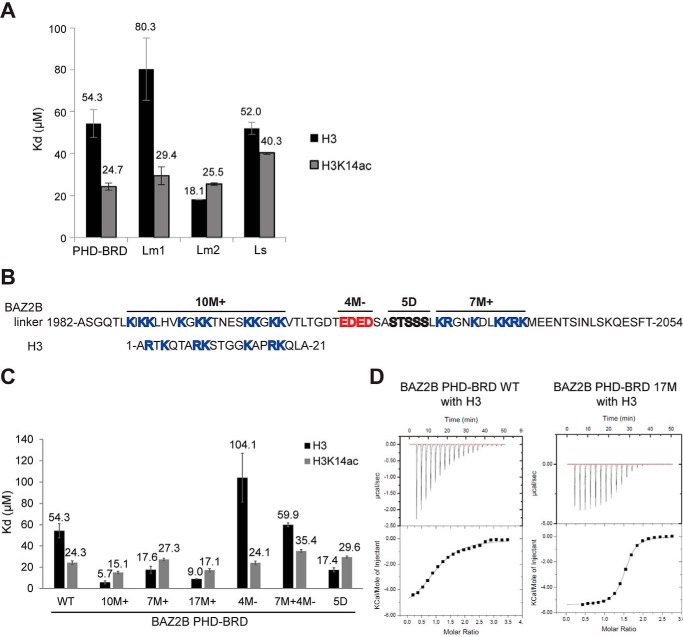
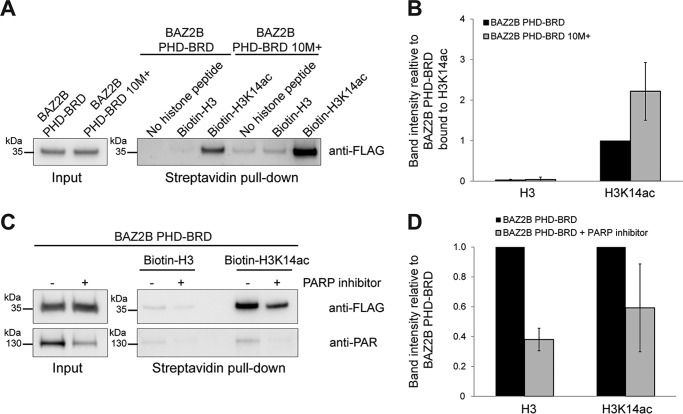
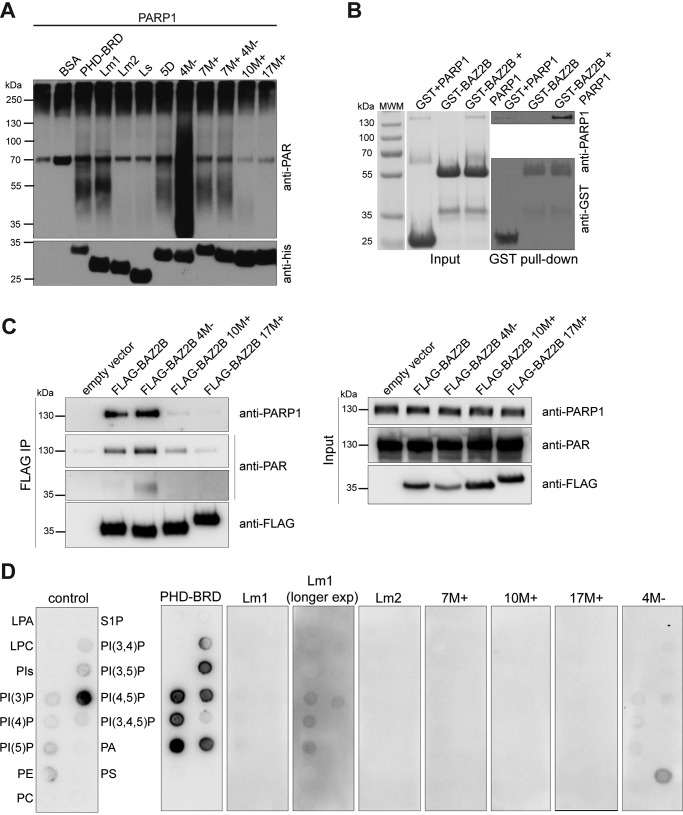
N-terminal histone tails are subject to many posttranslational modifications that are recognized by and interact with designated reader domains in histone-binding proteins. BROMO domain adjacent to zinc finger 2B (BAZ2B) is a multidomain histone-binding protein that contains two histone reader modules, a plant homeodomain (PHD) and a bromodomain (BRD), linked by a largely disordered linker. Although previous studies have reported specificity of the PHD domain for the unmodified N terminus of histone H3 and of the BRD domain for H3 acetylated at Lys (H3K14ac), the exact mode of H3 binding by BAZ2B and its regulation are underexplored. Here, using isothermal titration calorimetry and NMR spectroscopy, we report that acidic residues in the BAZ2B PHD domain are essential for H3 binding and that BAZ2B PHD-BRD establishes a polyvalent interaction with H3K14ac. Furthermore, we provide evidence that the disordered interdomain linker modulates the histone-binding affinity by interacting with the PHD domain. In particular, lysine-rich stretches in the linker, which resemble the positively charged N terminus of histone H3, reduce the binding affinity of the PHD finger toward the histone substrate. Phosphorylation, acetylation, or poly(ADP-ribosyl)ation of the linker residues may therefore act as a cellular mechanism to transiently tune BAZ2B histone-binding affinity. Our findings further support the concept of interdomain linkers serving a dual role in substrate binding by appropriately positioning the adjacent domains and by electrostatically modulating substrate binding. Moreover, inhibition of histone binding by a histone-mimicking interdomain linker represents another example of regulation of protein-protein interactions by intramolecular mimicry.
组蛋白的N端尾巴会经历多种翻译后修饰,这些修饰可被组蛋白结合蛋白中的特定读取结构域识别并与之相互作用。锌指2B相邻的溴结构域(BAZ2B)是一种多结构域组蛋白结合蛋白,它包含两个组蛋白读取模块,一个植物同源结构域(PHD)和一个溴结构域(BRD),由一个基本无序的连接子相连。尽管先前的研究报道了PHD结构域对组蛋白H3未修饰的N端具有特异性,以及BRD结构域对赖氨酸(H3K14ac)乙酰化的H3具有特异性,但BAZ2B与H3结合的确切模式及其调控尚未得到充分研究。在这里,我们使用等温滴定量热法和核磁共振光谱法,报告了BAZ2B PHD结构域中的酸性残基对于H3结合至关重要,并且BAZ2B PHD - BRD与H3K14ac建立了多价相互作用。此外,我们提供证据表明无序的结构域间连接子通过与PHD结构域相互作用来调节组蛋白结合亲和力。特别是,连接子中富含赖氨酸的片段类似于组蛋白H3带正电荷的N端,降低了PHD指对组蛋白底物的结合亲和力。因此,连接子残基的磷酸化、乙酰化或聚(ADP - 核糖基)化可能作为一种细胞机制来瞬时调节BAZ2B的组蛋白结合亲和力。我们的研究结果进一步支持了结构域间连接子在底物结合中发挥双重作用的概念,即通过适当地定位相邻结构域并通过静电调节底物结合。此外,组蛋白模拟的结构域间连接子对组蛋白结合的抑制代表了通过分子内模拟调节蛋白质 - 蛋白质相互作用的另一个例子。