Katti Prasanna, Thimmaya Divesh, Madan Aditi, Nongthomba Upendra
Department of Molecular Reproduction, Development and Genetics, Indian Institute of Science, Bangalore 560 012, India.
Department of Molecular Reproduction, Development and Genetics, Indian Institute of Science, Bangalore 560 012, India
G3 (Bethesda). 2017 Oct 5;7(10):3521-3531. doi: 10.1534/g3.117.300232.
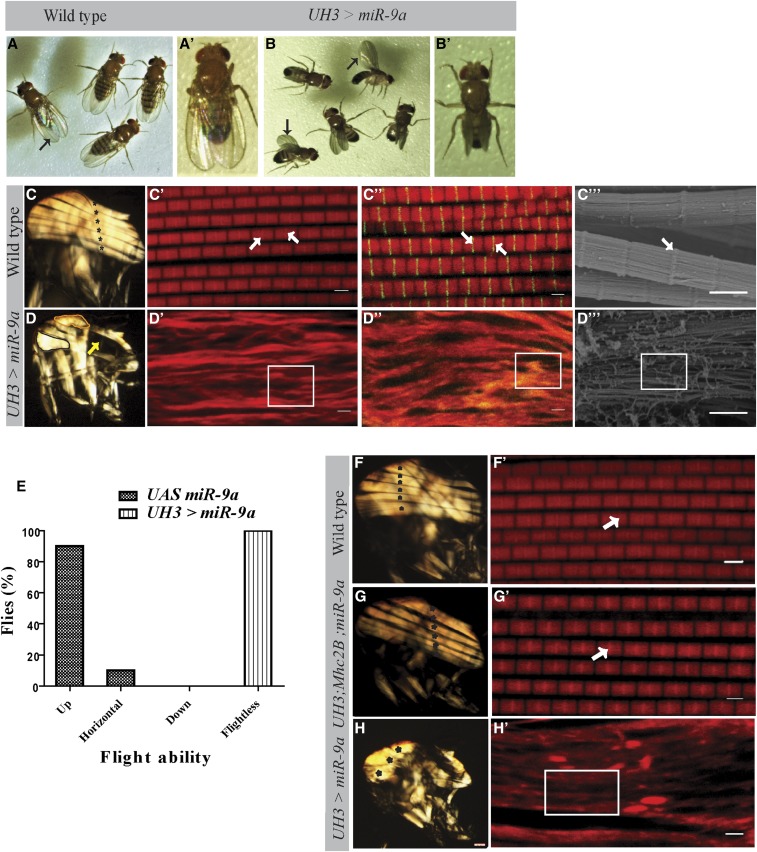
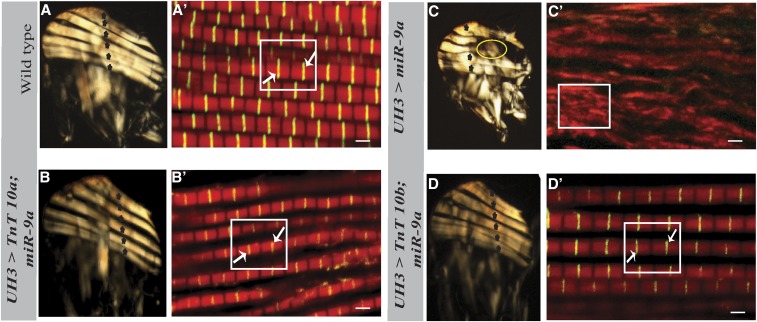
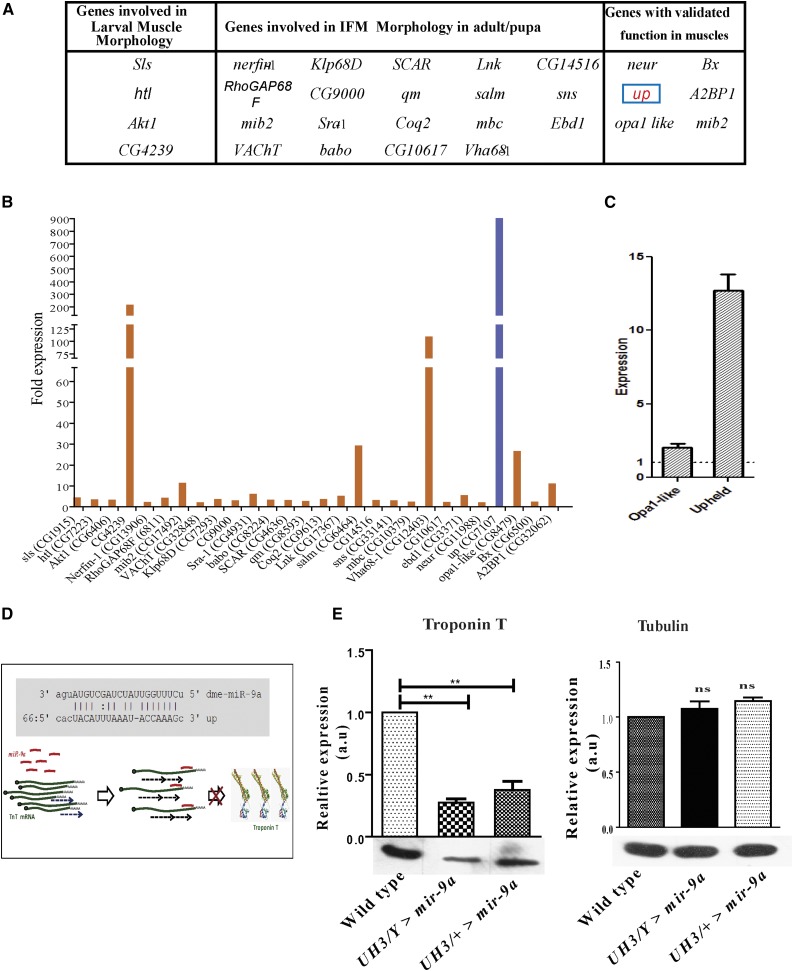
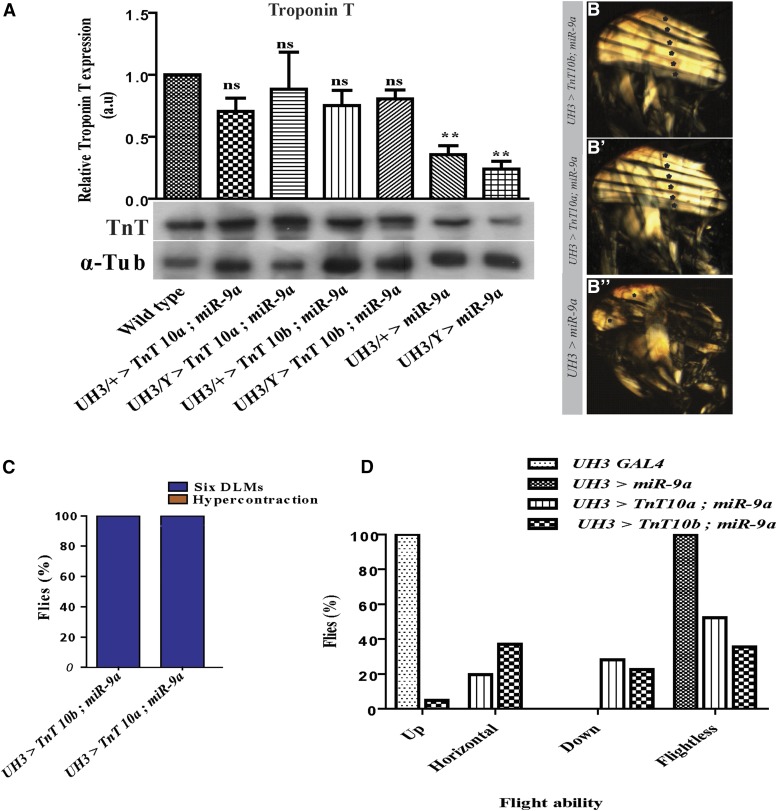
MicroRNAs (miRNAs) are small noncoding endogenous RNAs, typically 21-23 nucleotides long, that regulate gene expression, usually post-transcriptionally, by binding to the 3'-UTR of target mRNA, thus blocking translation. The expression of several miRNAs is significantly altered during cardiac hypertrophy, myocardial ischemia, fibrosis, heart failure, and other cardiac myopathies. Recent studies have implicated miRNA-9 (miR-9) in myocardial hypertrophy. However, a detailed mechanism remains obscure. In this study, we have addressed the roles of miR-9 in muscle development and function using a genetically tractable model system, the indirect flight muscles (IFMs) of Bioinformatics analysis identified 135 potential miR-9a targets, of which 27 genes were associated with muscle development. Troponin-T (TnT) was identified as major structural gene target of miR-9a. We show that flies overexpressing miR-9a in the IFMs have abnormal wing position and are flightless. These flies also exhibit a loss of muscle integrity and sarcomeric organization causing an abnormal muscle condition known as "hypercontraction." Additionally, miR-9a overexpression resulted in the reduction of TnT protein levels while transcript levels were unaffected. Furthermore, muscle abnormalities associated with miR-9a overexpression were completely rescued by overexpression of TnT transgenes which lacked the miR-9a binding site. These findings indicate that miR-9a interacts with the 3'-UTR of the TnT mRNA and downregulates the TnT protein levels by translational repression. The reduction in TnT levels leads to a cooperative downregulation of other thin filament structural proteins. Our findings have implications for understanding the cellular pathophysiology of cardiomyopathies associated with miR-9 overexpression.
微小RNA(miRNA)是一类小的非编码内源性RNA,通常长度为21 - 23个核苷酸,通过与靶mRNA的3'-非翻译区(3'-UTR)结合来调控基因表达,通常是在转录后水平,从而阻断翻译过程。在心脏肥大、心肌缺血、纤维化、心力衰竭及其他心肌病过程中,几种miRNA的表达会发生显著改变。最近的研究表明miRNA - 9(miR - 9)与心肌肥大有关。然而,其详细机制仍不清楚。在本研究中,我们利用一个遗传易处理的模型系统——果蝇的间接飞行肌(IFM),研究了miR - 9在肌肉发育和功能中的作用。生物信息学分析鉴定出135个潜在的miR - 9a靶标,其中27个基因与肌肉发育相关。肌钙蛋白T(TnT)被确定为miR - 9a的主要结构基因靶标。我们发现,在IFM中过表达miR - 9a的果蝇翅膀位置异常且无法飞行。这些果蝇还表现出肌肉完整性和肌节组织的丧失,导致一种称为“过度收缩”的异常肌肉状况。此外,miR - 9a过表达导致TnT蛋白水平降低,而转录水平不受影响。此外,通过过表达缺乏miR - 9a结合位点的TnT转基因,完全挽救了与miR - 9a过表达相关的肌肉异常。这些发现表明,miR - 9a与TnT mRNA的3'-UTR相互作用,并通过翻译抑制下调TnT蛋白水平。TnT水平的降低导致其他细肌丝结构蛋白的协同下调。我们的发现对于理解与miR - 9过表达相关的心肌病的细胞病理生理学具有重要意义。