CBSET Inc., 500 Shire Way, Lexington, MA, USA; IMES, MIT, 77 Massachusetts Avenue, Cambridge, MA, USA.
CBSET Inc., 500 Shire Way, Lexington, MA, USA; IMES, MIT, 77 Massachusetts Avenue, Cambridge, MA, USA.
J Control Release. 2017 Oct 28;264:203-210. doi: 10.1016/j.jconrel.2017.08.037. Epub 2017 Sep 1.
Calcific atherosclerosis is a major challenge to intraluminal drug delivery in peripheral artery disease (PAD).
We evaluated the effects of orbital atherectomy on intraluminal paclitaxel delivery to human peripheral arteries with substantial calcified plaque.
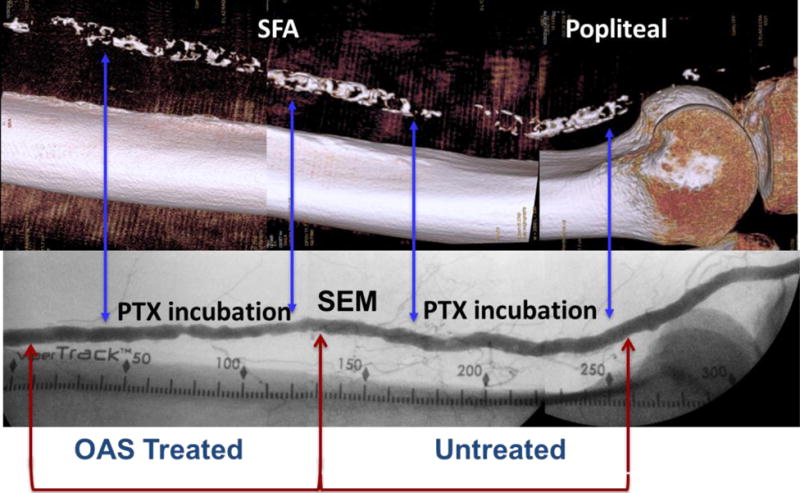
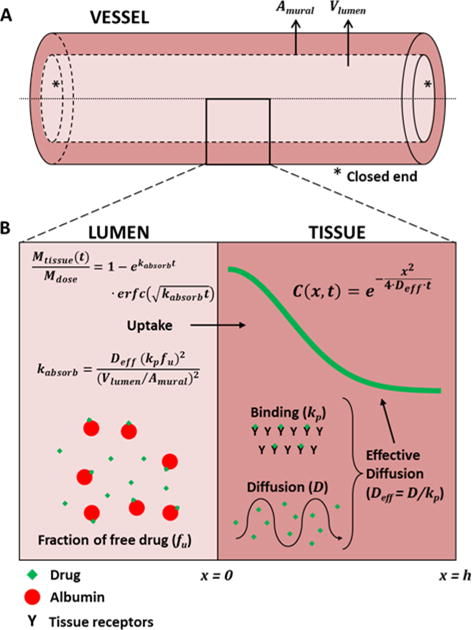
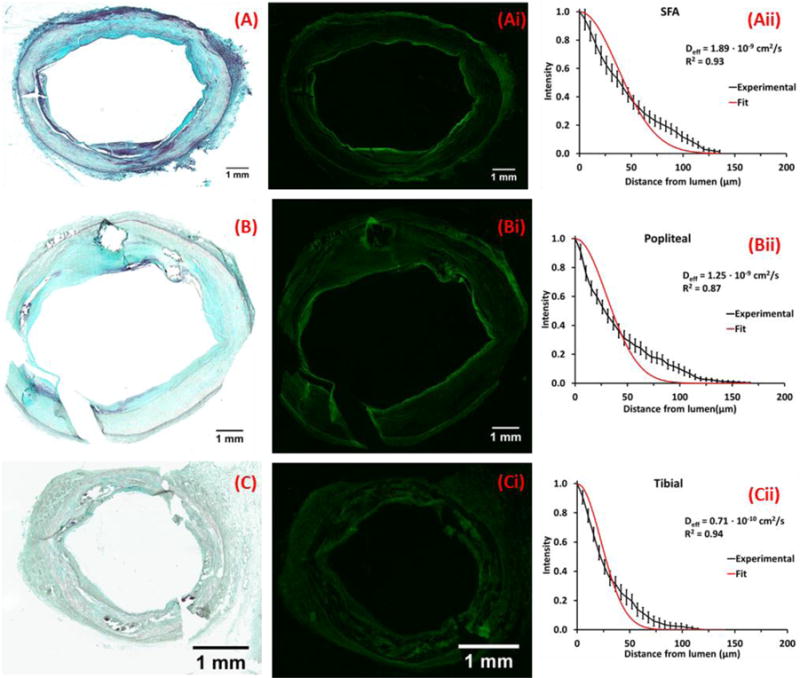
Diagnostic angiography and 3-D rotational imaging of five fresh human lower limbs revealed calcification in all main arteries. The proximal or distal segment of each artery was treated using an orbital atherectomy system (OAS) under simulated blood flow and fluoroscopy. Explanted arterial segments underwent either histomorphometric assessment of effect or tracking of C-labeled or fluorescent-labeled paclitaxel. Radiolabeled drug quantified bulk delivery and fluorescent label established penetration of drug over finer spatial domain in serial microscopic sections. Results were interpreted using a mathematical model of binding-diffusion mediated arterial drug distribution.
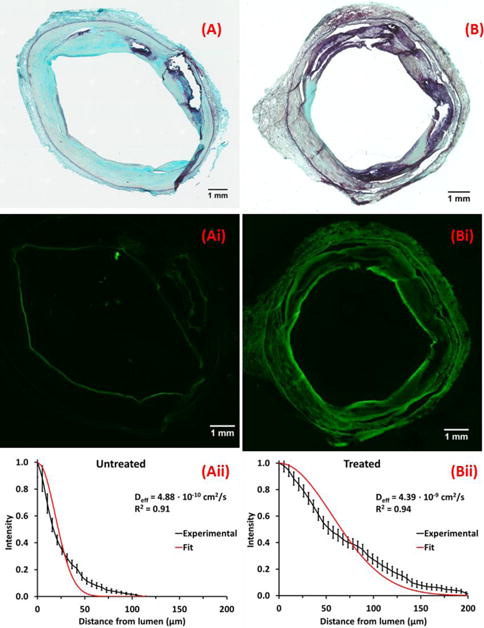
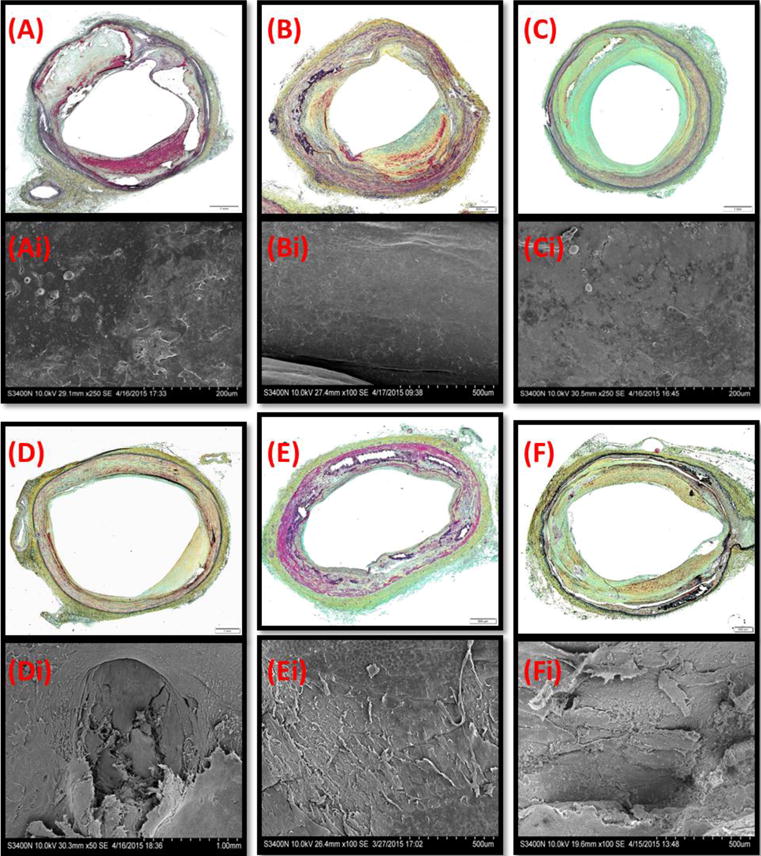
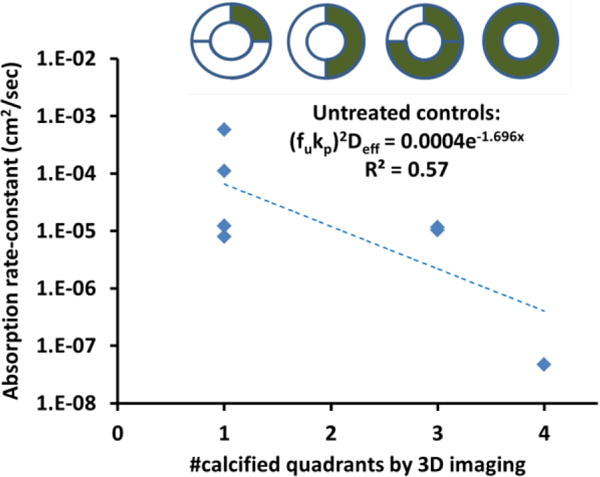
Lesion composition affected paclitaxel absorption and distribution in cadaveric human peripheral arteries. Pretreatment imaging calcium scores in control femoropopliteal arterial segments correlated with a log-linear decline in the bulk absorption rate-constant of C-labeled, declining 5.5-fold per calcified quadrant (p=0.05, n=7). Compared to controls, OAS-treated femoropopliteal segments exhibited 180μm thinner intima (p<0.001), 45% less plaque calcification, and 2 log orders higher paclitaxel bulk absorption rate-constants. Correspondingly, fluorescent paclitaxel penetrated deeper in OAS-treated femoropopliteal segments compared to controls, due to a 70% increase in diffusivity (p<0.001).
These data illustrate that calcified plaque limited intravascular drug delivery, and controlled OAS treatment of calcific plaques resulted in greater drug permeability and improved adjunct drug delivery to diseased arteries.
钙化动脉粥样硬化是外周动脉疾病(PAD)腔内药物输送的主要挑战。
我们评估了轨道旋切术对富含钙化斑块的人类外周动脉腔内紫杉醇输送的影响。
对 5 个新鲜人体下肢的诊断性血管造影和 3-D 旋转成像显示所有主要动脉均有钙化。在模拟血流和透视下,使用轨道旋切系统(OAS)对每个动脉的近端或远端节段进行治疗。离体动脉节段接受 C 标记或荧光标记的紫杉醇的组织形态计量学评估或跟踪。放射性标记药物定量了 bulk delivery,荧光标记则在连续的显微镜切片中建立了药物在更精细的空间域中的渗透。结果使用结合扩散介导的动脉药物分布的数学模型进行解释。
病变成分影响了尸体人类外周动脉中紫杉醇的吸收和分布。在对照股腘动脉节段的预处理成像钙评分与 C 标记的 bulk absorption rate-constant 的对数线性下降相关,每钙化象限下降 5.5 倍(p=0.05,n=7)。与对照组相比,OAS 处理的股腘动脉段的内膜薄 180μm(p<0.001),斑块钙化减少 45%,紫杉醇 bulk absorption rate-constants 高 2 个对数级。相应地,与对照组相比,OAS 处理的股腘动脉段中的荧光紫杉醇渗透更深,因为扩散率增加了 70%(p<0.001)。
这些数据表明,钙化斑块限制了血管内药物输送,而钙化斑块的受控 OAS 处理导致药物渗透性增加,并改善了患病动脉的辅助药物输送。