Romanenko Svetlana A, Serdyukova Natalya A, Perelman Polina L, Pavlova Svetlana V, Bulatova Nina S, Golenishchev Feodor N, Stanyon Roscoe, Graphodatsky Alexander S
Institute of Molecular and Cellular Biology, Siberian Branch of the Russian Academy of Sciences, 630090 Novosibirsk, Russia.
Synthetic Biological Unit, Novosibirsk State University, 630090 Novosibirsk, Russia.
Genes (Basel). 2017 Aug 30;8(9):215. doi: 10.3390/genes8090215.
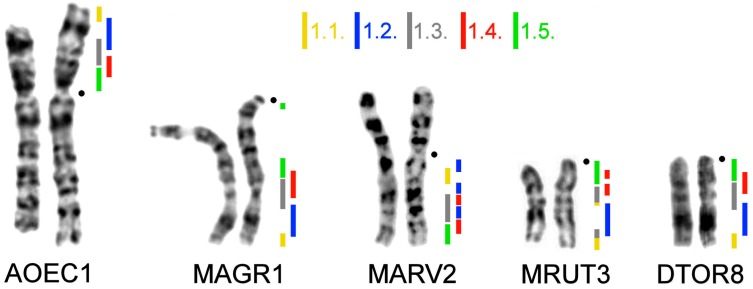
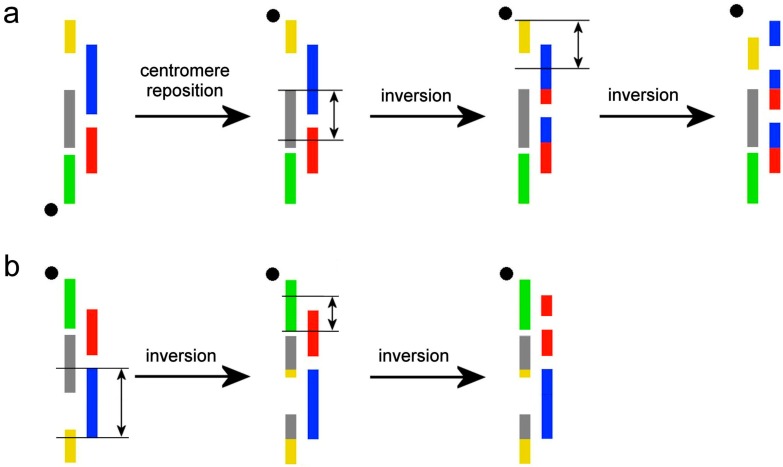
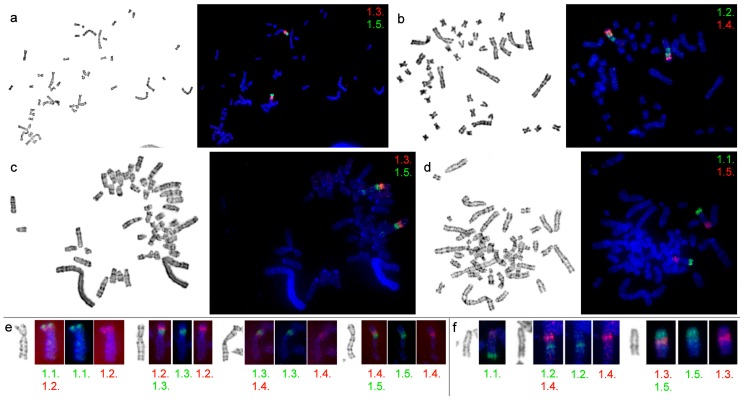
It has long been hypothesized that chromosomal rearrangements play a central role in different evolutionary processes, particularly in speciation and adaptation. Interchromosomal rearrangements have been extensively mapped using chromosome painting. However, intrachromosomal rearrangements have only been described using molecular cytogenetics in a limited number of mammals, including a few rodent species. This situation is unfortunate because intrachromosomal rearrangements are more abundant than interchromosomal rearrangements and probably contain essential phylogenomic information. Significant progress in the detection of intrachromosomal rearrangement is now possible, due to recent advances in molecular biology and bioinformatics. We investigated the level of intrachromosomal rearrangement in the Arvicolinae subfamily, a species-rich taxon characterized by very high rate of karyotype evolution. We made a set of region specific probes by microdissection for a single syntenic region represented by the p-arm of chromosome 1 of , and hybridized the probes onto the chromosomes of four arvicolines (, , , and ). These experiments allowed us to show the intrachromosomal rearrangements in the subfamily at a significantly higher level of resolution than previously described. We found a number of paracentric inversions in the karyotypes of and , as well as multiple inversions and a centromere shift in the karyotype of . We propose that during karyotype evolution, arvicolines underwent a significant number of complex intrachromosomal rearrangements that were not previously detected.
长期以来,人们一直假设染色体重排在不同的进化过程中起着核心作用,尤其是在物种形成和适应过程中。染色体间重排已通过染色体涂染技术进行了广泛的图谱绘制。然而,仅在包括少数啮齿动物物种在内的有限数量的哺乳动物中,使用分子细胞遗传学描述了染色体内重排。这种情况令人遗憾,因为染色体内重排比染色体间重排更为丰富,并且可能包含重要的系统发育基因组信息。由于分子生物学和生物信息学的最新进展,现在在检测染色体内重排方面取得重大进展成为可能。我们研究了田鼠亚科的染色体内重排水平,该亚科是一个物种丰富的分类群,其核型进化速率非常高。我们通过显微切割为以[具体物种]1号染色体p臂代表的单个同线区域制作了一组区域特异性探针,并将这些探针与四种田鼠([具体物种1]、[具体物种2]、[具体物种3]和[具体物种4])的染色体杂交。这些实验使我们能够以比先前描述的显著更高的分辨率显示该亚科中的染色体内重排。我们在[具体物种1]和[具体物种2]的核型中发现了一些臂内倒位,以及在[具体物种3]的核型中发现了多个倒位和一次着丝粒移位。我们提出,在核型进化过程中,田鼠经历了大量以前未检测到的复杂染色体内重排。