Department of Radiology and Radiological Sciences, Johns Hopkins University, School of Medicine, Baltimore, MD, USA.
Department of Pathology, University Medical Center Utrecht, Utrecht, The Netherlands.
Oncogene. 2018 Jan 4;37(1):63-74. doi: 10.1038/onc.2017.308. Epub 2017 Sep 4.
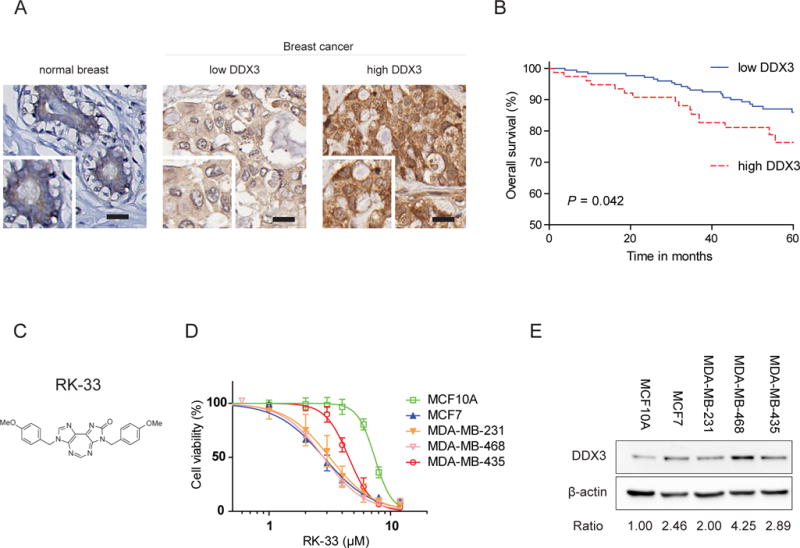
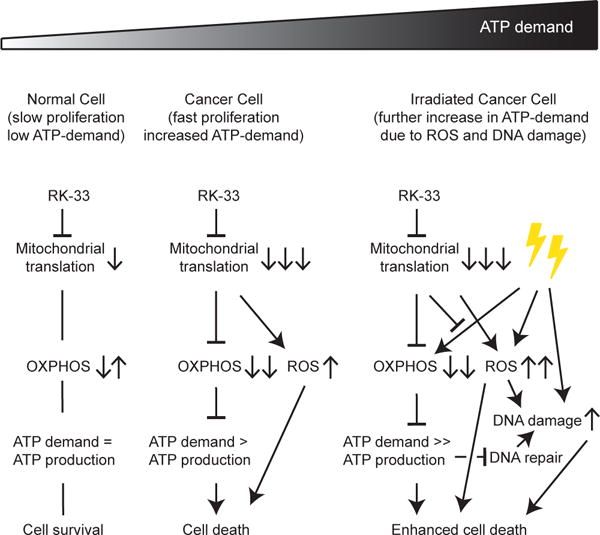
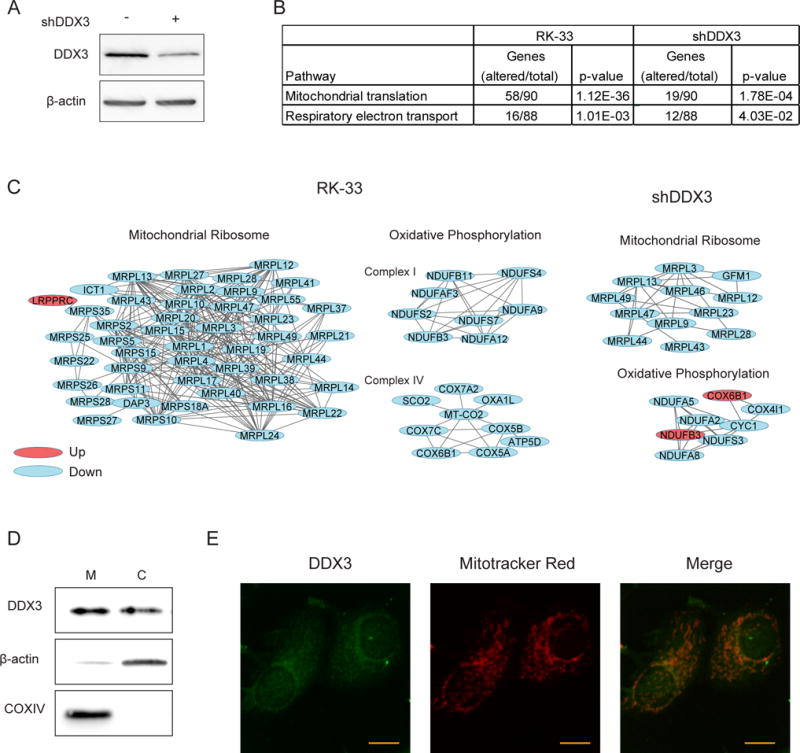
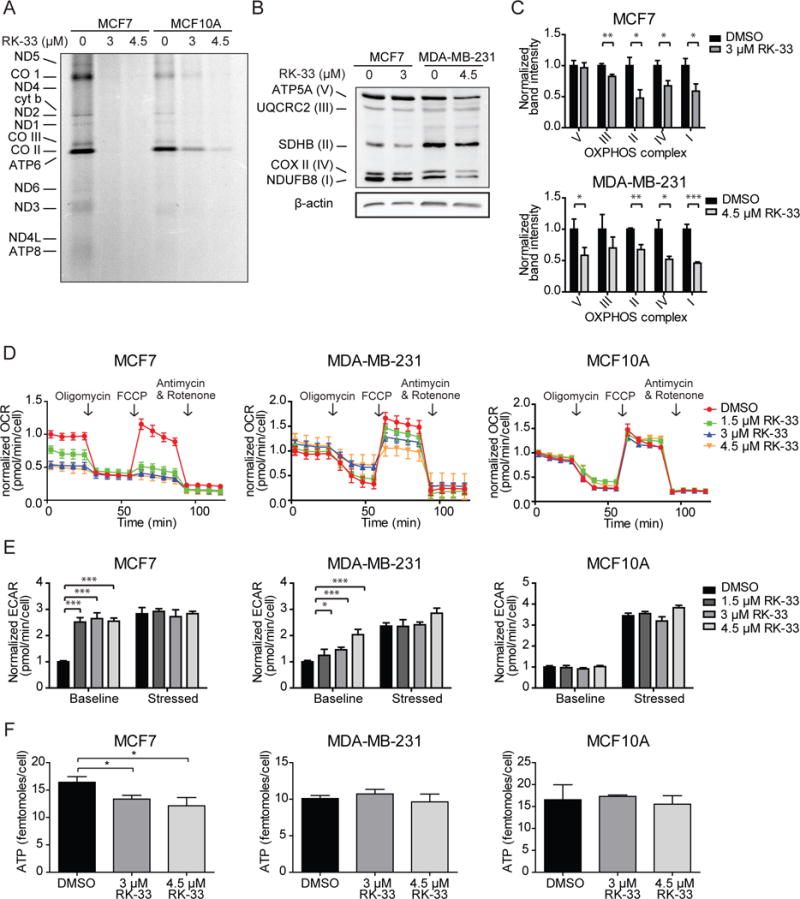
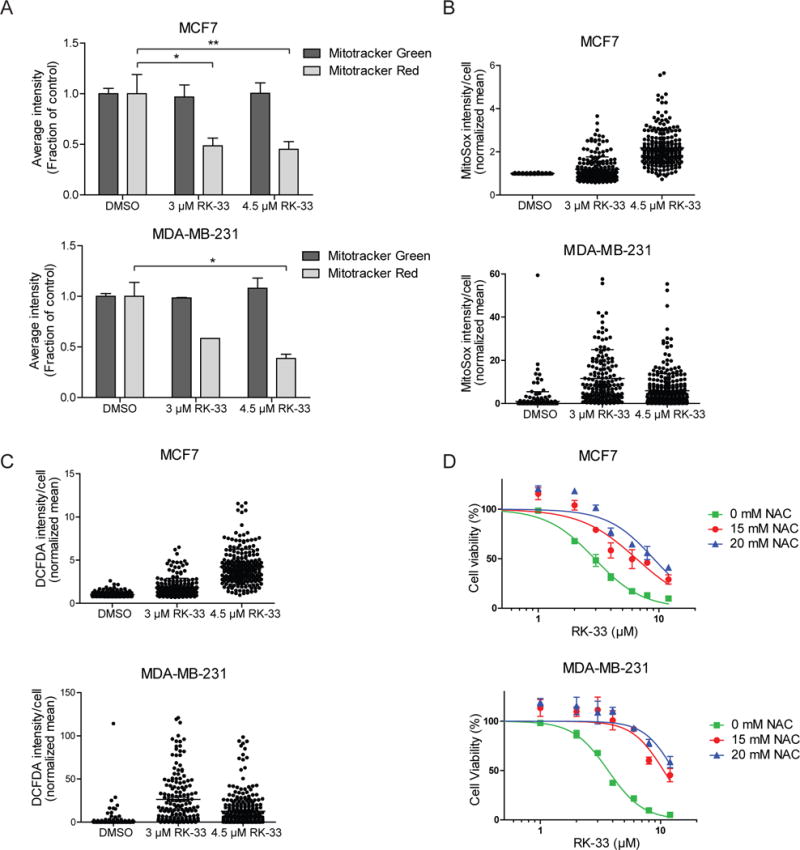
DDX3 is a DEAD box RNA helicase with oncogenic properties. RK-33 is developed as a small-molecule inhibitor of DDX3 and showed potent radiosensitizing activity in preclinical tumor models. This study aimed to assess DDX3 as a target in breast cancer and to elucidate how RK-33 exerts its anti-neoplastic effects. High DDX3 expression was present in 35% of breast cancer patient samples and correlated with markers of aggressiveness and shorter survival. With a quantitative proteomics approach, we identified proteins involved in the mitochondrial translation and respiratory electron transport pathways to be significantly downregulated after RK-33 or DDX3 knockdown. DDX3 localized to the mitochondria and DDX3 inhibition with RK-33 reduced mitochondrial translation. As a consequence, oxygen consumption rates and intracellular ATP concentrations decreased and reactive oxygen species (ROS) increased. RK-33 antagonized the increase in oxygen consumption and ATP production observed after exposure to ionizing radiation and reduced DNA repair. Overall, we conclude that DDX3 inhibition with RK-33 causes radiosensitization in breast cancer through inhibition of mitochondrial translation, which results in reduced oxidative phosphorylation capacity and increased ROS levels, culminating in a bioenergetic catastrophe.
DDX3 是一种具有致癌特性的 DEAD 盒 RNA 解旋酶。RK-33 被开发为 DDX3 的小分子抑制剂,在临床前肿瘤模型中表现出很强的放射增敏活性。本研究旨在评估 DDX3 在乳腺癌中的靶标,并阐明 RK-33 如何发挥其抗肿瘤作用。35%的乳腺癌患者样本中存在高表达的 DDX3,与侵袭性标志物和较短的生存期相关。通过定量蛋白质组学方法,我们发现 RK-33 或 DDX3 敲低后,线粒体翻译和呼吸电子传递途径中的蛋白质显著下调。DDX3 定位于线粒体,RK-33 抑制 DDX3 可减少线粒体翻译。结果,耗氧量和细胞内 ATP 浓度降低,活性氧 (ROS) 增加。RK-33 拮抗了电离辐射暴露后观察到的耗氧量和 ATP 产生的增加,并减少了 DNA 修复。总的来说,我们得出结论,RK-33 抑制 DDX3 通过抑制线粒体翻译导致乳腺癌放射增敏,从而降低氧化磷酸化能力并增加 ROS 水平,最终导致生物能量灾难。