Bol Guus M, Vesuna Farhad, Xie Min, Zeng Jing, Aziz Khaled, Gandhi Nishant, Levine Anne, Irving Ashley, Korz Dorian, Tantravedi Saritha, Heerma van Voss Marise R, Gabrielson Kathleen, Bordt Evan A, Polster Brian M, Cope Leslie, van der Groep Petra, Kondaskar Atul, Rudek Michelle A, Hosmane Ramachandra S, van der Wall Elsken, van Diest Paul J, Tran Phuoc T, Raman Venu
Department of Radiology and Radiological Science, Johns Hopkins University School of Medicine, Baltimore, MD, USA Department of Pathology, University Medical Center Utrecht, Utrecht, The Netherlands.
Department of Radiology and Radiological Science, Johns Hopkins University School of Medicine, Baltimore, MD, USA.
EMBO Mol Med. 2015 May;7(5):648-69. doi: 10.15252/emmm.201404368.
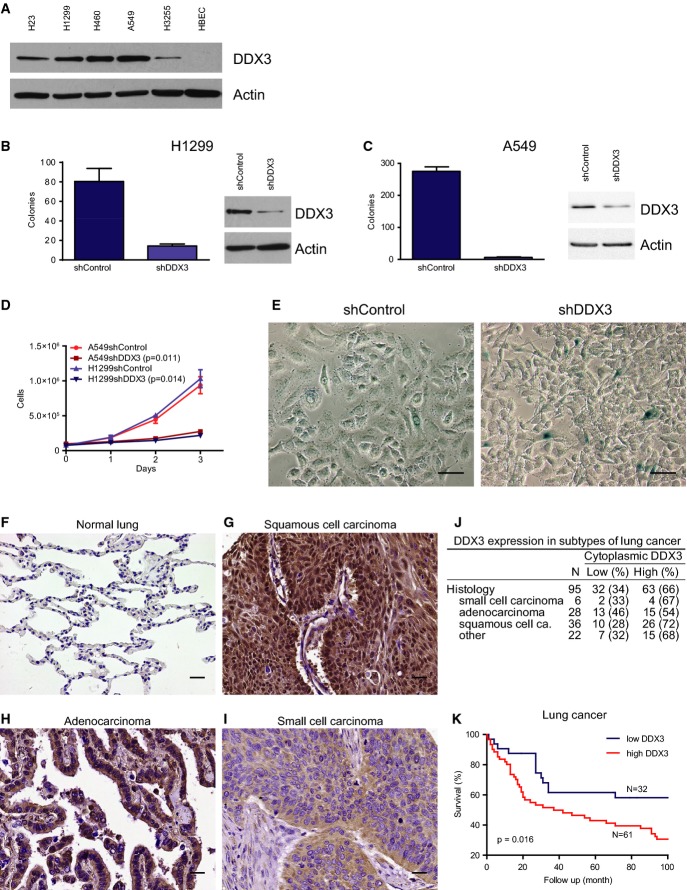
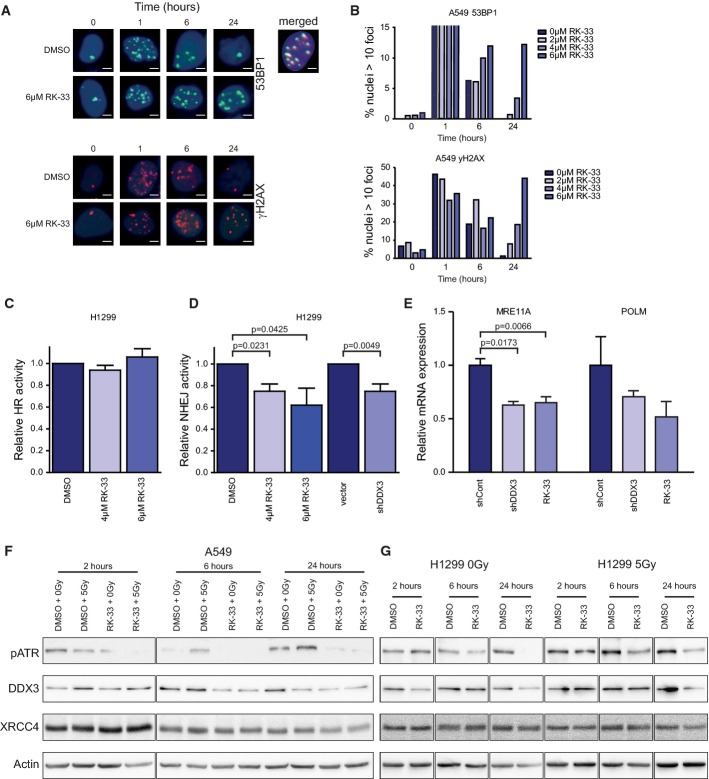
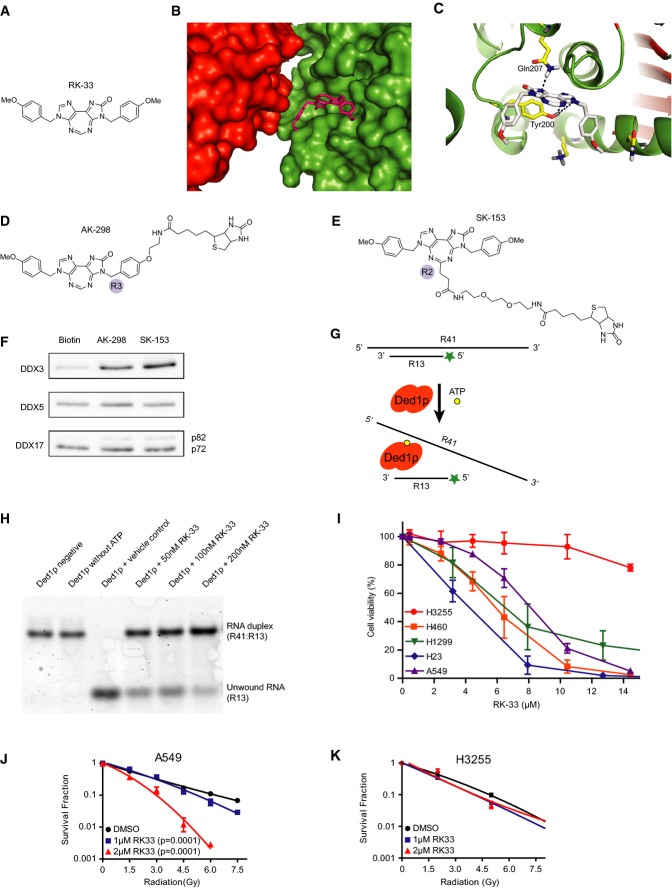
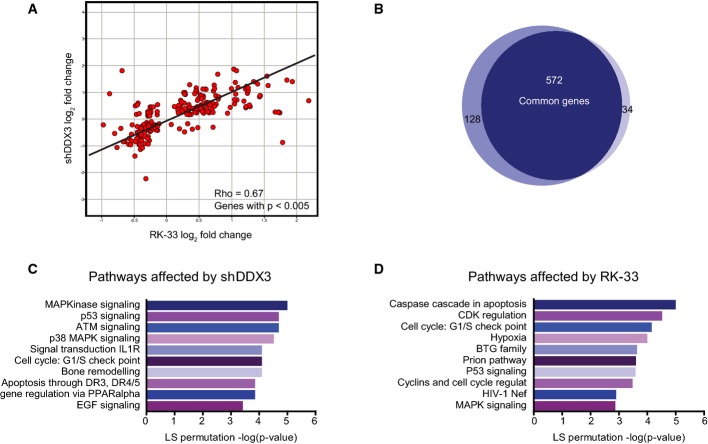
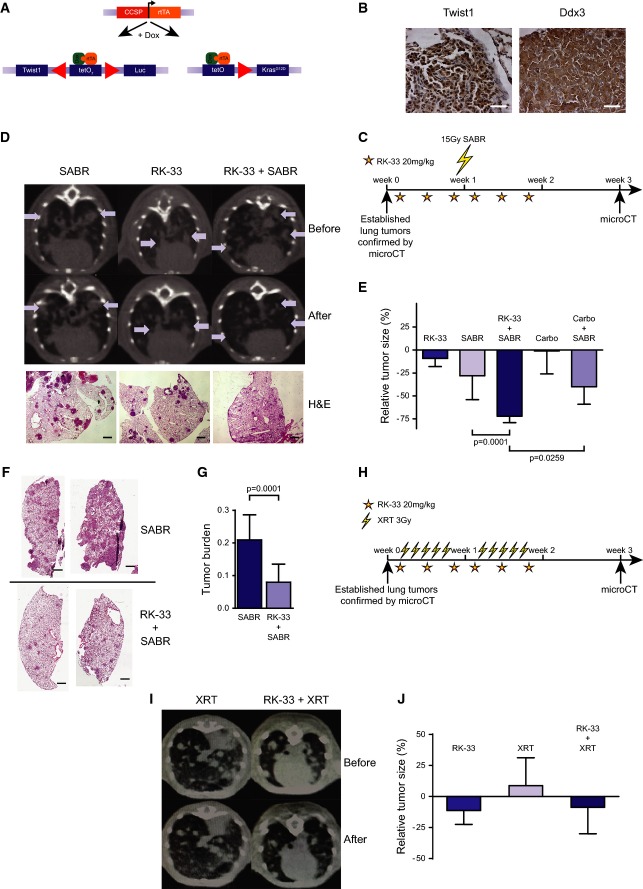
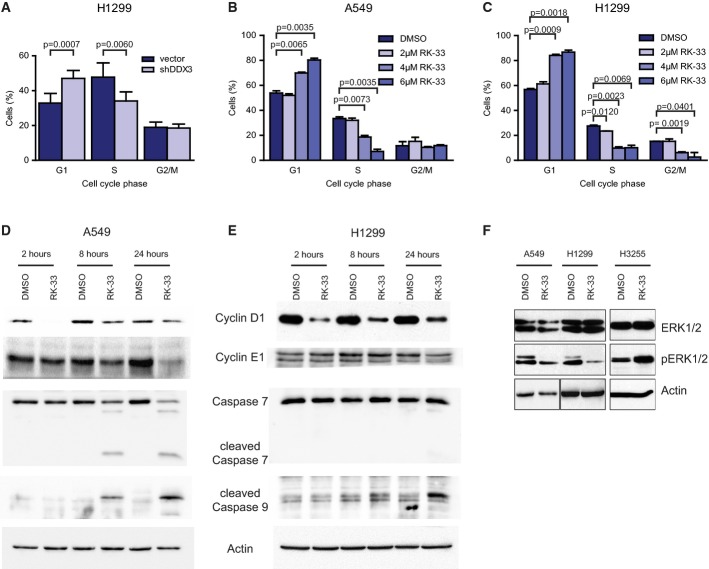
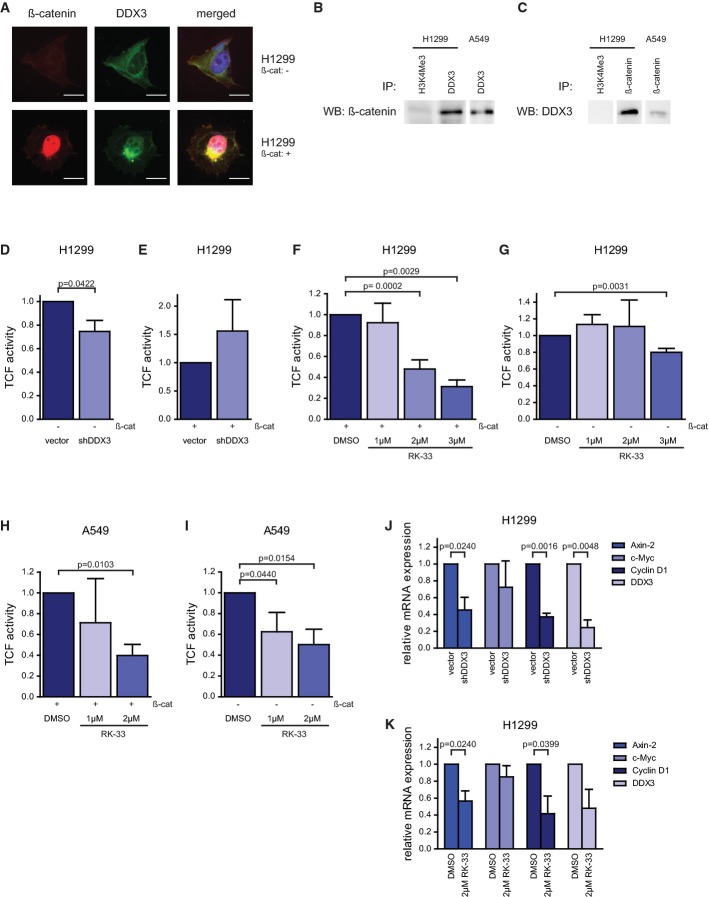
Lung cancer is the most common malignancy worldwide and is a focus for developing targeted therapies due to its refractory nature to current treatment. We identified a RNA helicase, DDX3, which is overexpressed in many cancer types including lung cancer and is associated with lower survival in lung cancer patients. We designed a first-in-class small molecule inhibitor, RK-33, which binds to DDX3 and abrogates its activity. Inhibition of DDX3 by RK-33 caused G1 cell cycle arrest, induced apoptosis, and promoted radiation sensitization in DDX3-overexpressing cells. Importantly, RK-33 in combination with radiation induced tumor regression in multiple mouse models of lung cancer. Mechanistically, loss of DDX3 function either by shRNA or by RK-33 impaired Wnt signaling through disruption of the DDX3-β-catenin axis and inhibited non-homologous end joining-the major DNA repair pathway in mammalian somatic cells. Overall, inhibition of DDX3 by RK-33 promotes tumor regression, thus providing a compelling argument to develop DDX3 inhibitors for lung cancer therapy.
肺癌是全球最常见的恶性肿瘤,由于其对当前治疗具有难治性,因此成为开发靶向治疗的重点。我们鉴定出一种RNA解旋酶DDX3,它在包括肺癌在内的多种癌症类型中均过度表达,并且与肺癌患者的低生存率相关。我们设计了一种一流的小分子抑制剂RK-33,它与DDX3结合并消除其活性。RK-33对DDX3的抑制导致G1期细胞周期停滞,诱导细胞凋亡,并在DDX3过表达的细胞中促进放射增敏作用。重要的是,RK-33与放射联合使用可在多种肺癌小鼠模型中诱导肿瘤消退。从机制上讲,通过shRNA或RK-33使DDX3功能丧失会通过破坏DDX3-β-连环蛋白轴而损害Wnt信号传导,并抑制非同源末端连接(哺乳动物体细胞中的主要DNA修复途径)。总体而言,RK-33对DDX3的抑制促进肿瘤消退,因此为开发用于肺癌治疗的DDX3抑制剂提供了令人信服的理由。