School of Pharmaceutical Sciences, Tsinghua University, 100084, Beijing, China.
School of Life Sciences, Tsinghua University, Beijing, China.
Arch Toxicol. 2018 Jan;92(1):469-485. doi: 10.1007/s00204-017-2048-0. Epub 2017 Sep 4.
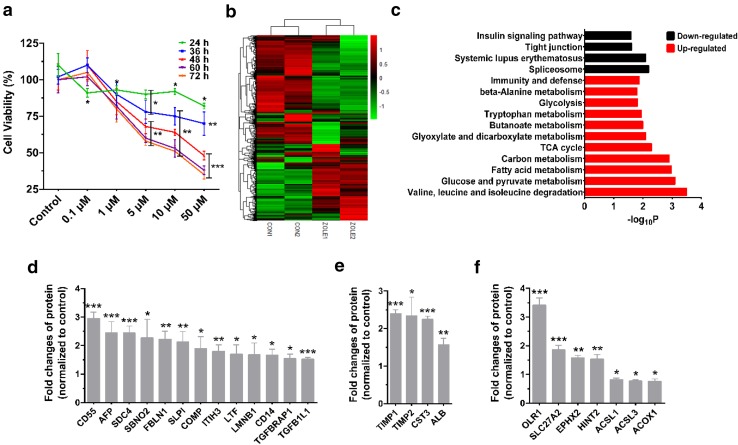
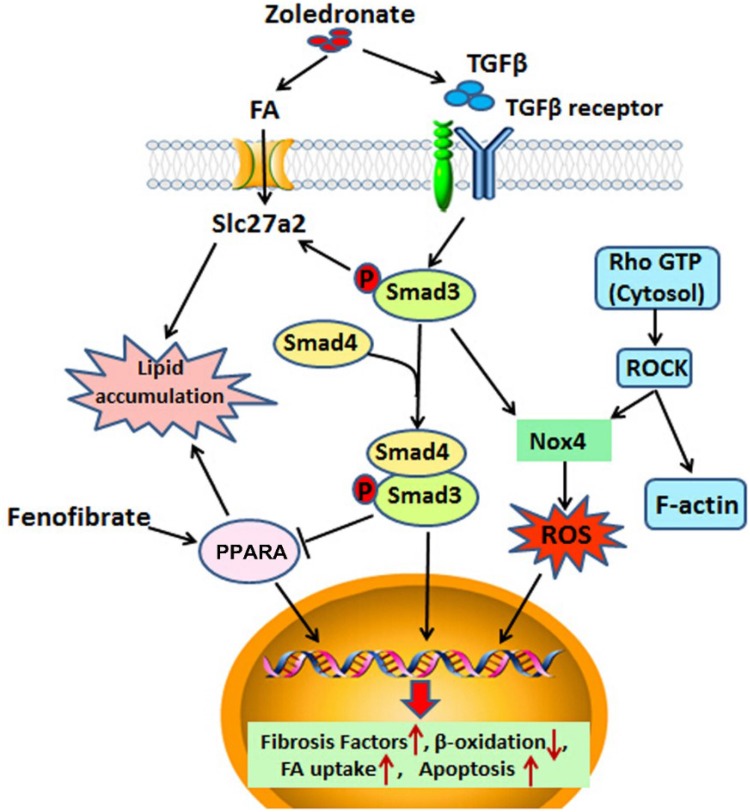
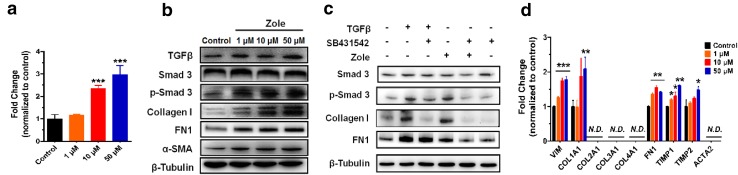
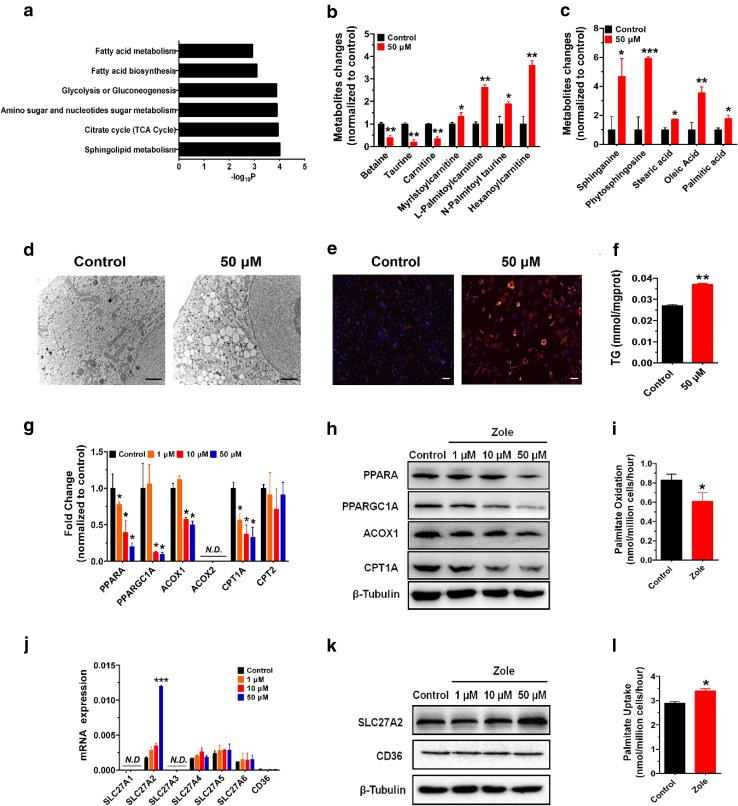
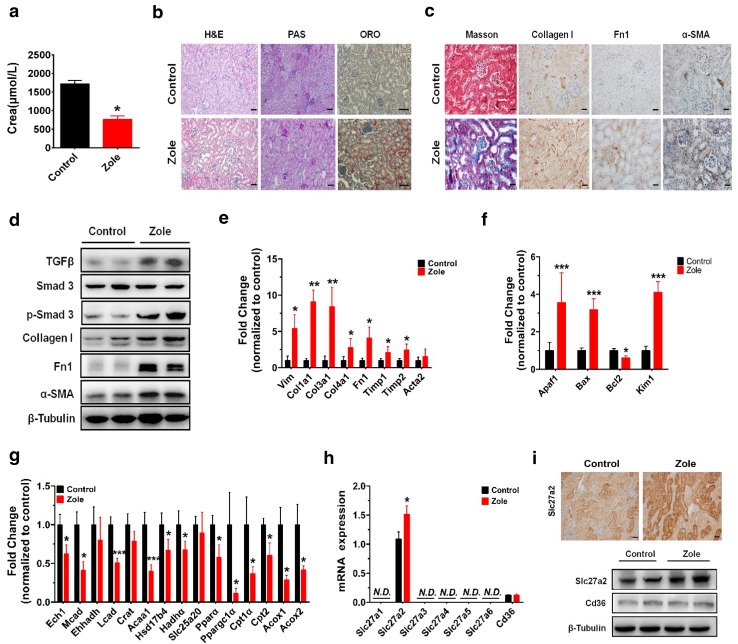
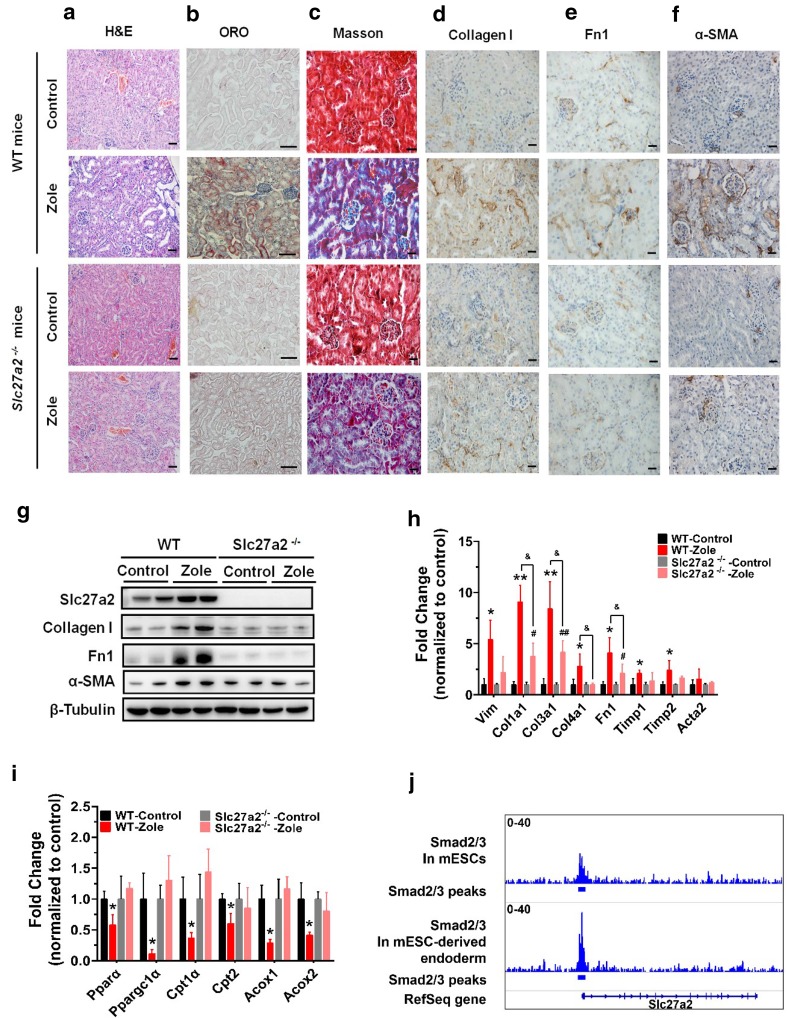
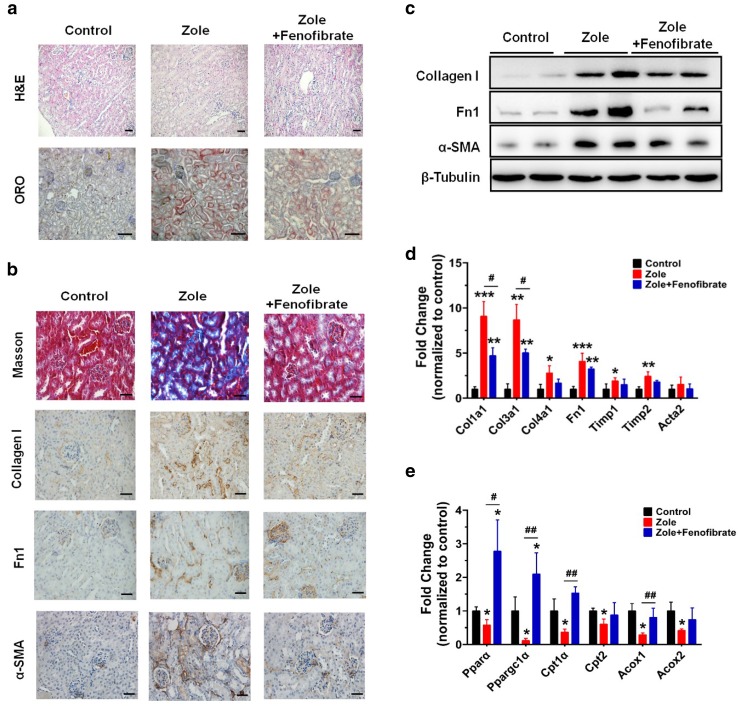
Zoledronate is a bisphosphonate that is widely used in the treatment of metabolic bone diseases. However, zoledronate induces significant nephrotoxicity associated with acute tubular necrosis and renal fibrosis when administered intravenously. There is speculation that zoledronate-induced nephrotoxicity may result from its pharmacological activity as an inhibitor of the mevalonate pathway but the molecular mechanisms are not fully understood. In this report, human proximal tubular HK-2 cells and mouse models were combined to dissect the molecular pathways underlying nephropathy caused by zoledronate treatments. Metabolomic and proteomic assays revealed that multiple cellular processes were significantly disrupted, including the TGFβ pathway, fatty acid metabolism and small GTPase signaling in zoledronate-treated HK-2 cells (50 μM) as compared with those in controls. Zoledronate treatments in cells (50 μM) and mice (3 mg/kg) increased TGFβ/Smad3 pathway activation to induce fibrosis and kidney injury, and specifically elevated lipid accumulation and expression of fibrotic proteins. Conversely, fatty acid transport protein Slc27a2 deficiency or co-administration of PPARA agonist fenofibrate (20 mg/kg) prevented zoledronate-induced lipid accumulation and kidney fibrosis in mice, indicating that over-expression of fatty acid transporter SLC27A2 and defective fatty acid β-oxidation following zoledronate treatments were significant factors contributing to its nephrotoxicity. These pharmacological and genetic studies provide an important mechanistic insight into zoledronate-associated kidney toxicity that will aid in development of therapeutic prevention and treatment options for this nephropathy.
唑来膦酸是一种广泛用于治疗代谢性骨病的双膦酸盐。然而,唑来膦酸静脉给药时会引起明显的肾毒性,与急性肾小管坏死和肾纤维化有关。有人推测,唑来膦酸引起的肾毒性可能与其作为法呢醇途径抑制剂的药理学活性有关,但分子机制尚不完全清楚。在本报告中,我们将人近端肾小管 HK-2 细胞和小鼠模型相结合,以剖析唑来膦酸治疗引起的肾病的分子途径。代谢组学和蛋白质组学分析表明,与对照组相比,唑来膦酸处理的 HK-2 细胞(50 μM)中多个细胞过程受到显著破坏,包括 TGFβ 途径、脂肪酸代谢和小 GTPase 信号转导。与对照组相比,细胞(50 μM)和小鼠(3 mg/kg)中唑来膦酸处理增加了 TGFβ/Smad3 途径的激活,从而诱导纤维化和肾损伤,并特异性地上调了脂质积累和纤维化蛋白的表达。相反,脂肪酸转运蛋白 Slc27a2 缺失或同时给予 PPARA 激动剂非诺贝特(20 mg/kg)可预防小鼠唑来膦酸引起的脂质积累和肾纤维化,表明唑来膦酸处理后脂肪酸转运蛋白 SLC27A2 的过度表达和脂肪酸β-氧化缺陷是其肾毒性的重要因素。这些药理学和遗传学研究为唑来膦酸相关肾毒性提供了重要的机制见解,有助于开发治疗这种肾病的预防和治疗选择。