University of Kansas Cancer Center, 2330 Shawnee Mission Parkway, Westwood, KS, 66205, USA.
Duke University School of Nursing and The Preston Robert Tisch Brain Tumor Center, Duke Cancer Institute, Durham, NC, USA.
Support Care Cancer. 2018 Feb;26(2):557-564. doi: 10.1007/s00520-017-3866-6. Epub 2017 Sep 4.
Chemotherapy-induced nausea and vomiting (CINV) can be prevented in most patients with use of guideline-recommended antiemetic regimens. However, studies have suggested that adherence to antiemetic guidelines is suboptimal. Oncology nurses, as part of a multidisciplinary team, can help promote appropriate antiemetic prophylaxis. Therefore, nurses were surveyed to assess antiemetic guideline awareness and practice patterns of antiemetic use, determine adherence to guideline recommendations, and query barriers to adherence.
In September 2015, 531 US-based oncology nurses participated in an online survey administered and analyzed by ONS:Edge.
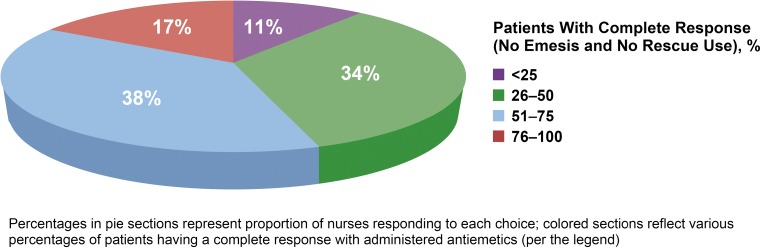
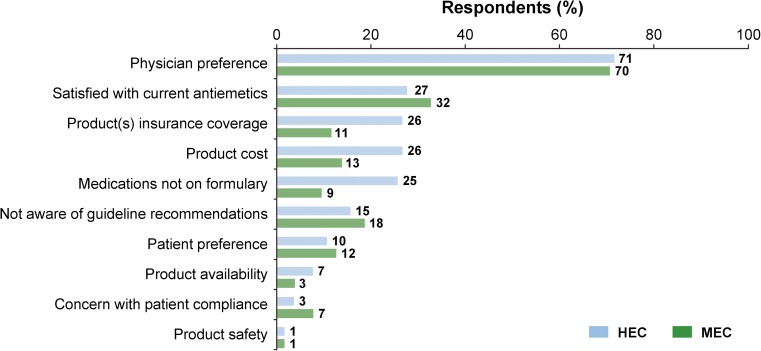
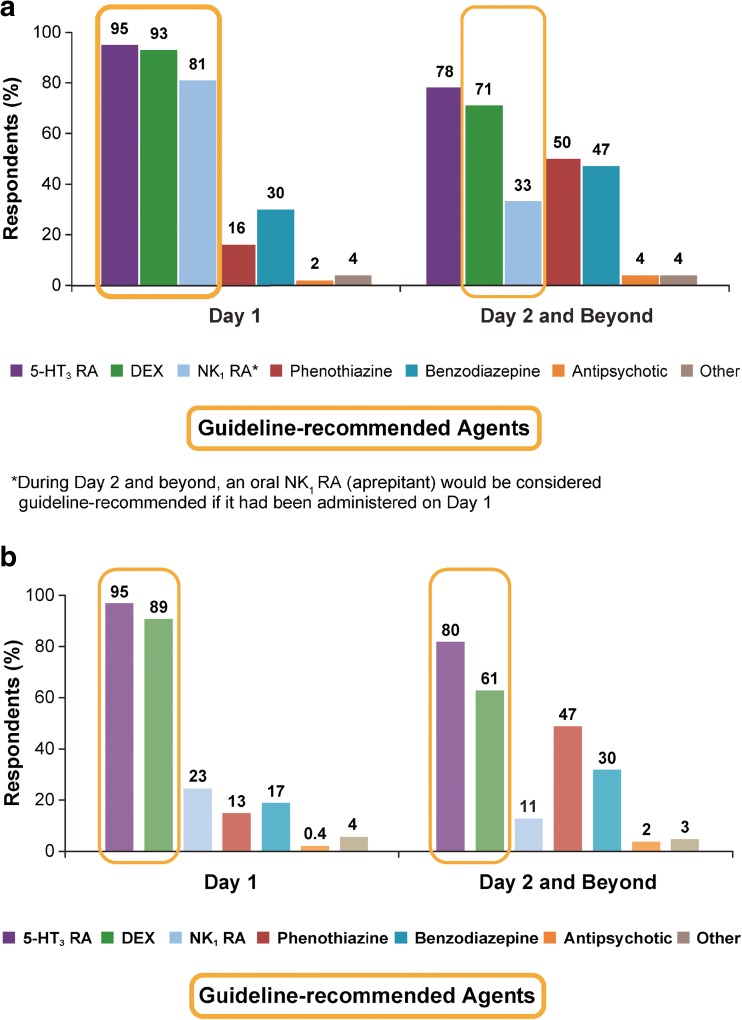
Nurses were most familiar with National Comprehensive Cancer Network (73%) and American Society of Clinical Oncology (48%) antiemetic guidelines. While most (77%) felt that antiemetics prescribed were consistent with guideline recommendations, practice patterns of antiemetic use revealed low adherence to those guidelines, particularly during the delayed (25-120 h) phase following highly emetogenic chemotherapy, where only 25% of nurses reported administration of guideline-recommended agents. Overutilization of phenothiazines and benzodiazepines was common. Only 17% of respondents reported that most (> 75%) of their patients have CINV optimally controlled; 39% reported between 6 and 20% of patients have an alteration in their chemotherapy due to CINV, and reports of emergency department/hospital visits due to poorly controlled CINV were high. The predominant barrier interfering guideline-recommended antiemetic prophylaxis was reported as physician preference (71%).
This survey revealed an opportunity to increase awareness of antiemetic guidelines and a critical need to address barriers interfering with utilization of guideline-recommended antiemetic agents in order to optimize CINV control for patients undergoing emetogenic chemotherapy.
采用指南推荐的止吐方案可预防多数化疗所致恶心呕吐(CINV)。然而,多项研究显示,止吐指南的依从性并不理想。肿瘤护士作为多学科团队的一员,可协助促进适当的止吐预防。因此,对护士进行了调查,以评估止吐指南知晓情况及止吐药物使用实践模式,确定对指南推荐的依从性,并查询依从性障碍因素。
2015 年 9 月,531 名美国肿瘤护士参与了由 ONS:Edge 管理和分析的在线调查。
护士对国家综合癌症网络(73%)和美国临床肿瘤学会(48%)止吐指南最熟悉。尽管大多数护士(77%)认为开具的止吐药物与指南推荐一致,但止吐药物使用实践模式显示,这些指南的依从性较低,尤其是在高度致吐性化疗后 25-120 小时的延迟期,仅有 25%的护士报告使用了指南推荐的药物。非典型抗精神病药和苯二氮䓬类药物的过度使用较为常见。仅 17%的受访者报告称,大多数(>75%)患者的 CINV 得到了很好的控制;39%报告称有 6-20%的患者因 CINV 而改变化疗方案,且因 CINV 控制不佳而到急诊室/住院的报告率较高。主要干扰指南推荐的止吐预防的障碍因素被报告为医生的偏好(71%)。
这项调查显示,有必要提高对止吐指南的认识,并需解决使用指南推荐的止吐药物的障碍因素,以优化接受致吐性化疗的患者的 CINV 控制。