Cartocci Giulia, Caratù Myriam, Modica Enrica, Maglione Anton Giulio, Rossi Dario, Cherubino Patrizia, Babiloni Fabio
Department of Molecular Medicine, Sapienza University of Rome;
Department of Communication and Social Research, Sapienza University of Rome.
J Vis Exp. 2017 Aug 28(126):55872. doi: 10.3791/55872.
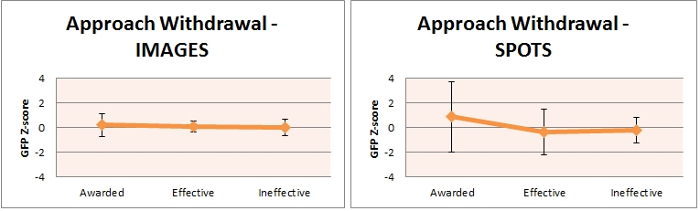
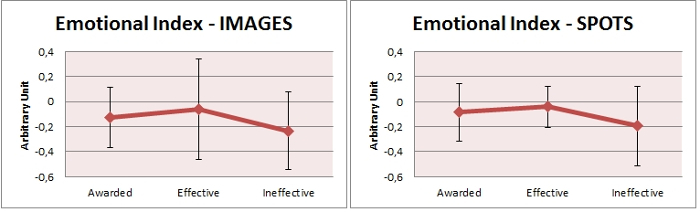
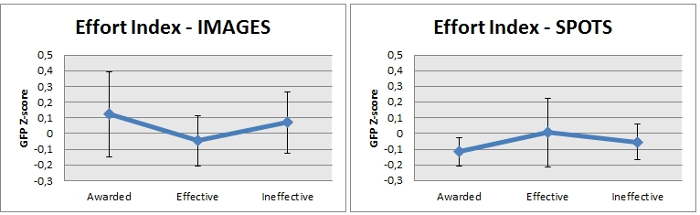
The evaluation of advertising, products, and packaging is traditionally performed through methods based on self-reports and focus groups, but these approaches often appear poorly accurate in scientific terms. Neuroscience is increasingly applied to the investigation of the neurophysiological bases of the perception of and reaction to commercial stimuli to support traditional marketing methods. In this context, a particular sector or marketing is represented by public service announcements (PSAs). The objective of this protocol is to apply electroencephalography (EEG) and autonomic signal analysis to study responses to selected antismoking PSAs. Two EEG indices were employed: the frontal alpha band EEG asymmetry (the Approach Withdrawal (AW) index) and the frontal theta (effort index). Furthermore, the autonomic Emotional Index (EI) was calculated, as derived from the Galvanic Skin Response (GSR) and Heart Rate (HR) signals. The present protocol describes a series of operational and computational steps required to properly estimate, through the aforementioned indices, the emotional and cerebral reaction of a group of subjects towards a selected number of antismoking PSAs. In particular, a campaign characterized by a symbolic communication style (classified as "awarded" on the basis of the prizes received by specialized committees) obtained the highest approach values, as estimated by the AW index. A spot and an image belonging to the same PSA campaign based on the "fear arousing appeal" and with a narrative/experiential communication style (classified as "effective" on the basis of the economical/health-related improvements promoted) reported the lowest and highest effort values, respectively. This is probably due to the complexity of the storytelling (spot) and to the immediateness of the image (a lady who underwent a tracheotomy). Finally, the same "effective" campaign showed the highest EI values, possibly because of the empathy induced by the testimonial and the explicitness of the message.
传统上,对广告、产品和包装的评估是通过基于自我报告和焦点小组的方法进行的,但从科学角度来看,这些方法往往准确性欠佳。神经科学越来越多地应用于研究对商业刺激的感知和反应的神经生理基础,以支持传统营销方法。在这一背景下,公共服务广告(PSA)代表了一个特殊的营销领域。本方案的目的是应用脑电图(EEG)和自主信号分析来研究对选定的反吸烟PSA的反应。采用了两个EEG指标:额叶α波段EEG不对称性(趋近-回避(AW)指数)和额叶θ波(努力指数)。此外,还计算了自主情绪指数(EI),它源自皮肤电反应(GSR)和心率(HR)信号。本方案描述了通过上述指标正确估计一组受试者对选定数量的反吸烟PSA的情绪和大脑反应所需的一系列操作和计算步骤。特别是,一个以象征性传播风格为特征的宣传活动(根据专业委员会获得的奖项被归类为“获奖”),根据AW指数估计,获得了最高的趋近值。一个属于同一PSA宣传活动的广告片和一幅图像,基于“恐惧唤起诉求”且具有叙事/体验式传播风格(根据所促进的经济/健康相关改善被归类为“有效”),分别报告了最低和最高的努力值。这可能是由于广告片故事情节的复杂性以及图像(一位接受气管切开术的女士)的直观性。最后,同一个“有效”宣传活动显示出最高的EI值,可能是由于推荐所引发的同理心和信息的明确性。