Center for Marine Biotechnology and Biomedicine, Scripps Institution of Oceanography, University of California at San Diego, La Jolla, California, USA.
Genomic Medicine, J. Craig Venter Institute, La Jolla, California, USA.
mBio. 2017 Sep 5;8(5):e01291-17. doi: 10.1128/mBio.01291-17.
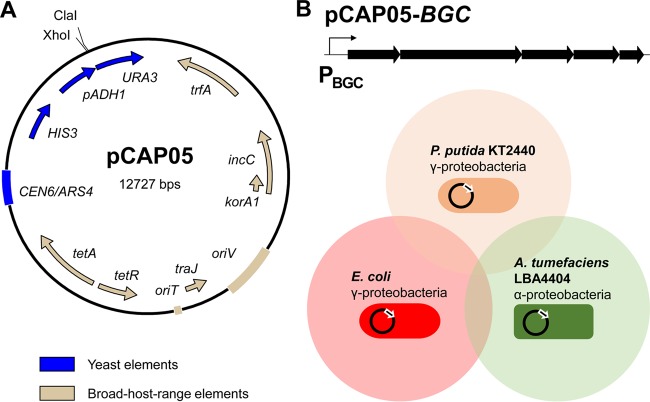
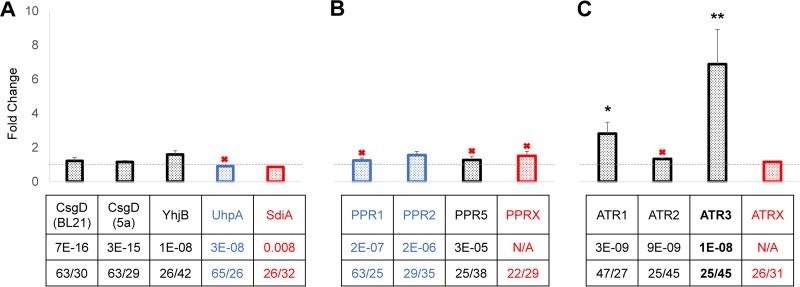
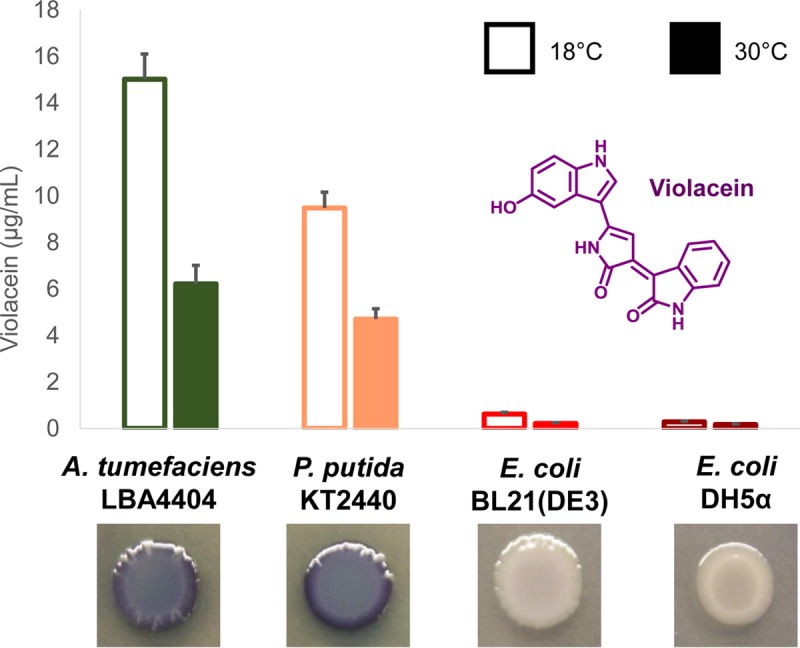
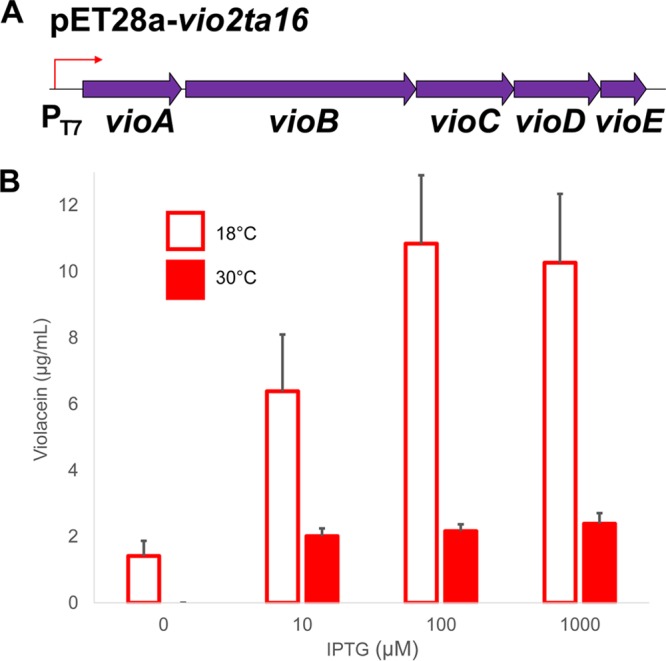
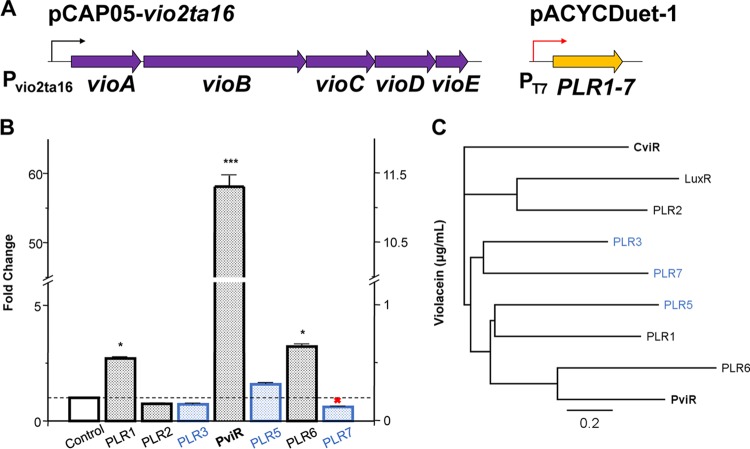
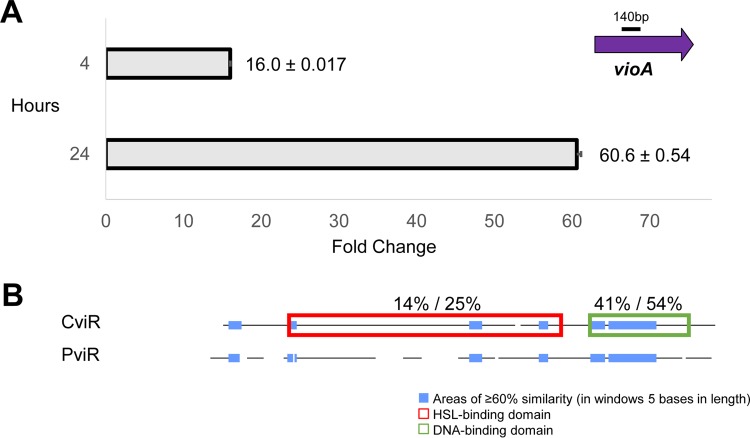
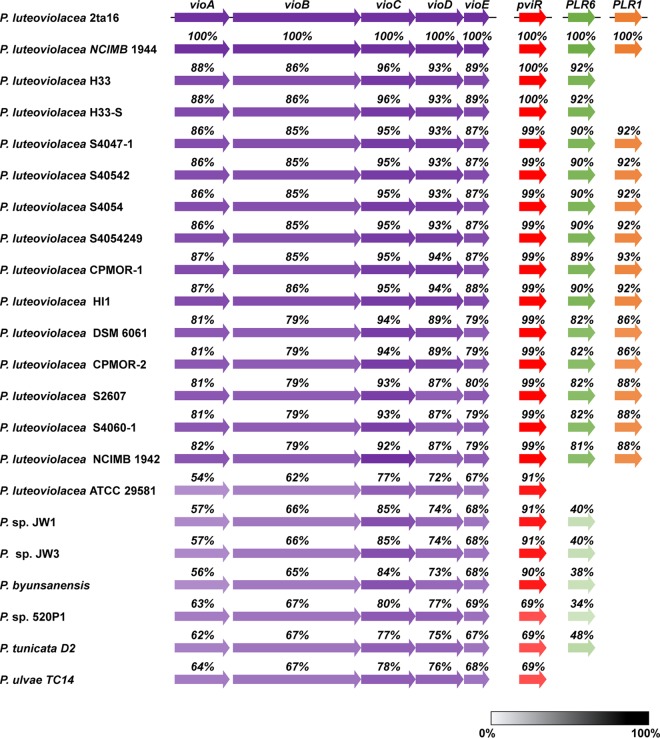
Heterologous expression has become a powerful tool for studying microbial biosynthetic gene clusters (BGCs). Here, we extend the transformation-associated recombination cloning and heterologous expression platform for microbial BGCs to include Gram-negative proteobacterial expression hosts. Using a broad-host-range expression platform, we test the implicit assumption that biosynthetic pathways are more successfully expressed in more closely related heterologous hosts. Cloning and expression of the violacein BGC from 2ta16 revealed robust production in two proteobacterial hosts, KT2440 and LBA4404, but very little production of the antibiotic in various laboratory strains of , despite their closer phylogenetic relationship. We identified a nonclustered LuxR-type quorum-sensing receptor from 2ta16, PviR, that increases pathway transcription and violacein production in by ∼60-fold independently of acyl-homoserine lactone autoinducers. Although harbors the most similar homolog of PviR identified from all of the hosts tested, overexpression of various transcription factors did not result in a statistically significant increase in violacein production, while overexpression of two PviR homologs significantly increased production. Thus, this work not only introduces a new genetic platform for the heterologous expression of microbial BGCs, it also challenges the assumption that host phylogeny is an accurate predictor of host compatibility. Although Gram-positive heterologous hosts such as have been developed and optimized to support diverse secondary metabolic reactions, there has been comparatively less work on Gram-negative hosts, some of which grow faster and are easier to work with. This work presents a new genetic platform for direct cloning and broad-host-range heterologous expression of BGCs in Gram-negative proteobacterial expression hosts, and we leverage this platform to uncover regulatory elements that influence violacein expression from Although it is often assumed that BGCs will be more successfully expressed in more closely related hosts, our work suggests that this may not be a general rule of thumb, as heterologous production of natural products can be influenced by specific host regulatory and/or biosynthetic elements, and the identity and effectiveness of those elements are difficult to predict. We argue for the use of a diverse set of heterologous hosts, which may also provide insights into the BGC biosynthetic mechanism and the biological function of BGCs.
异源表达已成为研究微生物生物合成基因簇 (BGCs) 的强大工具。在这里,我们将微生物 BGCs 的转化相关重组克隆和异源表达平台扩展到包括革兰氏阴性变形杆菌表达宿主。使用广泛宿主范围的表达平台,我们测试了这样一个隐含假设,即生物合成途径在更密切相关的异源宿主中表达更为成功。从 2ta16 克隆和表达了 violacein BGC,结果表明在两个变形杆菌宿主 KT2440 和 LBA4404 中产生了丰富的产物,但在尽管它们具有更密切的系统发育关系,但在各种实验室菌株中却几乎没有产生抗生素。我们从 2ta16 中鉴定出一种非聚类的 LuxR 型群体感应受体 PviR,它可独立于酰基高丝氨酸内酯自动诱导物将途径转录和 violacein 的产生增加约 60 倍。尽管 含有从所有测试宿主中鉴定出的最相似的 PviR 同源物,但过表达各种 转录因子并没有导致 violacein 产量的统计学显著增加,而过表达两种 PviR 同源物则显著增加了产量。因此,这项工作不仅引入了一个新的微生物 BGC 异源表达遗传平台,还挑战了宿主系统发育是宿主相容性的准确预测因子的假设。尽管已经开发和优化了革兰氏阳性异源宿主,如 ,以支持多种次级代谢反应,但对革兰氏阴性宿主的研究相对较少,其中一些宿主生长更快,更容易操作。这项工作提出了一种新的遗传平台,用于在革兰氏阴性变形杆菌表达宿主中直接克隆和广泛宿主范围的 BGC 异源表达,并且我们利用该平台揭示了影响 中 violacein 表达的调控元件。尽管通常假设 BGCs 在更密切相关的宿主中表达更为成功,但我们的工作表明,这可能不是一个普遍的经验法则,因为天然产物的异源生产可能受到特定宿主调控和/或生物合成元件的影响,而这些元件的身份和有效性难以预测。我们主张使用多样化的异源宿主集,这也可能为 BGC 生物合成机制和 BGC 的生物学功能提供新的见解。