FlexTronix Laboratory, Dept. of Engineering and Architecture, University of Trieste - V. Valerio 10, 34100, Trieste, Italy.
Advanced Functional Polymers Laboratory, Department of Macromolecular Chemistry I, University of Bayreuth, 95440, Bayreuth, Germany.
Sci Rep. 2017 Sep 5;7(1):10526. doi: 10.1038/s41598-017-09463-z.
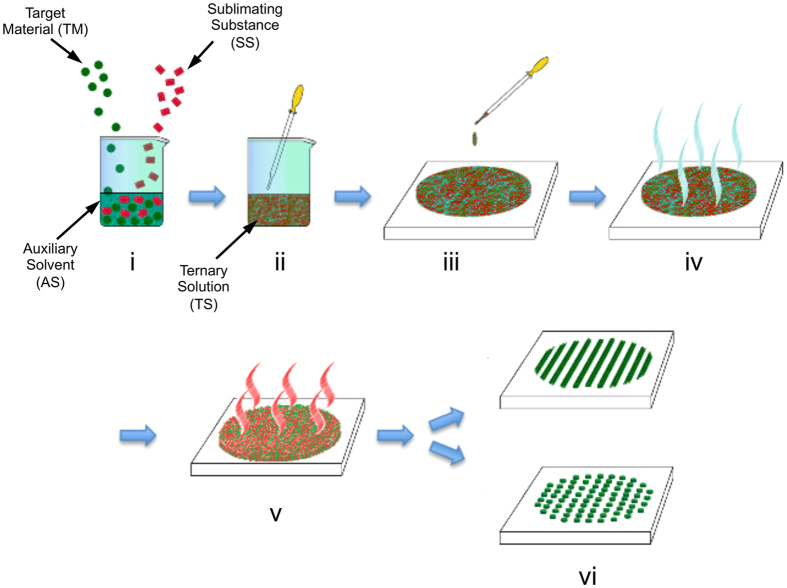
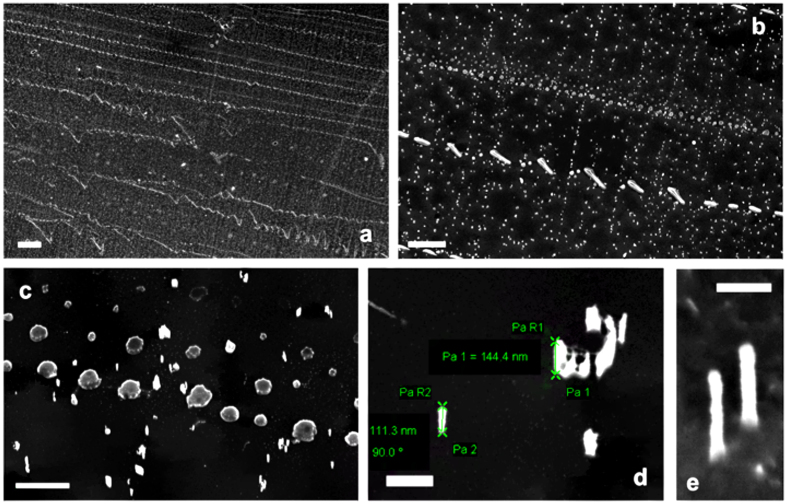
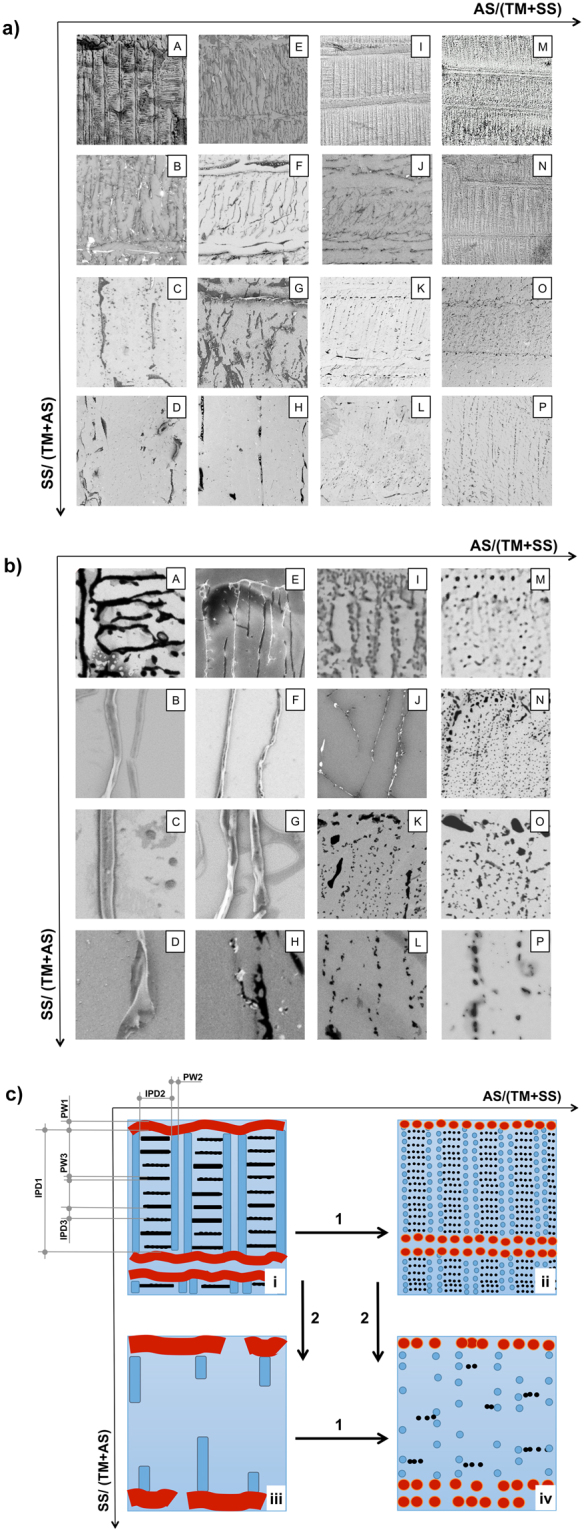
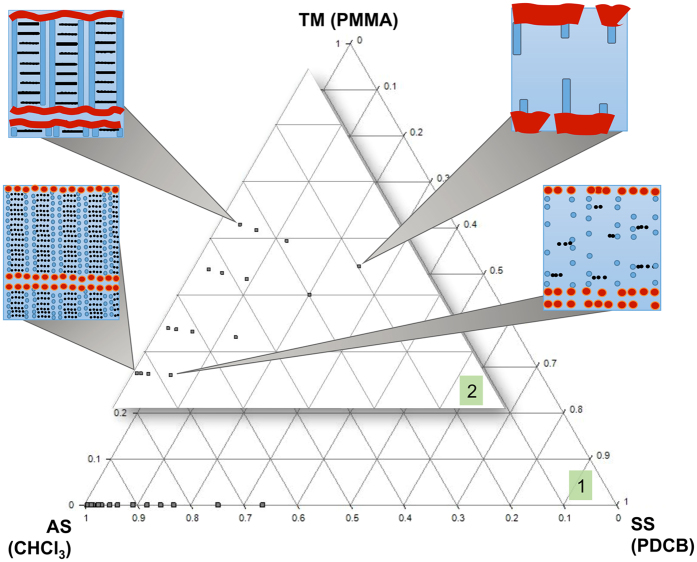
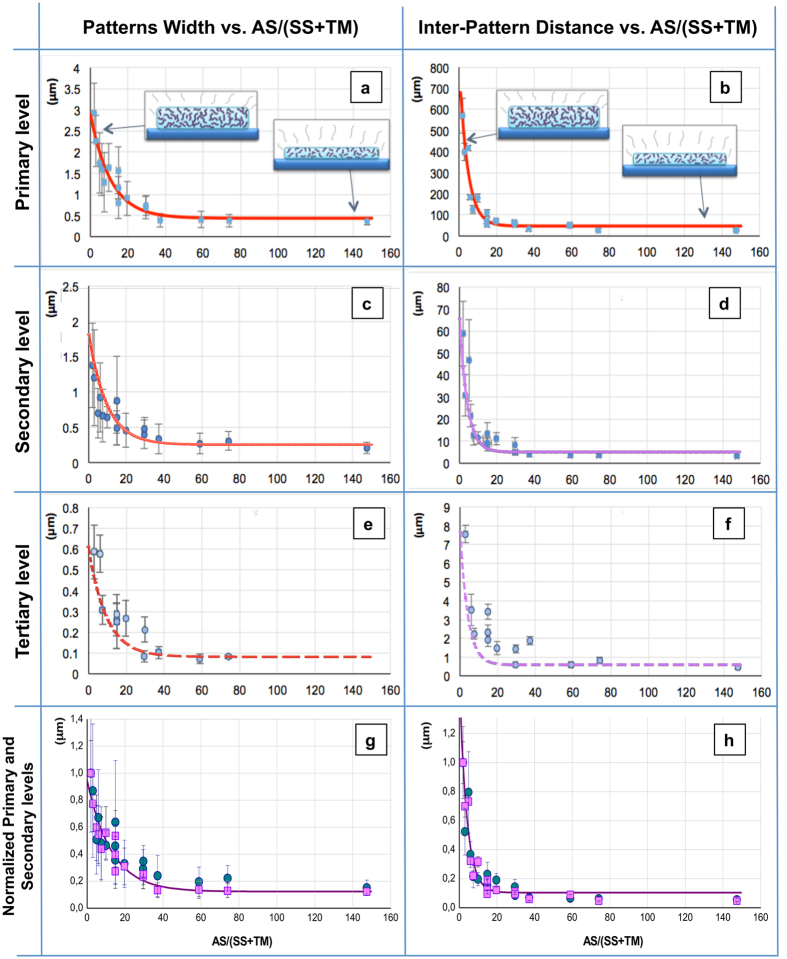
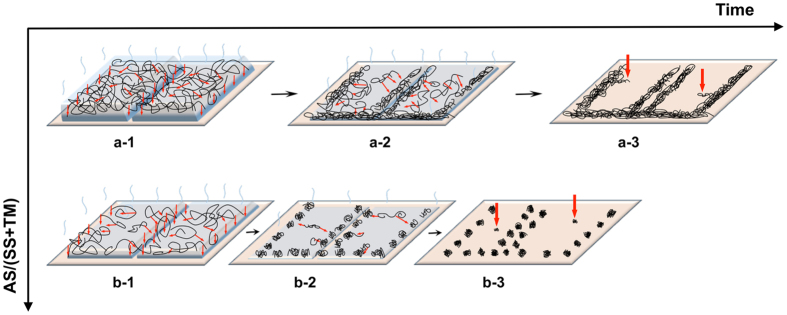
Self-assembly methods allow to obtain ordered patterns on surfaces with exquisite precision, but often lack in effectiveness over large areas. Here we report on the realization of hierarchically ordered polymethylmethacrylate (PMMA) nanofibres and nanodots over large areas from solution via a fast, easy and low-cost method named ASB-SANS, based on a ternary solution that is cast on the substrate. Simple changes to the ternary solution composition allow to control the transition from nanofibres to nanodots, via a wide range of intermediate topologies. The ternary solution includes the material to be patterned, a liquid solvent and a solid substance able to sublimate. The analysis of the fibres/dots width and inter-pattern distance variations with respect to the ratio between the solution components suggests that the macromolecular chains mobility in the solidified sublimating substance follows Zimm-like models (mobility of macromolecules in diluted liquid solutions). A qualitative explanation of the self-assembly phenomena originating the observed nanopatterns is given. Finally, ASB-SANS-generated PMMA nanodots arrays have been used as lithographic masks for a silicon substrate and submitted to Inductively Coupled Plasma-Reactive Ion Etching (ICP-RIE). As a result, nanopillars with remarkably high aspect ratios have been achieved over areas as large as several millimeters square, highlighting an interesting potential of ASB-SANS in practical applications like photon trapping in photovoltaic cells, surface-enhanced sensors, plasmonics.
自组装方法允许在表面上获得具有极高精度的有序图案,但在大面积上往往缺乏效果。在这里,我们报告了一种通过一种快速、简单且低成本的方法 ASB-SANS 从溶液中实现聚甲基丙烯酸甲酯 (PMMA) 纳米纤维和纳米点的分级有序排列,该方法基于一种三元溶液在基底上浇铸。通过简单地改变三元溶液的组成,可以控制从纳米纤维到纳米点的转变,从而实现广泛的中间拓扑结构。三元溶液包括要图案化的材料、一种液体溶剂和一种能够升华的固体物质。对纤维/点宽度和图案间距离相对于溶液成分比的变化的分析表明,在固化升华物质中大分子链的流动性遵循 Zimm 类似模型(稀释液体溶液中大分子的流动性)。给出了对观察到的纳米图案起源的自组装现象的定性解释。最后,ASB-SANS 生成的 PMMA 纳米点阵列已被用作硅基底的光刻掩模,并进行了感应耦合等离子体反应离子刻蚀 (ICP-RIE)。结果,在几毫米见方的大面积上实现了具有显著高纵横比的纳米柱,突出了 ASB-SANS 在光伏电池中的光子捕获、表面增强传感器、等离子体等实际应用中的有趣潜力。