Afonso Silva Ana C, Santos Natali, Ogilvie Huw A, Moritz Craig
Division of Ecology and Evolution, Research School of Biology and Centre for Biodiversity Analysis, Australian National University, Acton, ACT, Australia.
cE3c-Centre for Ecology, Evolution and Environmental Changes, Faculdade de Ciências, Universidade de Lisboa, Lisboa, Portugal.
PeerJ. 2017 Aug 29;5:e3724. doi: 10.7717/peerj.3724. eCollection 2017.
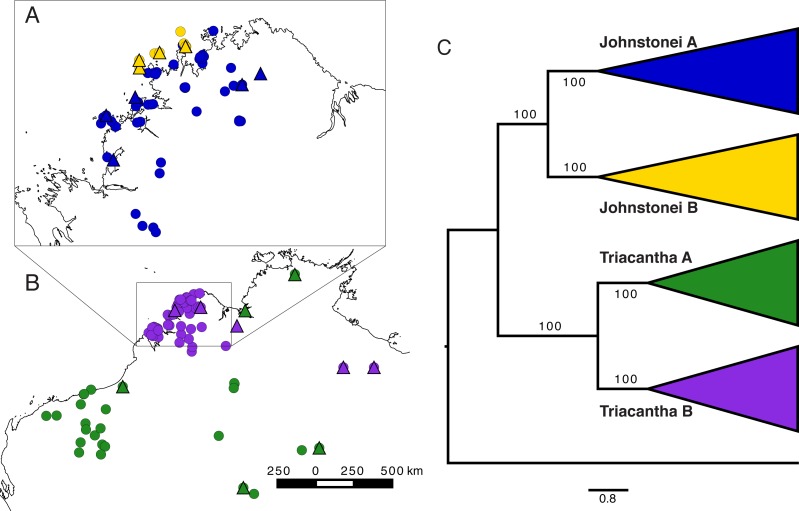
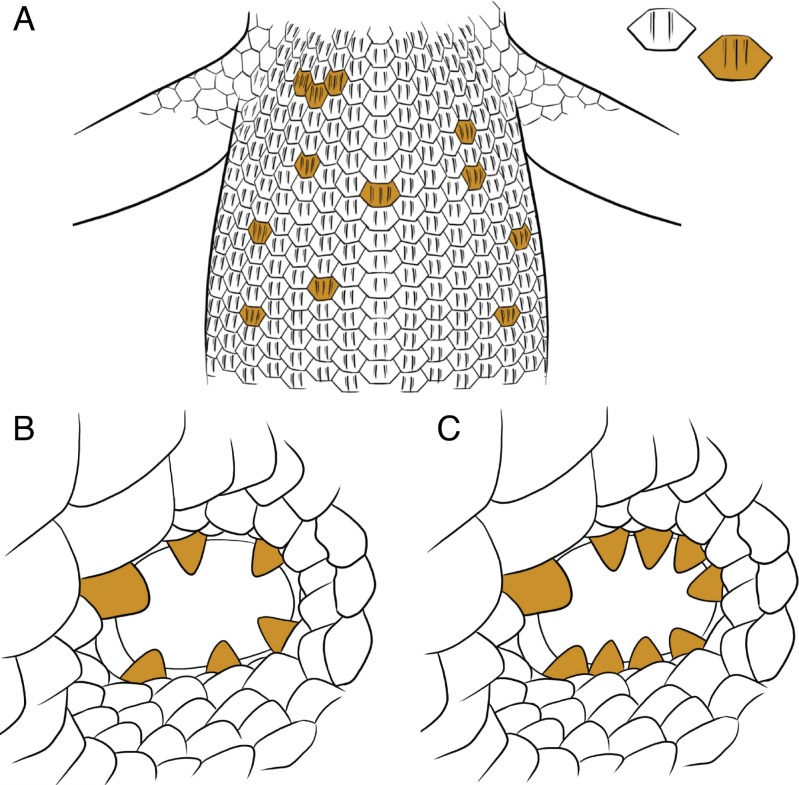
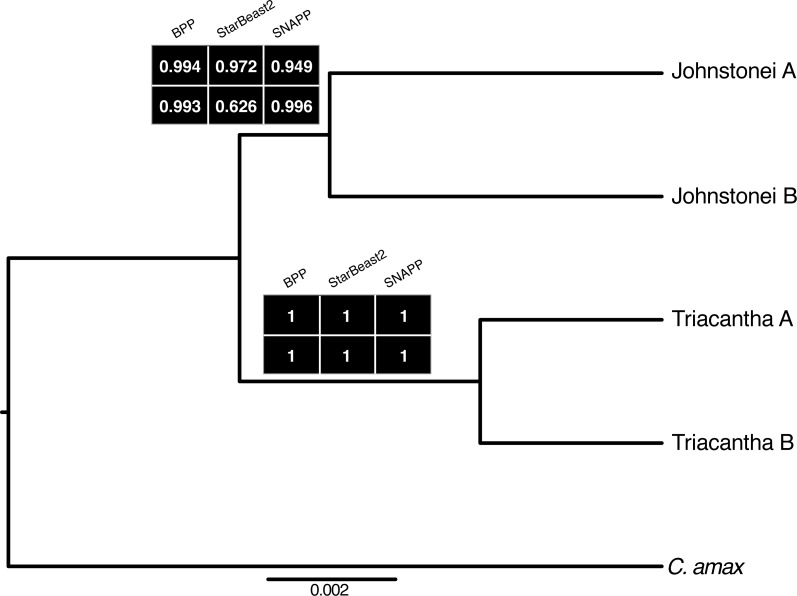
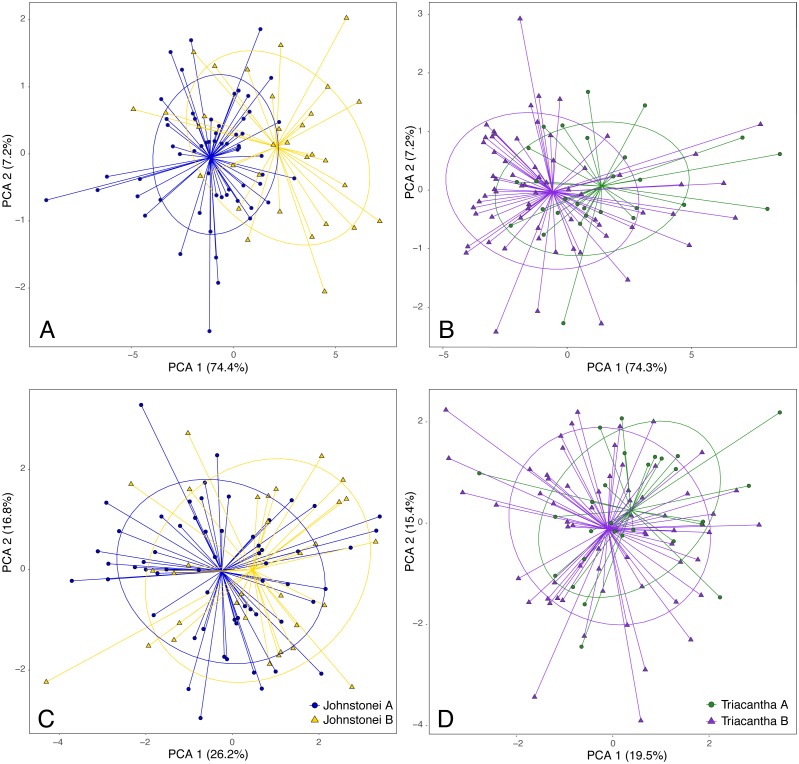
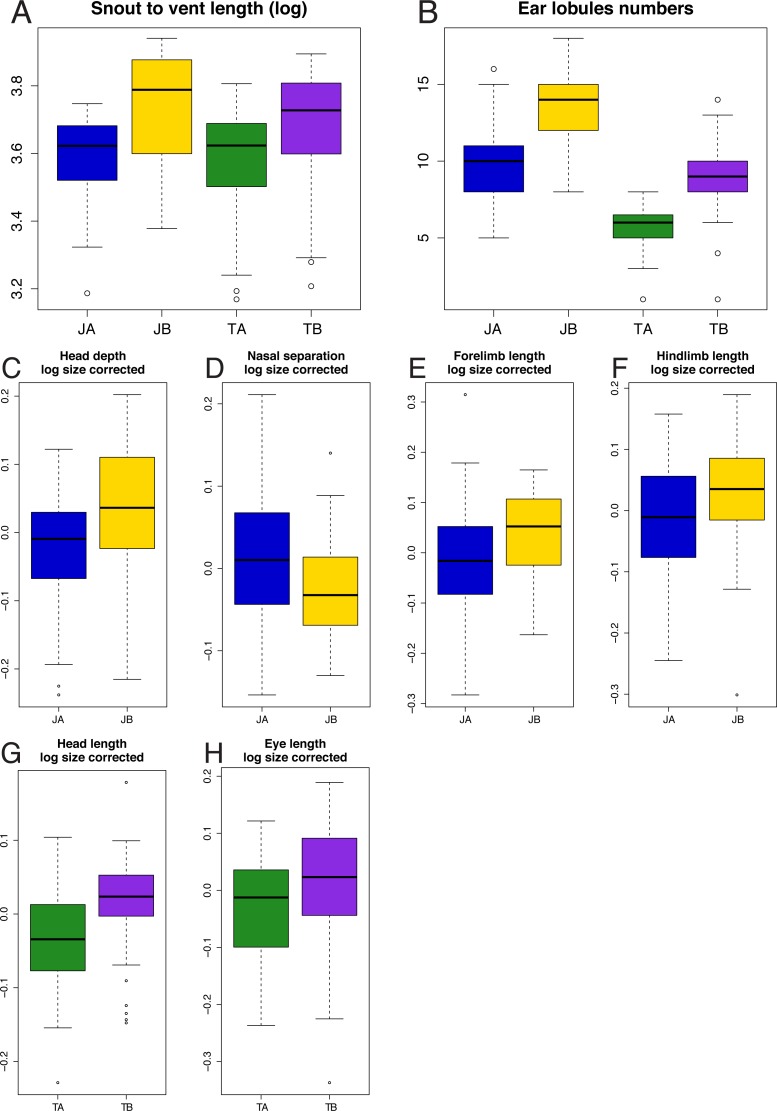
While methods for genetic species delimitation have noticeably improved in the last decade, this remains a work in progress. Ideally, model based approaches should be applied and considered jointly with other lines of evidence, primarily morphology and geography, in an integrative taxonomy framework. Deep phylogeographic divergences have been reported for several species of skinks, but only for some eastern taxa have species boundaries been formally tested. The present study does this and revises the taxonomy for two species from northern Australia, and . We introduce an approach that is based on the recently published method StarBEAST2, which uses multilocus data to explore the support for alternative species delimitation hypotheses using Bayes Factors (BFD). We apply this method, jointly with two other multispecies coalescent methods, using an extensive (from 2,163 exons) data set along with measures of 11 morphological characters. We use this integrated approach to evaluate two new candidate species previously revealed in phylogeographic analyses of rainbow skinks (genus ) in Western Australia. The results based on BFD StarBEAST2, BFD* SNAPP and BPP genetic delimitation, together with morphology, support each of the four recently identified lineages as separate species. The BFD StarBEAST2 approach yielded results highly congruent with those from BFD* SNAPP and BPP. This supports use of the robust multilocus multispecies coalescent StarBEAST2 method for species delimitation, which does not require resolved species or gene trees. Compared to the situation in , morphological divergence was greater between the two lineages within Kimberley endemic , which also had deeper divergent histories. This congruence supports recognition of two species within . Nevertheless, the combined evidence also supports recognition of two taxa within the more widespread . With this work, we describe two new species, sp. nov and sp. nov. in the northwest of Australia. This contributes to increasing recognition that this region of tropical Australia has a rich and unique fauna.
尽管在过去十年中,遗传物种界定方法有了显著改进,但仍在不断完善。理想情况下,基于模型的方法应在综合分类框架中与其他证据线(主要是形态学和地理学)联合应用并加以考虑。已报道了几种石龙子物种存在深度系统发育地理分歧,但仅对一些东部分类单元的物种界限进行了正式检验。本研究对此进行了检验,并修订了来自澳大利亚北部的两种石龙子物种的分类。我们引入了一种基于最近发表的StarBEAST2方法的途径,该方法使用多位点数据,通过贝叶斯因子(BFD)来探索对替代物种界定假设的支持。我们将此方法与另外两种多物种溯祖方法联合应用,使用一个广泛的(来自2163个外显子)数据集以及11个形态特征的测量值。我们使用这种综合方法来评估先前在西澳大利亚彩虹石龙子(属)的系统发育地理分析中揭示的两个新候选物种。基于BFD StarBEAST2、BFD* SNAPP和BPP遗传界定以及形态学的结果,支持将最近确定的四个谱系中的每一个都作为独立物种。BFD StarBEAST2方法得出的结果与BFD* SNAPP和BPP的结果高度一致。这支持使用强大的多位点多物种溯祖StarBEAST2方法进行物种界定,该方法不需要解析的物种或基因树。与[某情况]相比,金伯利特有石龙子的两个谱系之间的形态差异更大,其分歧历史也更深。这种一致性支持将其识别为两个物种。然而,综合证据也支持在分布更广的石龙子中识别出两个分类单元。通过这项工作,我们在澳大利亚西北部描述了两个新物种,即[新物种名1] sp. nov和[新物种名2] sp. nov。这有助于人们越来越认识到澳大利亚热带地区拥有丰富而独特的动物群。