Yamashina Masahiro, Akita Munetaka, Hasegawa Taisuke, Hayashi Shigehiko, Yoshizawa Michito
Laboratory for Chemistry and Life Science, Institute of Innovative Research, Tokyo Institute of Technology, 4259 Nagatsuta, Midori-ku, Yokohama 226-8503, Japan.
Department of Chemistry, Graduate School of Science, Kyoto University, Kitashirakawa, Oiwakecho, Sakyo, Kyoto 606-8502, Japan.
Sci Adv. 2017 Aug 25;3(8):e1701126. doi: 10.1126/sciadv.1701126. eCollection 2017 Aug.
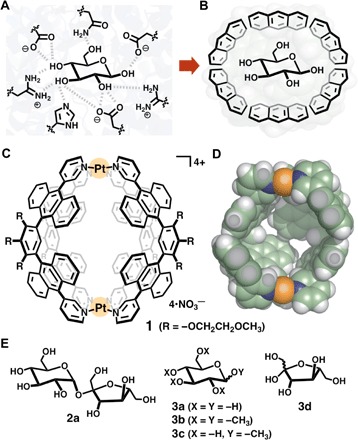
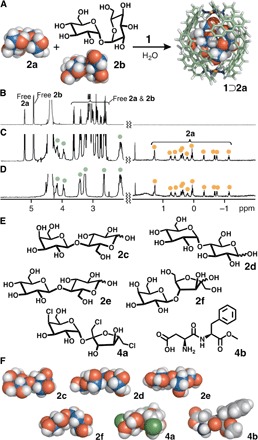
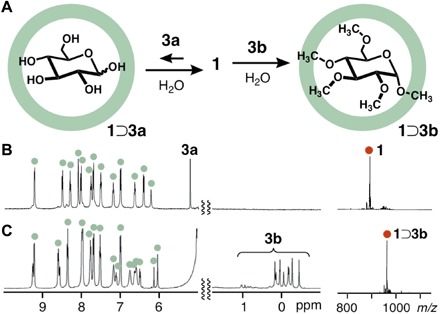
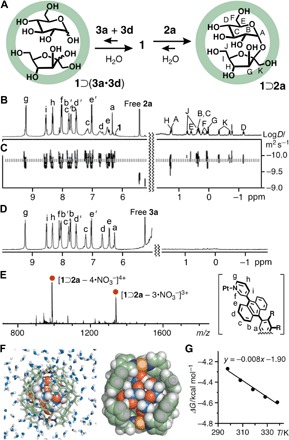
Selective recognition of saccharides by artificial receptors in water is a challenging goal due to their strong hydrophilicities and complex molecular structures with subtle regio- and stereochemical differences. We report the selective and efficient encapsulation of d-sucrose within a coordination-driven molecular capsule from natural saccharide mixtures in water (100% selectivity, >85% yield, and ~10 M binding constant). Unlike previous artificial receptors and natural receptors that rely on multiple hydrogen-bonding interactions, theoretical calculations and control experiments indicate that the observed unique selectivity arises from multiple CH-π interactions between the sucrose hydrocarbon backbone and the shape-complementary polyaromatic cavity (1 nm in diameter) of the capsule.
由于糖类具有很强的亲水性以及存在细微区域和立体化学差异的复杂分子结构,因此在水中通过人工受体对糖类进行选择性识别是一个具有挑战性的目标。我们报告了在水中从天然糖类混合物中,d - 蔗糖在配位驱动的分子胶囊内实现选择性高效包封(选择性约100%,产率>85%,结合常数约10 M)。与之前依赖多种氢键相互作用的人工受体和天然受体不同,理论计算和对照实验表明,观察到的独特选择性源于蔗糖碳氢骨架与胶囊形状互补的多芳腔(直径约1 nm)之间的多种CH-π相互作用。