Wakaria Eric N, Rombo Charles O, Oduor Margaret, Kambale Serah M, Tilock Kimberly, Kimani Daniel, Makokha Ernest, Mwamba Peter M, Mwangi Jane
Global Communities, Nairobi, Kenya.
Kenya Ministry of Health, Kenya National Blood Transfusion Service, Nairobi, Kenya.
Afr J Lab Med. 2017 Apr 24;6(1):585. doi: 10.4102/ajlm.v6i1.585. eCollection 2017.
The Kenya National Blood Transfusion Service (KNBTS) is mandated to provide safe and sufficient blood and blood components for the country. In 2013, the KNBTS National Testing Laboratory and the six regional blood transfusion centres were enrolled in the Strengthening Laboratory Management Toward Accreditation (SLMTA) programme. The process was supported by Global Communities with funding from the United States Centers for Disease Control and Prevention.
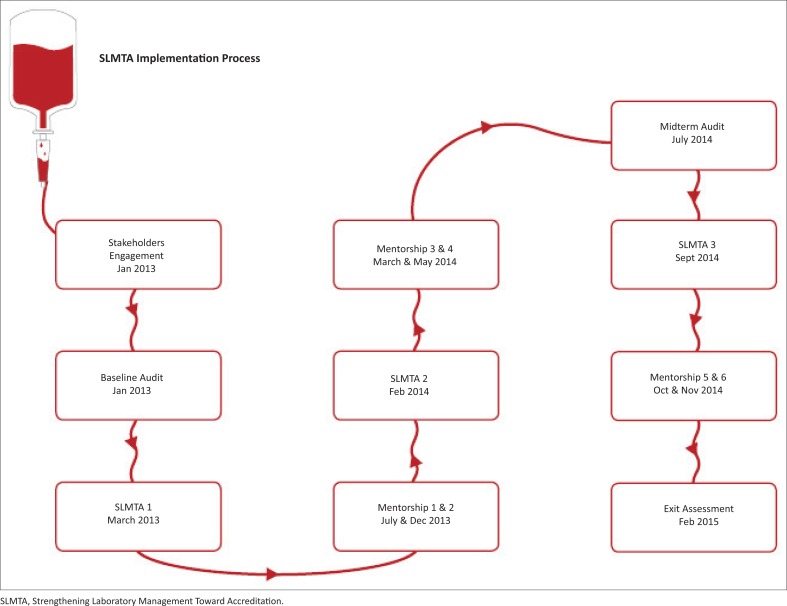
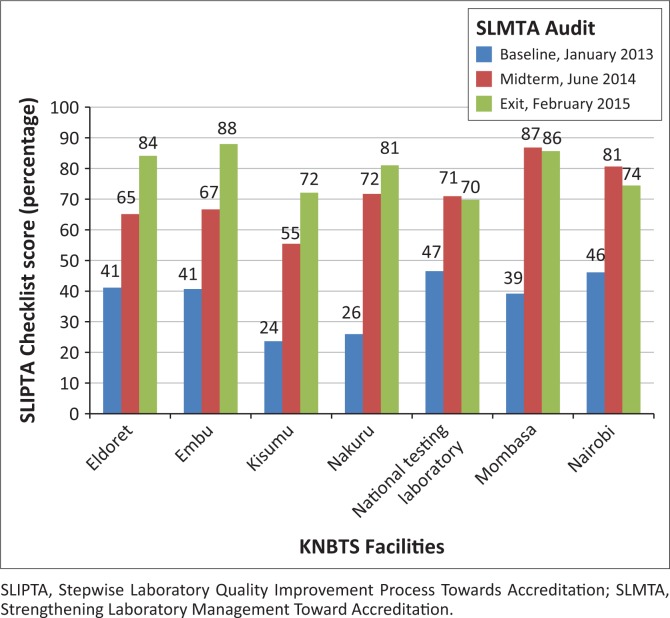
The SLMTA implementation at KNBTS followed the standard three-workshop series, on-site mentorships and audits. Baseline, midterm and exit audits were conducted at the seven facilities, using a standard checklist to measure progress. Given that SLMTA was designed for clinical and public health laboratories, key stakeholders, guided by Global Communities, tailored SLMTA materials to address blood transfusion services, and oriented trainers, auditors and mentors on the same.
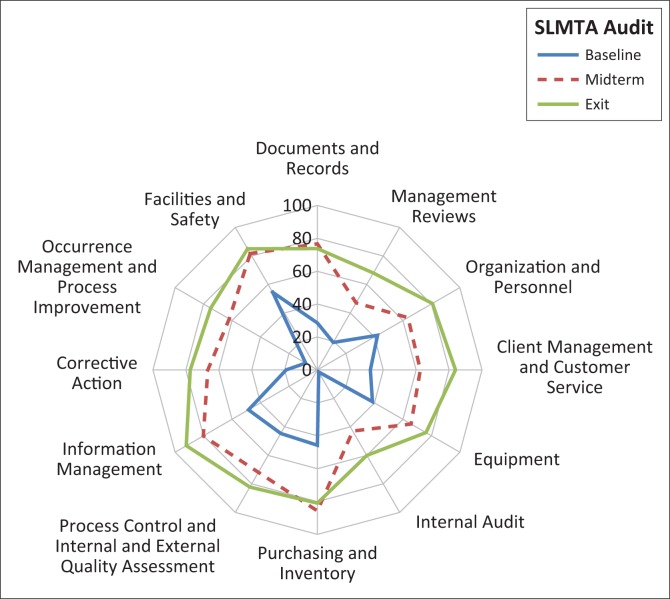
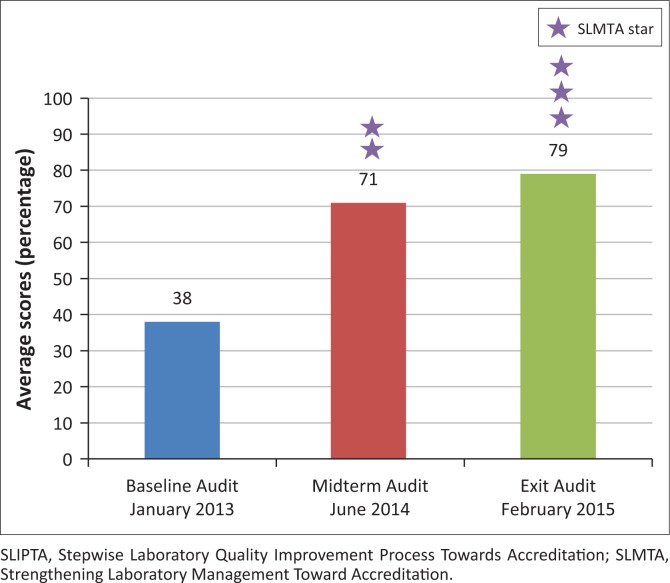
The seven facilities moved from an average of zero stars at baseline to an average of three stars at the exit audit. The average baseline audit score was 38% (97 points), midterm 71% (183 points) and exit audit 79% (205 points). The quality system essential had the largest improvement (at 67 percentage points), from baseline to exit, whereas had the smallest improvement (at 31 percentage points).
SLMTA can be an effective tool for preparing a blood transfusion service for accreditation. Key success factors included customising SLMTA to blood transfusion activities; sensitising trainers, mentors and auditors on operations of blood transfusion service; creating SLMTA champions in key departments; and integrating other blood transfusion-specific accreditation standards into SLMTA.
肯尼亚国家输血服务局(KNBTS)的任务是为该国提供安全充足的血液及血液成分。2013年,KNBTS国家检测实验室和六个地区输血中心参加了加强实验室管理以实现认可(SLMTA)项目。该项目由全球社区提供支持,并由美国疾病控制与预防中心提供资金。
KNBTS实施SLMTA项目遵循标准的三阶段工作坊系列、现场指导和审核。使用标准检查表对这七个机构进行基线、中期和结业审核,以衡量进展情况。鉴于SLMTA是为临床和公共卫生实验室设计的,在全球社区的指导下,关键利益相关者对SLMTA材料进行了调整,以适用于输血服务,并对培训人员、审核人员和指导人员进行了相关培训。
这七个机构的平均星级从基线时的零星提升至结业审核时的三星。平均基线审核得分为38%(97分),中期为71%(183分),结业审核为79%(205分)。从基线到结业,质量体系要素的改善幅度最大(达67个百分点),而 的改善幅度最小(为31个百分点)。
SLMTA可以成为使输血服务准备好接受认可的有效工具。关键成功因素包括使SLMTA适用于输血活动;让培训人员、指导人员和审核人员熟悉输血服务的操作;在关键部门培养SLMTA倡导者;以及将其他特定于输血的认可标准纳入SLMTA。