He Yong, Xiao Shupei, Nie Pengcheng, Dong Tao, Qu Fangfang, Lin Lei
College of Biosystems Engineering and Food Science, Zhejiang University, Hangzhou 310058, China.
Key Laboratory of Spectroscopy Sensing, Ministry of Agriculture, Zhejiang University, Hangzhou 310058, China.
Sensors (Basel). 2017 Sep 7;17(9):2045. doi: 10.3390/s17092045.
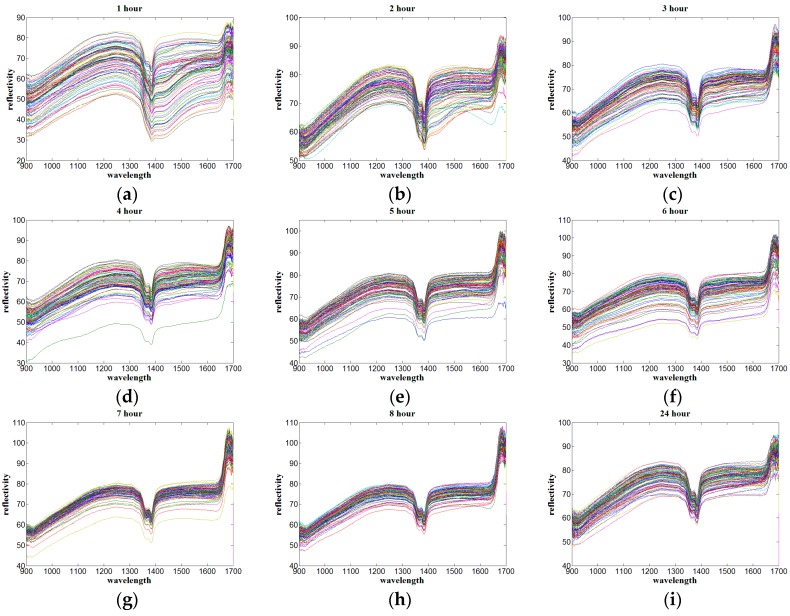
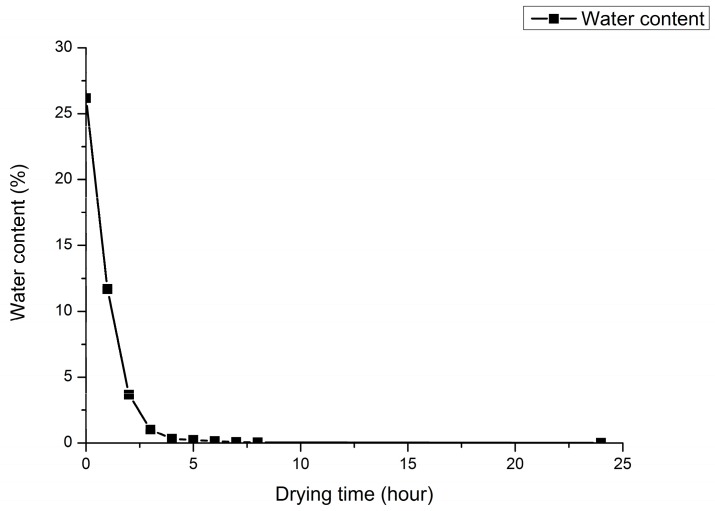
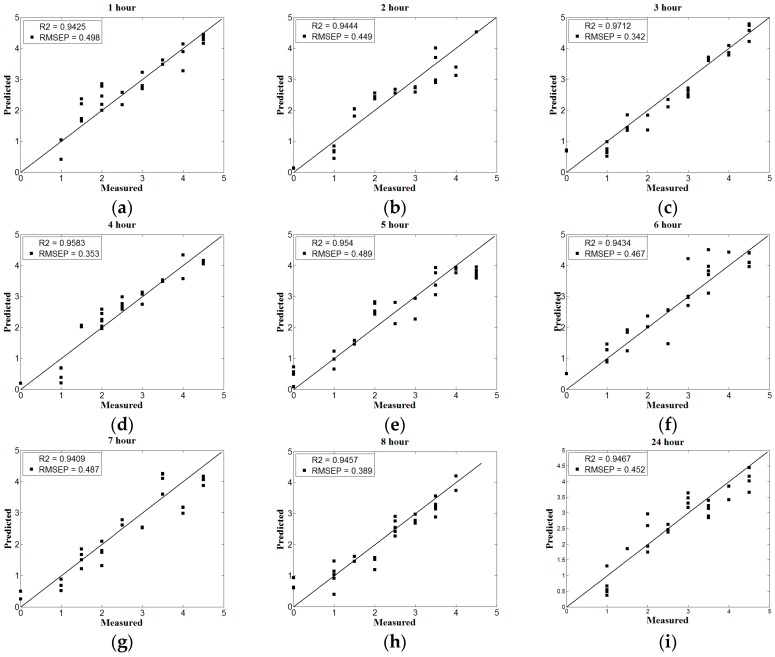
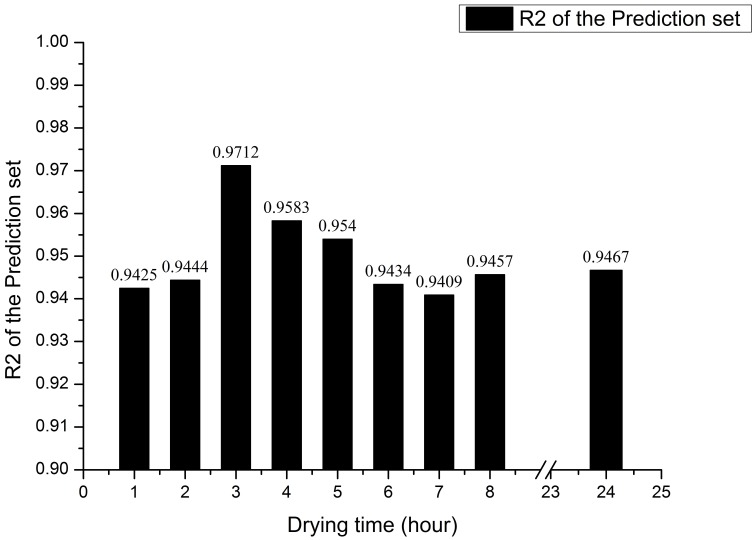
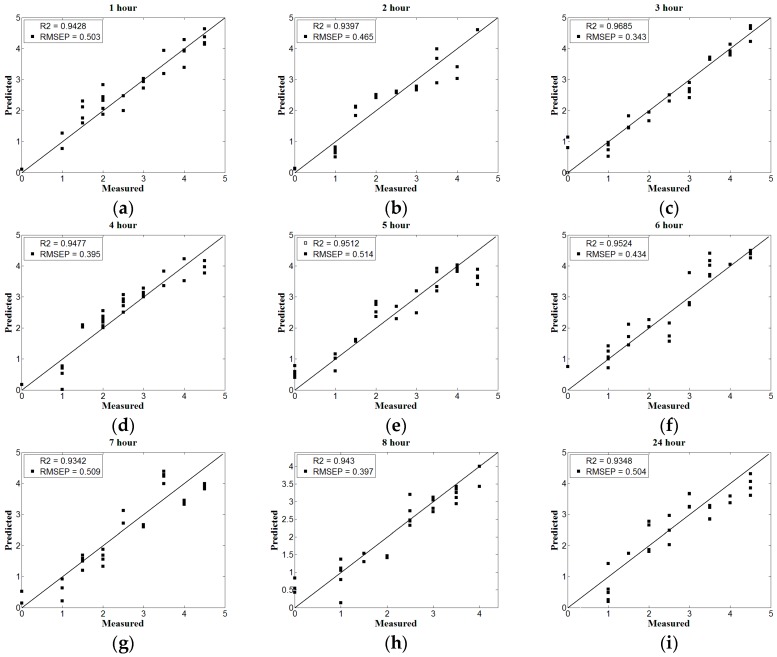
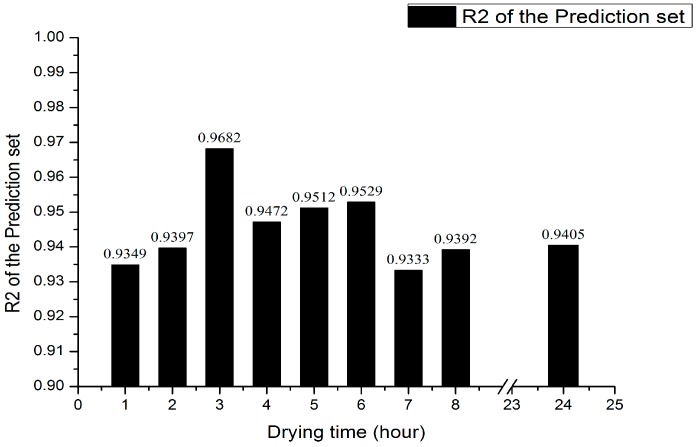
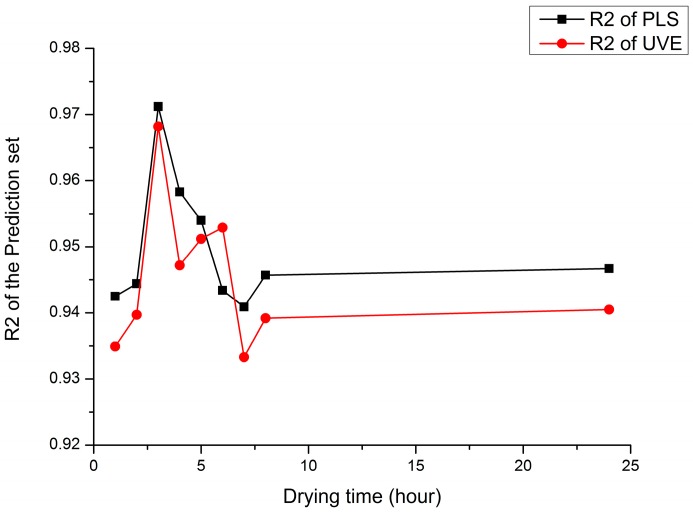
Nitrogen is one of the important indexes to evaluate the physiological and biochemical properties of soil. The level of soil nitrogen content influences the nutrient levels of crops directly. The near infrared sensor can be used to detect the soil nitrogen content rapidly, nondestructively, and conveniently. In order to investigate the effect of the different soil water content on soil nitrogen detection by near infrared sensor, the soil samples were dealt with different drying times and the corresponding water content was measured. The drying time was set from 1 h to 8 h, and every 1 h 90 samples (each nitrogen concentration of 10 samples) were detected. The spectral information of samples was obtained by near infrared sensor, meanwhile, the soil water content was calculated every 1 h. The prediction model of soil nitrogen content was established by two linear modeling methods, including partial least squares (PLS) and uninformative variable elimination (UVE). The experiment shows that the soil has the highest detection accuracy when the drying time is 3 h and the corresponding soil water content is 1.03%. The correlation coefficients of the calibration set are 0.9721 and 0.9656, and the correlation coefficients of the prediction set are 0.9712 and 0.9682, respectively. The prediction accuracy of both models is high, while the prediction effect of PLS model is better and more stable. The results indicate that the soil water content at 1.03% has the minimum influence on the detection of soil nitrogen content using a near infrared sensor while the detection accuracy is the highest and the time cost is the lowest, which is of great significance to develop a portable apparatus detecting nitrogen in the field accurately and rapidly.
氮是评估土壤生理生化特性的重要指标之一。土壤氮含量水平直接影响作物的养分水平。近红外传感器可用于快速、无损且便捷地检测土壤氮含量。为了研究不同土壤含水量对近红外传感器检测土壤氮的影响,对土壤样品进行不同干燥时间处理并测量相应含水量。干燥时间设定为1小时至8小时,每1小时检测90个样品(每种氮浓度10个样品)。通过近红外传感器获取样品的光谱信息,同时每1小时计算一次土壤含水量。采用偏最小二乘法(PLS)和无信息变量消除法(UVE)两种线性建模方法建立土壤氮含量预测模型。实验表明,当干燥时间为3小时且相应土壤含水量为1.03%时,土壤检测精度最高。校正集的相关系数分别为0.9721和0.9656,预测集的相关系数分别为0.9712和0.9682。两种模型的预测精度都很高,而PLS模型的预测效果更好且更稳定。结果表明,1.03%的土壤含水量对利用近红外传感器检测土壤氮含量的影响最小,此时检测精度最高且时间成本最低,这对于开发一种能够在田间准确快速检测氮的便携式仪器具有重要意义。