Wang Meng, Lemos Bernardo
Department of Environmental Health & Molecular and Integrative Physiological Sciences program, Harvard T. H. Chan School of Public Health, Boston, Massachusetts, United States of America.
PLoS Genet. 2017 Sep 7;13(9):e1006994. doi: 10.1371/journal.pgen.1006994. eCollection 2017 Sep.
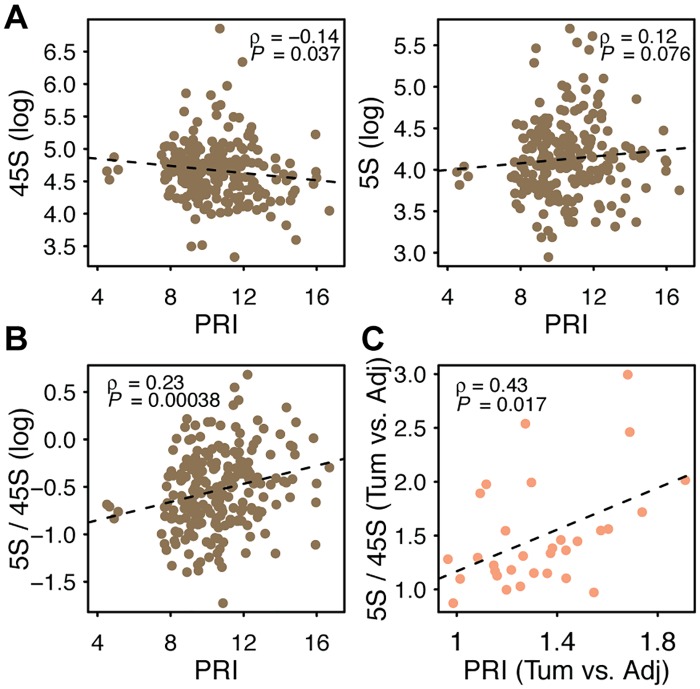
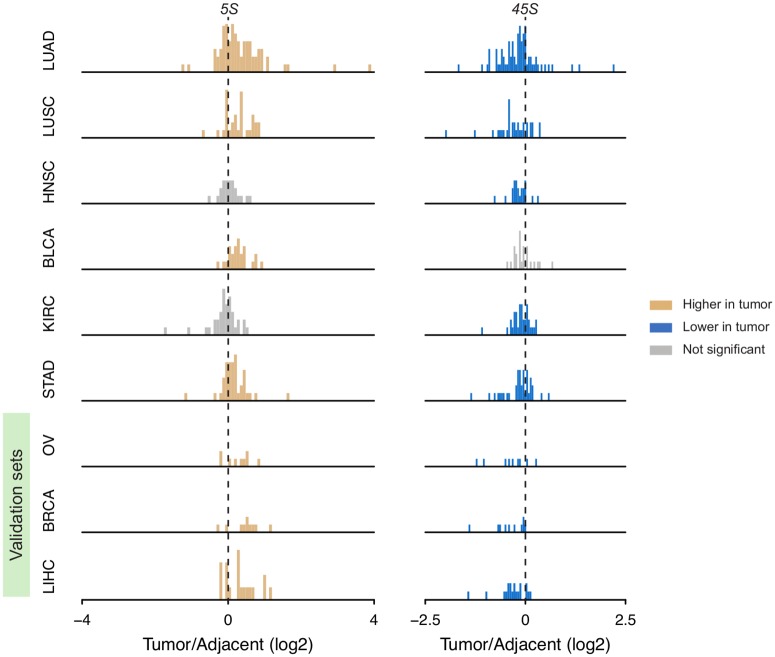
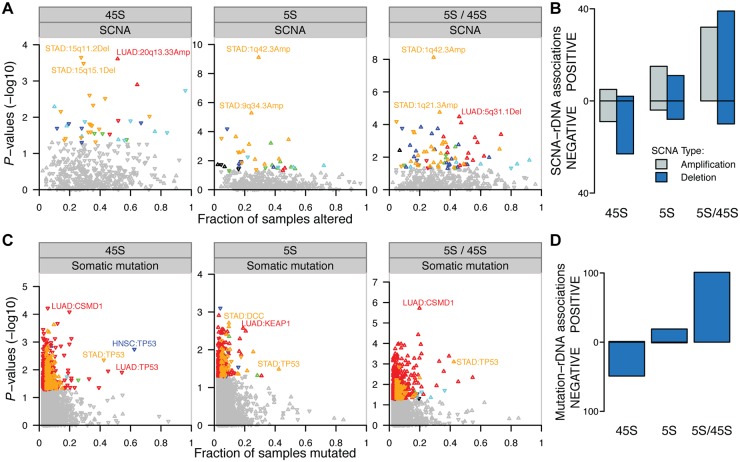
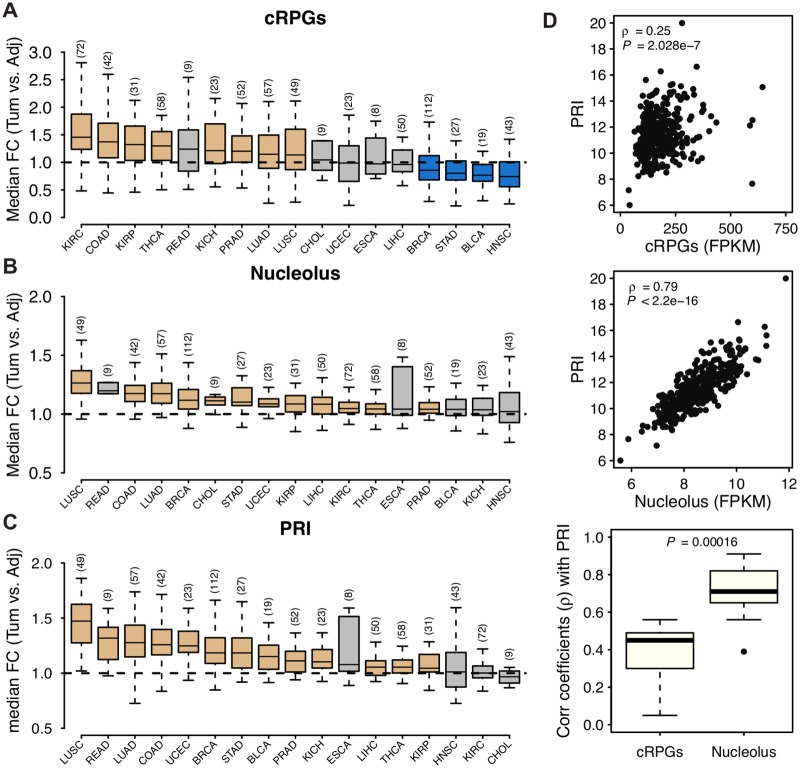
Ribosomal RNAs (rRNAs) are transcribed from two multicopy DNA arrays: the 5S ribosomal DNA (rDNA) array residing in a single human autosome and the 45S rDNA array residing in five human autosomes. The arrays are among the most variable segments of the genome, exhibit concerted copy number variation (cCNV), encode essential components of the ribosome, and modulate global gene expression. Here we combined whole genome data from >700 tumors and paired normal tissues to provide a portrait of rDNA variation in human tissues and cancers of diverse mutational signatures, including stomach and lung adenocarcinomas, ovarian cancers, and others of the TCGA panel. We show that cancers undergo coupled 5S rDNA array expansion and 45S rDNA loss that is accompanied by increased estimates of proliferation rate and nucleolar activity. These somatic changes in rDNA CN occur in a background of over 10-fold naturally occurring rDNA CN variation across individuals and cCNV of 5S-45S arrays in some but not all tissues. Analysis of genetic context revealed associations between cancer rDNA CN amplification or loss and the presence of specific somatic alterations, including somatic SNPs and copy number gain/losses in protein coding genes across the cancer genome. For instance, somatic inactivation of the tumor suppressor gene TP53 emerged with a strong association with coupled 5S expansion / 45S loss in several cancers. Our results uncover frequent and contrasting changes in the 5S and 45S rDNA along rapidly proliferating cell lineages with high nucleolar activity. We suggest that 5S rDNA amplification facilitates increased proliferation, nucleolar activity, and ribosomal synthesis in cancer, whereas 45S rDNA loss emerges as a byproduct of transcription-replication conflict in rapidly replicating tumor cells. The observations raise the prospects of using the rDNA arrays as re-emerging targets for the design of novel strategies in cancer therapy.
核糖体RNA(rRNA)由两个多拷贝DNA阵列转录而来:5S核糖体DNA(rDNA)阵列位于一条人类常染色体上,45S rDNA阵列位于五条人类常染色体上。这些阵列是基因组中变化最大的片段之一,呈现协同拷贝数变异(cCNV),编码核糖体的必需成分,并调节全局基因表达。在这里,我们整合了来自700多个肿瘤和配对正常组织的全基因组数据,以描绘人类组织和具有不同突变特征的癌症(包括胃腺癌和肺腺癌、卵巢癌以及TCGA面板中的其他癌症)中的rDNA变异情况。我们发现,癌症会经历5S rDNA阵列扩增和45S rDNA缺失的耦合过程,同时增殖率和核仁活性估计值增加。rDNA拷贝数的这些体细胞变化发生在个体间自然存在的rDNA拷贝数变异超过10倍以及部分而非所有组织中5S - 45S阵列存在cCNV的背景下。对遗传背景的分析揭示了癌症rDNA拷贝数扩增或缺失与特定体细胞改变之间的关联,包括体细胞单核苷酸多态性(SNP)以及癌症基因组中蛋白质编码基因的拷贝数增加/缺失。例如,肿瘤抑制基因TP53的体细胞失活在几种癌症中与5S扩增/45S缺失的耦合密切相关。我们的结果揭示了在具有高核仁活性的快速增殖细胞谱系中,5S和45S rDNA频繁且相反的变化。我们认为,5S rDNA扩增促进了癌症中的增殖增加、核仁活性和核糖体合成,而45S rDNA缺失则是快速复制的肿瘤细胞中转录 - 复制冲突的副产物。这些观察结果提高了将rDNA阵列用作癌症治疗新策略设计中重新出现的靶点的前景。