Coplan Jeremy D, Gupta Nishant K, Karim Asif, Rozenboym Anna, Smith Eric L P, Kral John G, Rosenblum Leonard A
Department of Psychiatry and Behavioral Sciences, Biological Science Unit, State University of New York (SUNY) Downstate Medical Center, Brooklyn, New York, United States of America.
College of Medicine, SUNY Downstate Medical Center, Brooklyn, New York, United States of America.
PLoS One. 2017 Sep 7;12(9):e0184340. doi: 10.1371/journal.pone.0184340. eCollection 2017.
Food insecurity is a major global contributor to developmental origins of adult disease. The allostatic load of maternal food uncertainty from variable foraging demand (VFD) activates corticotropin-releasing factor (CRF) without eliciting hypothalamic-pituitary-adrenal (HPA) activation measured on a group level. Individual homeostatic adaptations of the HPA axis may subserve second-order homeostasis, a process we provisionally term "social allostasis." We postulate that maternal food insecurity induces a "superorganism" state through coordination of individual HPA axis response.
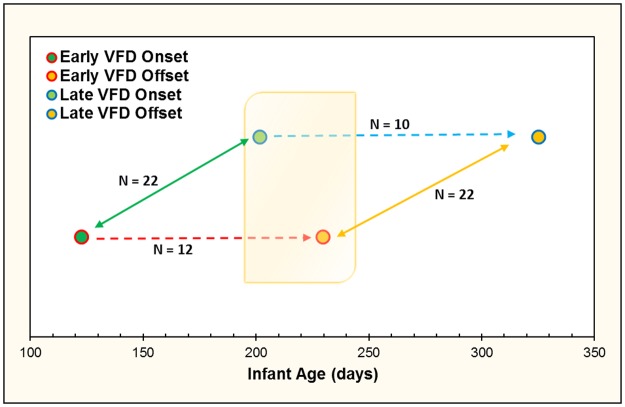
Twenty-four socially-housed bonnet macaque maternal-infant dyads were exposed to 16 weeks of alternating two-week epochs of low or high foraging demand shown to compromise normative maternal-infant rearing. Cerebrospinal fluid (CSF) CRF concentrations and plasma cortisol were measured pre- and post-VFD. Dyadic distance was measured, and blinded observers performed pre-VFD social ranking assessments.
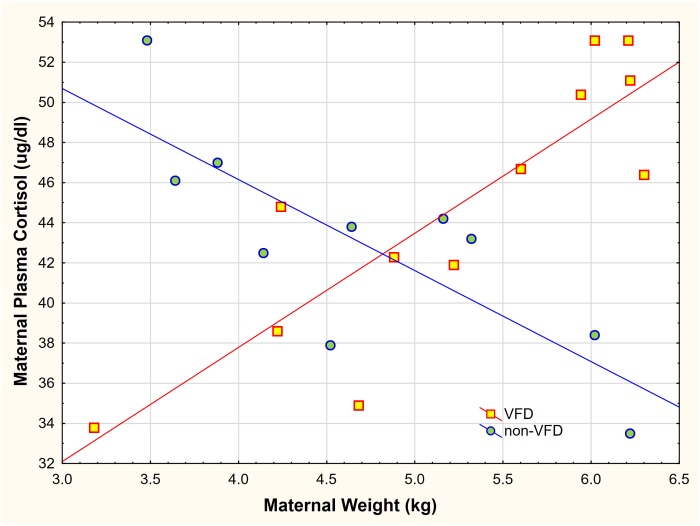
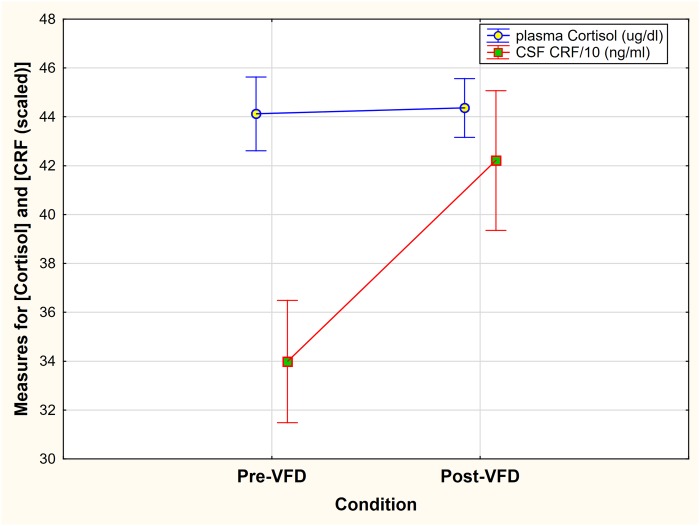
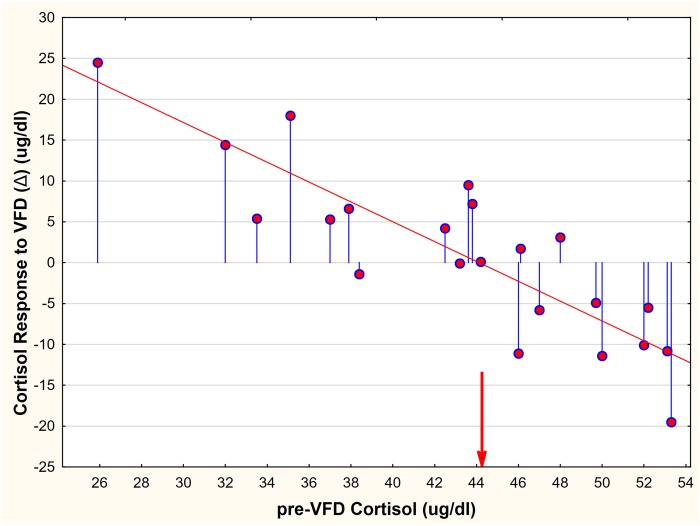
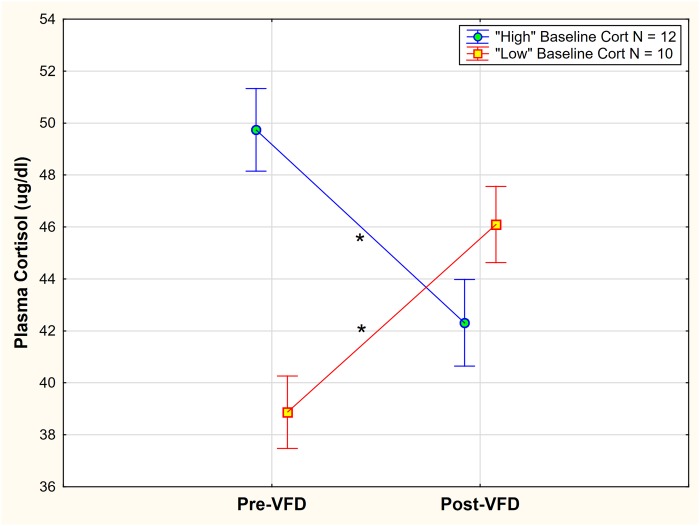
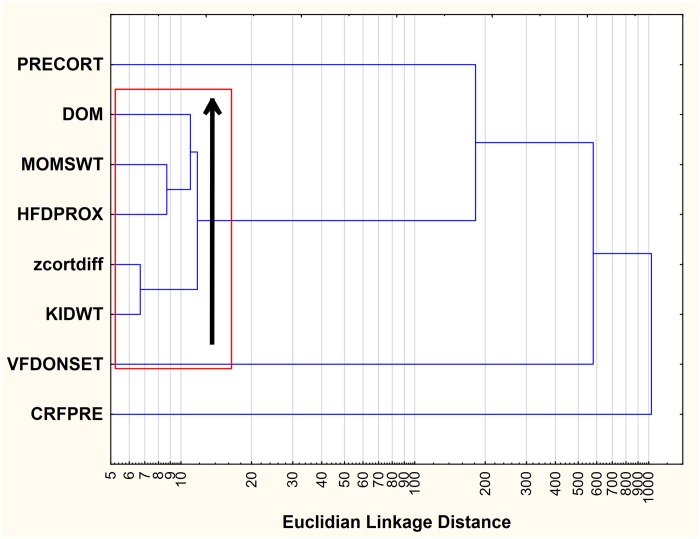
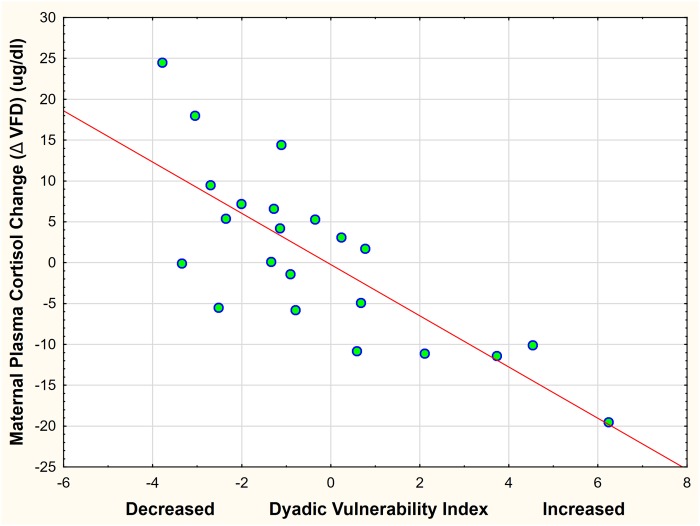
Despite marked individual cortisol responses (mean change = 20%) there was an absence of maternal HPA axis group mean response to VFD (0%). Whereas individual CSF CRF concentrations change = 56%, group mean did increase 25% (p = 0.002). Our "dyadic vulnerability" index (low infant weight, low maternal weight, subordinate maternal social status and reduced dyadic distance) predicted maternal cortisol decreases (p < 0.0001) whereas relatively "advantaged" dyads exhibited maternal cortisol increases in response to VFD exposure.
In response to a chronic stressor, relative dyadic vulnerability plays a significant role in determining the directionality and magnitude of individual maternal HPA axis responses in the service of maintaining a "superorganism" version of HPA axis homeostasis, provisionally termed "social allostasis."
粮食不安全是导致成人疾病发育起源的主要全球性因素。可变觅食需求(VFD)导致的母亲食物不确定性所产生的应激负荷会激活促肾上腺皮质激素释放因子(CRF),但在群体水平上未引发下丘脑-垂体-肾上腺(HPA)轴的激活。HPA轴的个体稳态适应可能有助于二阶稳态,我们暂时将这一过程称为“社会稳态”。我们推测,母亲的粮食不安全通过协调个体HPA轴反应诱导一种“超个体”状态。
将24对群居的帽猴母婴二元组暴露于16周的交替两周周期中,低觅食需求或高觅食需求会损害正常的母婴养育。在VFD前后测量脑脊液(CSF)CRF浓度和血浆皮质醇。测量二元距离,不知情的观察者进行VFD前的社会等级评估。
尽管个体皮质醇反应显著(平均变化 = 20%),但母亲HPA轴对VFD的群体平均反应缺失(0%)。个体CSF CRF浓度变化 = 56%,而群体平均浓度确实增加了25%(p = 0.002)。我们的“二元脆弱性”指数(低婴儿体重、低母亲体重、母亲社会地位低下和二元距离缩短)预测母亲皮质醇会降低(p < 0.0001),而相对“优势”的二元组在暴露于VFD时母亲皮质醇会增加。
在应对慢性应激源时,相对二元脆弱性在确定个体母亲HPA轴反应的方向和幅度方面起着重要作用,以维持HPA轴稳态的“超个体”版本,暂时称为“社会稳态”。