Whang Young Mi, Jin Su Bin, Park Serk In, Chang In Ho
Department of Urology, Chung-Ang University College of Medicine, Seoul, Korea.
Department of Biochemistry and Molecular Biology and BK21 Plus Program, Korea University College of Medicine, Seoul, Korea.
Oncotarget. 2017 May 26;8(32):53168-53179. doi: 10.18632/oncotarget.18230. eCollection 2017 Aug 8.
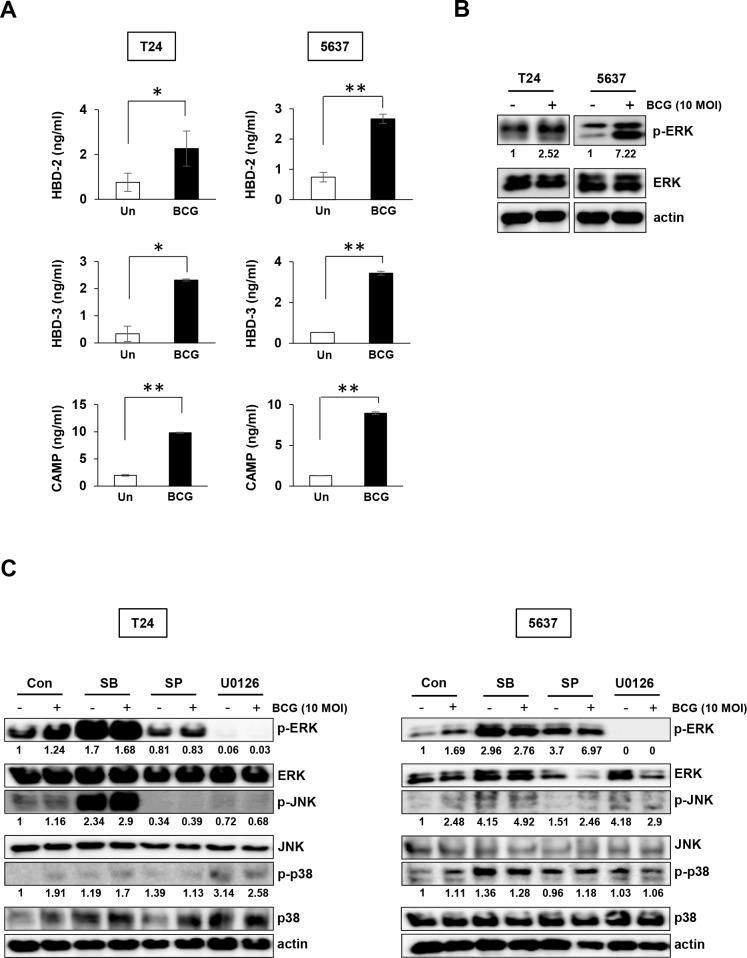
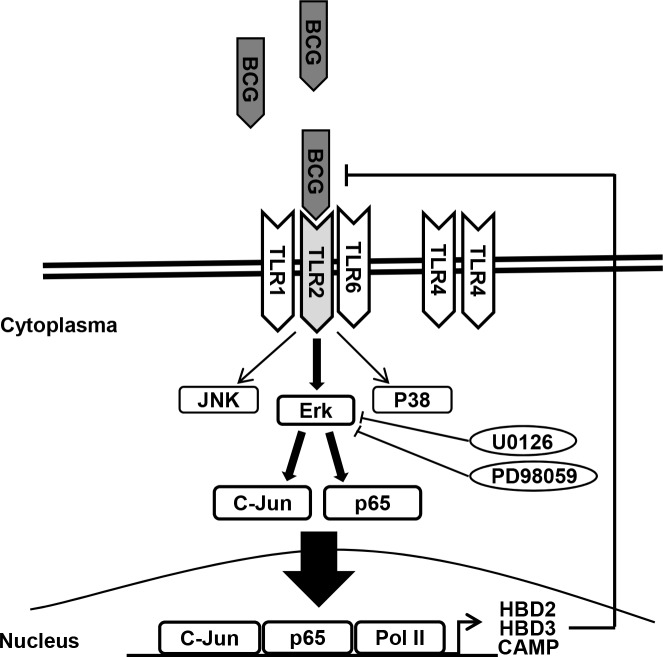
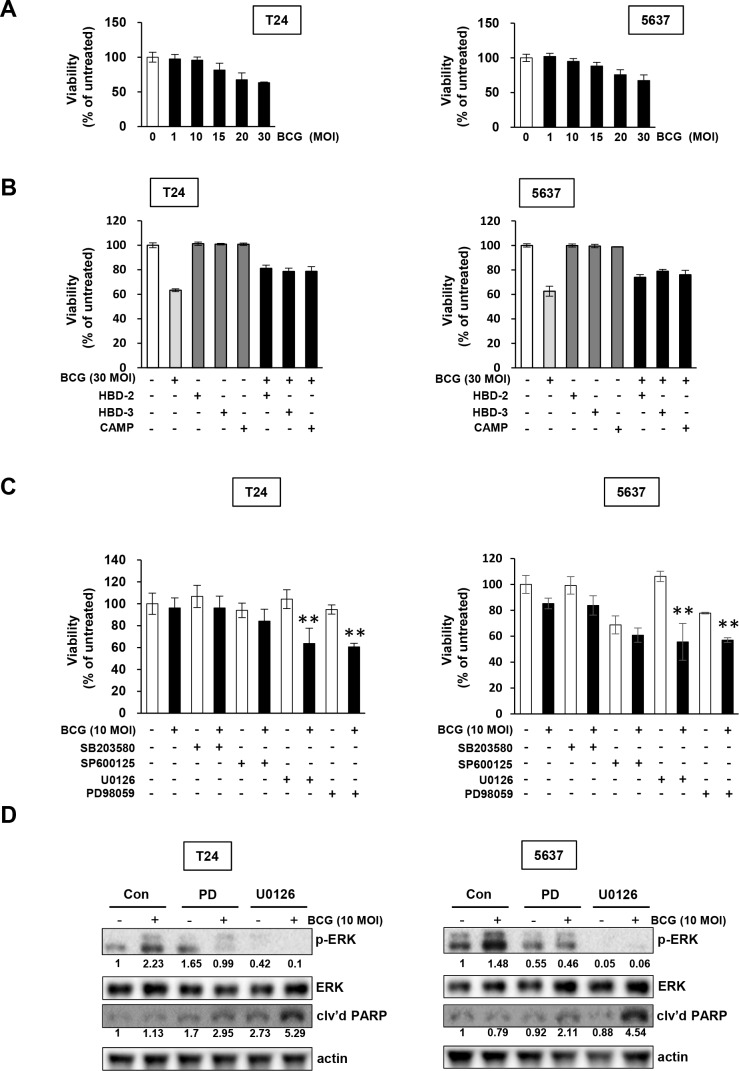
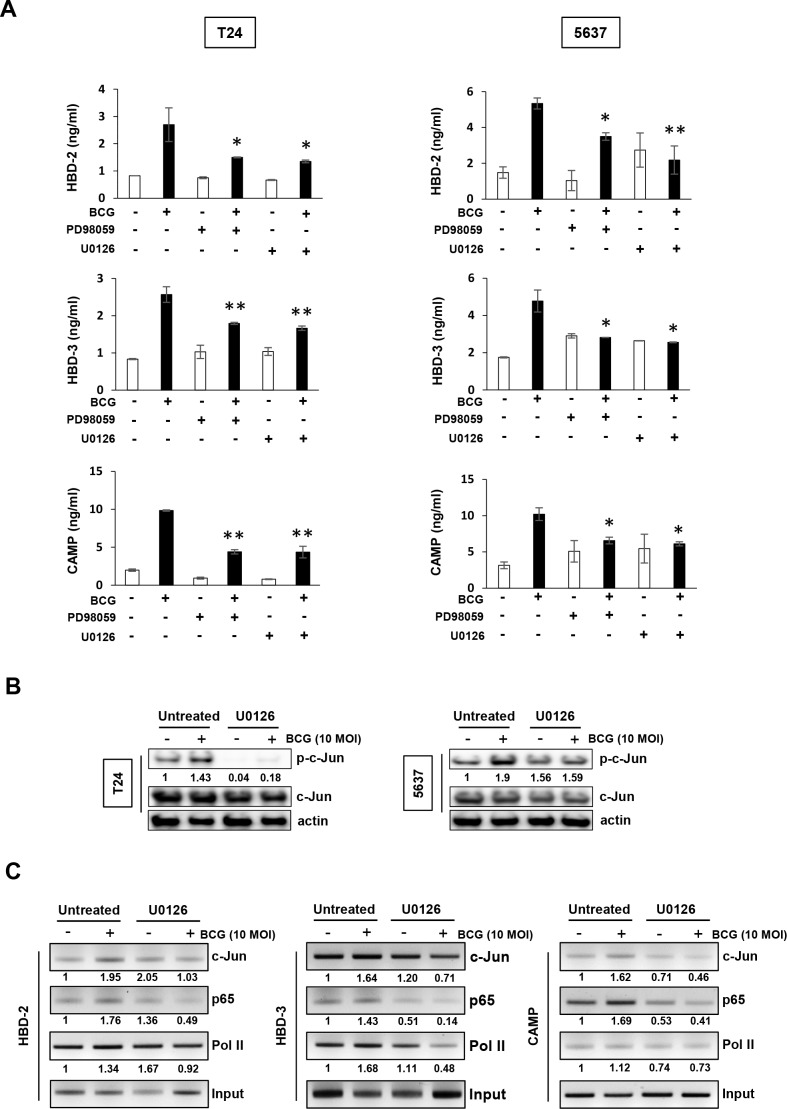
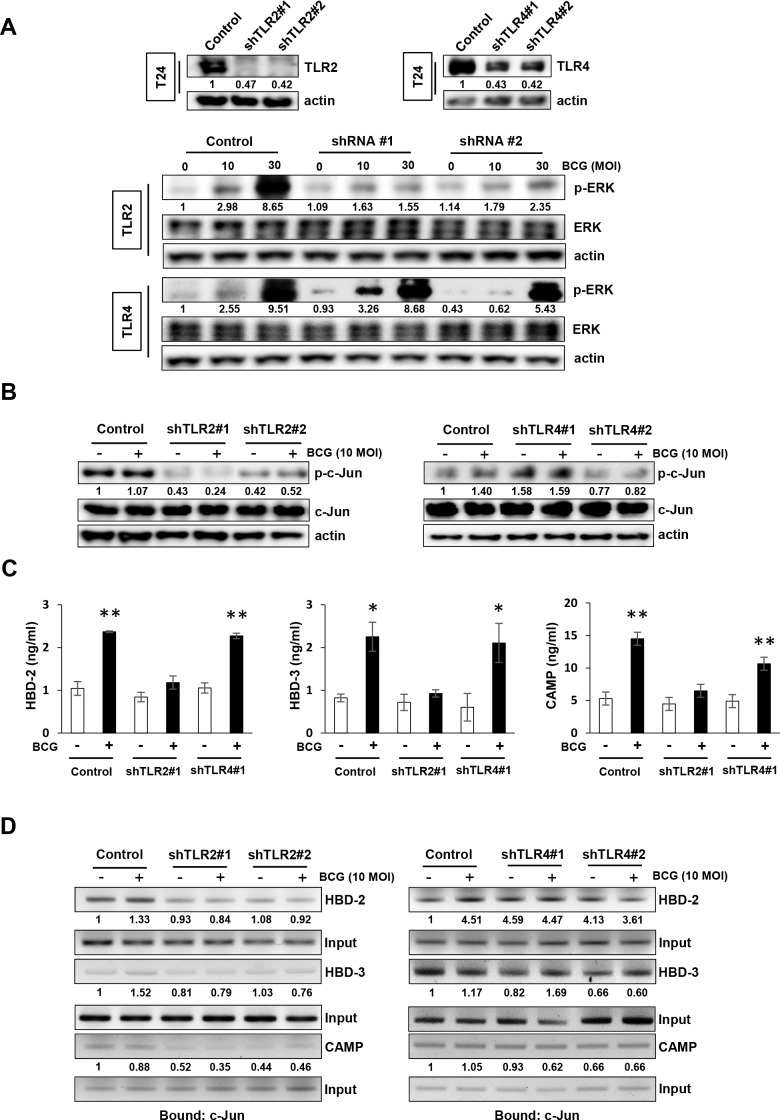
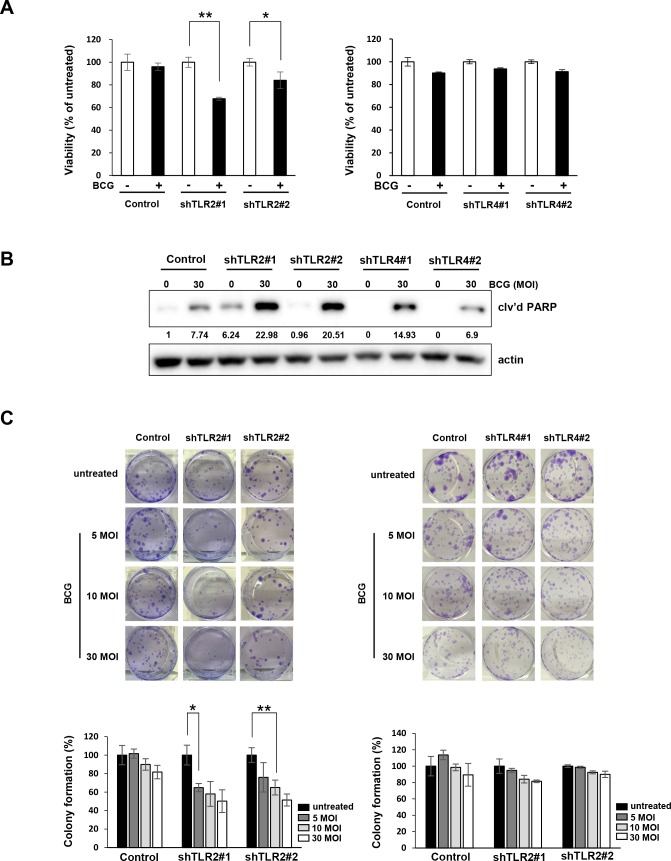
Bacillus Calmette-Guérin (BCG) is one of the standard treatment options for non-muscle-invasive bladder cancer. The details of the biological defense mechanisms against BCG remain unclear. Here, we investigated whether BCG-induced release of antimicrobial peptides (AMPs; e.g., human β-defensin-2, -3, and cathelicidin) is involved with mitogen-activated protein kinase (MAPK) pathways, and investigated the enhanced anticancer effect of BCG through the down-regulation of Toll-like receptors (TLRs) and MAPK pathways in bladder cancer cells. BCG-infected bladder cancer cells produced AMPs as a defense mechanism against BCG, which were reduced by MEK inhibitors by blocking phosphorylation of extracellular signal-regulated kinase (ERK1/2 or MEK) and c-Jun. MEK inhibitors enhanced inhibition of bladder cancer cell growth by decreased binding of c-Jun, p65 and Pol II to the activated protein-1 promoter. Knockdown of TLR2 and TLR4 reduced ERK phosphorylation. Knockdown of TLR 2 decreased release of AMPs, which was similar to the efficacy of MEK inhibitor on BCG-infected cells. BCG-infected bladder cancer cells were more prone to induction of AMP release following TLR2 activation via ERK and c-Jun pathway mediators. In conclusion, our data suggest that the BCG-induced release of AMPs in bladder cancer cells is a promising molecular target for enhancing the immunotherapeutic efficacy of BCG in bladder cancer patients.
卡介苗(BCG)是非肌层浸润性膀胱癌的标准治疗选择之一。针对卡介苗的生物防御机制细节尚不清楚。在此,我们研究了卡介苗诱导的抗菌肽(AMPs;例如人β-防御素-2、-3和cathelicidin)释放是否与丝裂原活化蛋白激酶(MAPK)途径有关,并研究了通过下调膀胱癌细胞中的Toll样受体(TLRs)和MAPK途径增强卡介苗的抗癌作用。卡介苗感染的膀胱癌细胞产生AMPs作为针对卡介苗的防御机制,MEK抑制剂通过阻断细胞外信号调节激酶(ERK1/2或MEK)和c-Jun的磷酸化来降低AMPs的产生。MEK抑制剂通过减少c-Jun、p65和Pol II与活化蛋白-1启动子的结合来增强对膀胱癌细胞生长的抑制作用。TLR2和TLR4的敲低降低了ERK磷酸化。TLR 2的敲低减少了AMPs的释放,这与MEK抑制剂对卡介苗感染细胞的作用效果相似。通过ERK和c-Jun途径介质激活TLR2后,卡介苗感染的膀胱癌细胞更容易诱导AMPs释放。总之,我们的数据表明,卡介苗诱导膀胱癌细胞释放AMPs是增强卡介苗对膀胱癌患者免疫治疗效果的一个有前景的分子靶点。