Topalidou Irini, Miller Dana L
Department of Biochemistry, University of Washington School of Medicine, Seattle, Washington 98195.
Department of Biochemistry, University of Washington School of Medicine, Seattle, Washington 98195
G3 (Bethesda). 2017 Nov 6;7(11):3699-3704. doi: 10.1534/g3.117.300146.
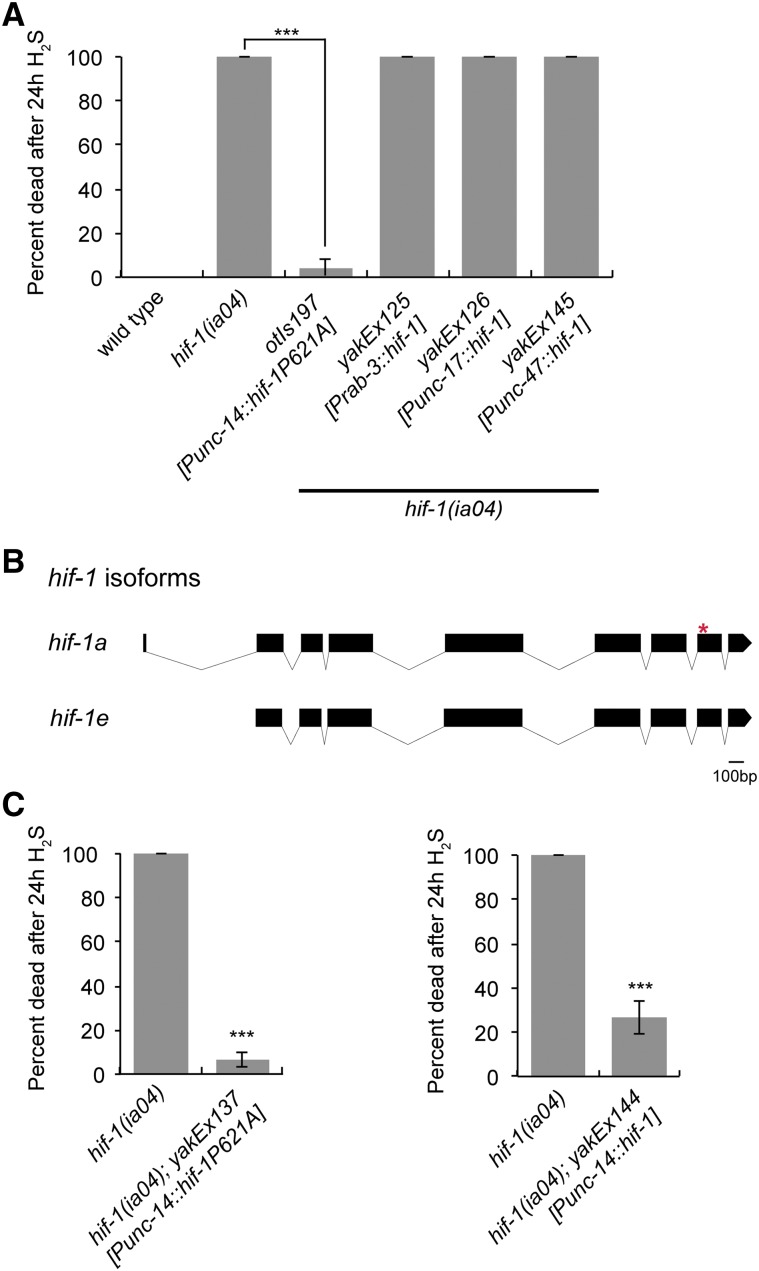
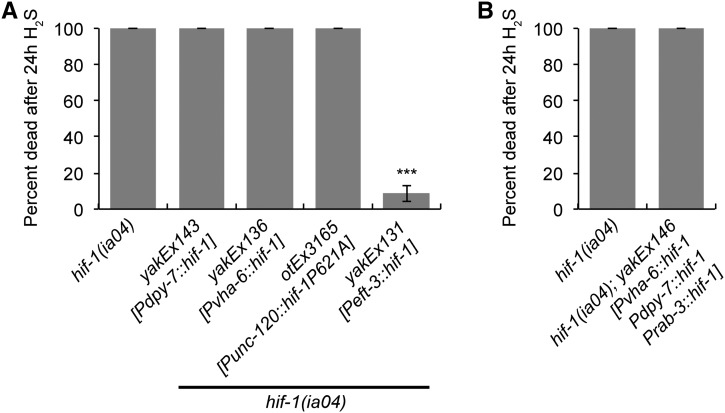
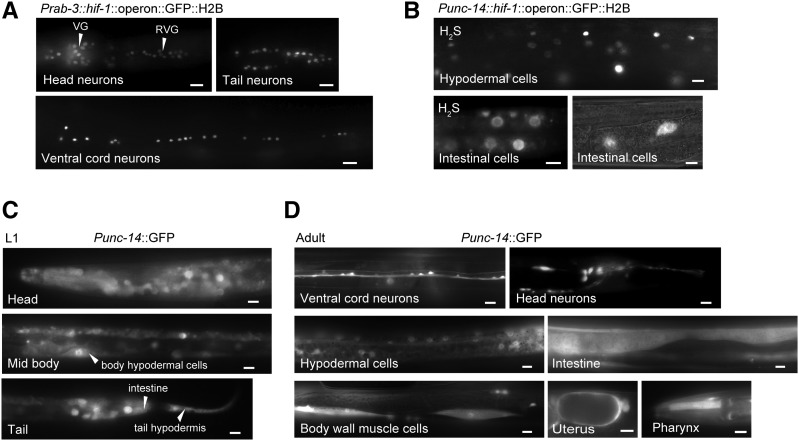
Hydrogen sulfide is common in the environment, and is also endogenously produced by animal cells. Although hydrogen sulfide is often toxic, exposure to low levels of hydrogen sulfide improves outcomes in a variety of mammalian models of ischemia-reperfusion injury. In , the initial transcriptional response to hydrogen sulfide depends on the transcription factor, and mutant animals die when exposed to hydrogen sulfide. In this study, we use rescue experiments to identify tissues in which is required to survive exposure to hydrogen sulfide. We find that expression of from the promoter is sufficient to survive hydrogen sulfide. Although is generally considered to be a pan-neuronal promoter, we show that it is active in many nonneuronal cells as well. Using other promoters, we show that pan-neuronal expression of is not sufficient to survive exposure to hydrogen sulfide. Our data suggest that is required in many different tissues to direct the essential response to hydrogen sulfide.
硫化氢在环境中很常见,动物细胞也能内源性产生硫化氢。尽管硫化氢通常有毒,但在多种缺血再灌注损伤的哺乳动物模型中,暴露于低水平的硫化氢能改善预后。在[具体情况未提及]中,对硫化氢的初始转录反应依赖于[具体转录因子未提及]转录因子,[具体突变动物未提及]突变动物在暴露于硫化氢时会死亡。在本研究中,我们通过挽救实验来确定在暴露于硫化氢时生存所需[具体物质未提及]的组织。我们发现,由[具体启动子未提及]启动子驱动的[具体物质未提及]表达足以在硫化氢环境中存活。尽管[具体启动子未提及]通常被认为是一个泛神经元启动子,但我们发现它在许多非神经元细胞中也有活性。使用其他启动子,我们发现[具体物质未提及]的泛神经元表达不足以在暴露于硫化氢时存活。我们的数据表明,在许多不同组织中都需要[具体物质未提及]来引导对硫化氢的关键反应。