Hertz Leif, Chen Ye
Laboratory of Metabolic Brain Diseases, Institute of Metabolic Disease Research and Drug Development, China Medical UniversityShenyang, China.
Henry M. Jackson FoundationBethesda, MD, United States.
Front Integr Neurosci. 2017 Aug 25;11:18. doi: 10.3389/fnint.2017.00018. eCollection 2017.
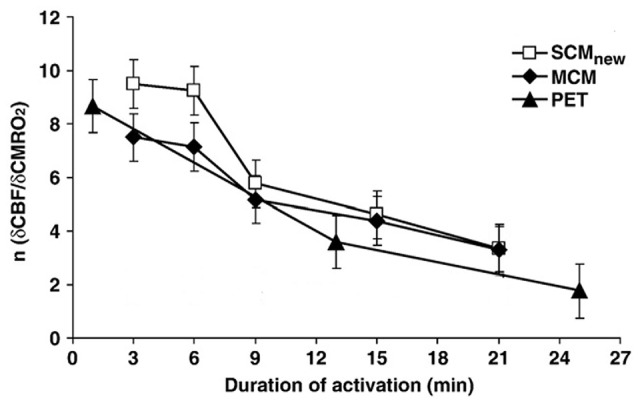
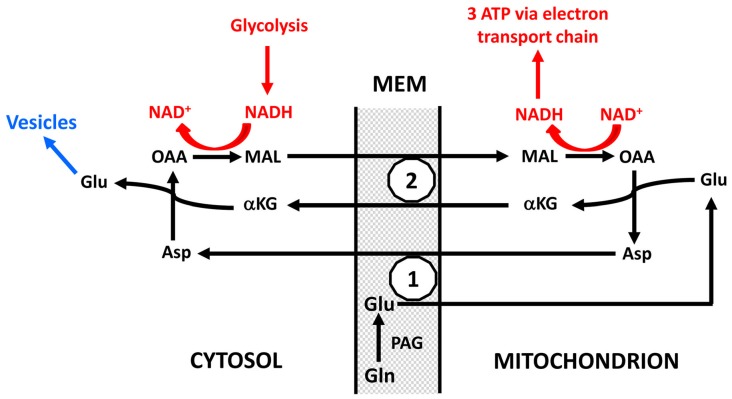
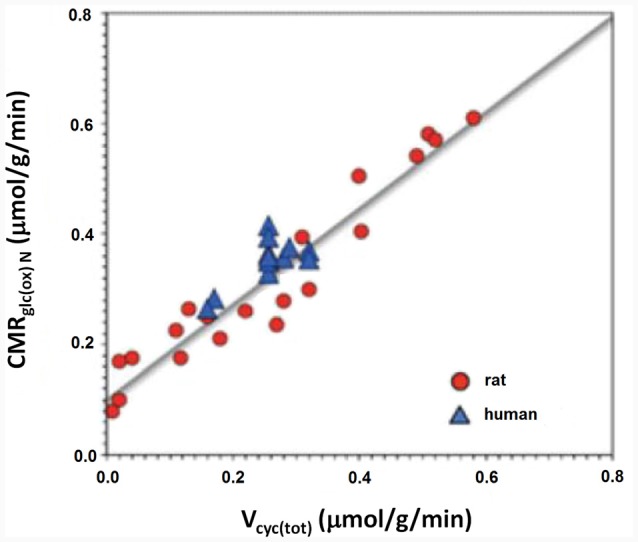
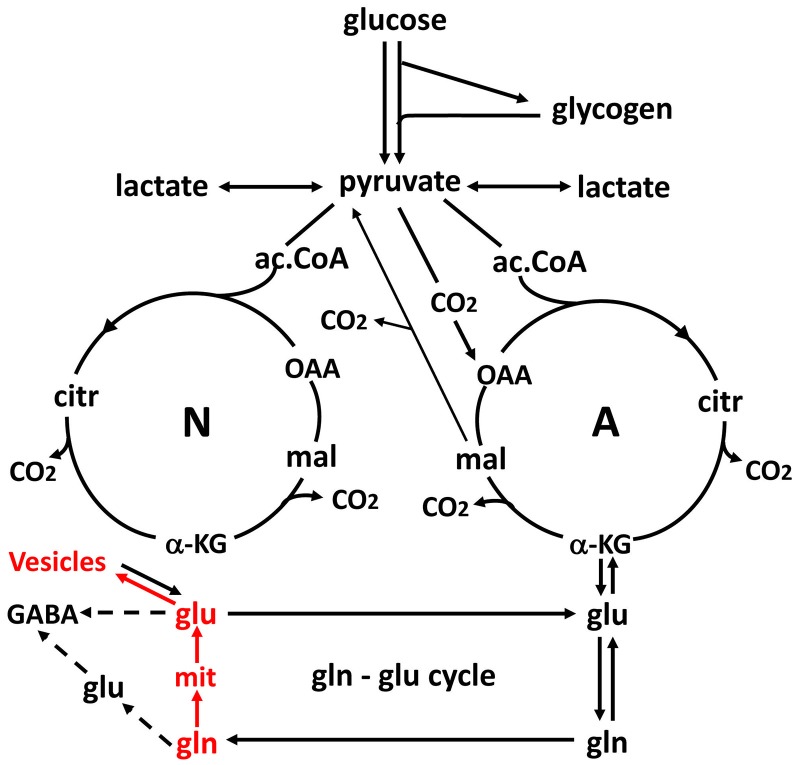
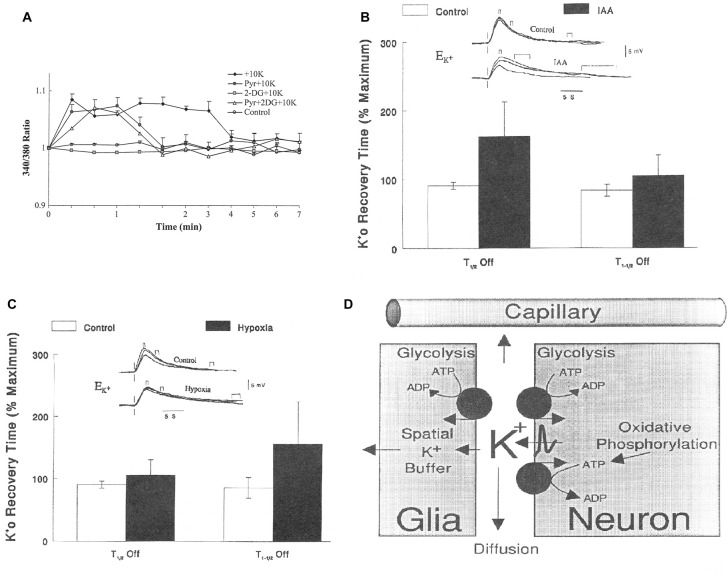
The 1988 observation by Fox et al. (1988) that brief intense brain activation increases glycolysis (pyruvate formation from glucose) much more than oxidative metabolism has been abundantly confirmed. Specifically glycolytic increase was unexpected because the amount of ATP it generates is smaller than that formed by subsequent oxidative metabolism of pyruvate. The present article shows that preferential glycolysis can be explained by metabolic processes associated with activation of the glutamate-glutamine cycle. The flux in this cycle, which is essential for production of transmitter glutamate and GABA, equals 75% of brain glucose utilization and each turn is associated with utilization of ~1 glucose molecule. About one half of the association between cycle flux and glucose metabolism occurs during neuronal conversion of glutamine to glutamate in a process similar to the malate-aspartate shuttle (MAS) except that glutamate is supplied from glutamine, not formed from α-ketoglutarate (αKG) as during operation of conventional MAS. Regular MAS function is triggered by one oxidative process in the cytosol during glycolysis causing NAD reduction to NADH. Since NADH cannot cross the mitochondrial membrane (MEM) for oxidation NAD is re-generated by conversion of cytosolic oxaloacetate (OAA) to malate, which enters the mitochondria for oxidation and in a cyclic process regenerates cytosolic OAA. Therefore MAS as well as the "pseudo-MAS" necessary for neuronal glutamate formation can only operate together with cytosolic reduction of NAD to NADH. The major process causing NAD reduction is glycolysis which therefore also occur during neuronal conversion of glutamine to glutamate and may energize vesicular glutamate uptake which preferentially uses glycolytically derived energy. Another major contributor to the association between glutamate-glutamine cycle and glucose utilization is the need for astrocytic pyruvate to generate glutamate. Although some oxidative metabolism occurs during glutamate formation it is only one half of that during normal tricarboxylic acid (TCA) cycle function. Glutamate's receptor stimulation leads to potassium ion (K) release and astrocytic uptake, preferentially fueled by glycolysis and followed by release and neuronal re-accumulation. The activation-induced preferential glycolysis diminishes with continued activation and is followed by an increased ratio between oxidative metabolism and glycolysis, reflecting oxidation of generated glutamate and accumulated lactate.
福克斯等人于1988年观察到,短暂的强烈脑部激活会使糖酵解(从葡萄糖生成丙酮酸)比氧化代谢增加得更多,这一观察结果已得到大量证实。具体而言,糖酵解增加出乎意料,因为其产生的三磷酸腺苷(ATP)量比丙酮酸随后的氧化代谢所形成的量要少。本文表明,优先进行糖酵解可以通过与谷氨酸 - 谷氨酰胺循环激活相关的代谢过程来解释。该循环中的通量对于神经递质谷氨酸和γ-氨基丁酸(GABA)的产生至关重要,其等于大脑葡萄糖利用率的75%,并且每一轮循环与约1个葡萄糖分子的利用相关。循环通量与葡萄糖代谢之间约一半的关联发生在神经元将谷氨酰胺转化为谷氨酸的过程中,这一过程类似于苹果酸 - 天冬氨酸穿梭(MAS),不同之处在于谷氨酸是由谷氨酰胺提供,而不是像传统MAS运作时那样由α-酮戊二酸(αKG)形成。常规MAS功能由糖酵解过程中细胞质中的一个氧化过程触发,导致烟酰胺腺嘌呤二核苷酸(NAD)还原为还原型烟酰胺腺嘌呤二核苷酸(NADH)。由于NADH不能穿过线粒体膜(MEM)进行氧化,NAD通过将细胞质中的草酰乙酸(OAA)转化为苹果酸而再生,苹果酸进入线粒体进行氧化,并在一个循环过程中再生细胞质中的OAA。因此,MAS以及神经元谷氨酸形成所需的“假MAS”只能与细胞质中NAD还原为NADH同时进行。导致NAD还原的主要过程是糖酵解,因此在神经元将谷氨酰胺转化为谷氨酸的过程中也会发生,并且可能为优先利用糖酵解衍生能量的囊泡谷氨酸摄取提供能量。谷氨酸 - 谷氨酰胺循环与葡萄糖利用之间关联的另一个主要因素是星形胶质细胞需要丙酮酸来生成谷氨酸。尽管在谷氨酸形成过程中会发生一些氧化代谢,但这只是正常三羧酸(TCA)循环功能期间氧化代谢的一半。谷氨酸受体刺激导致钾离子(K)释放和星形胶质细胞摄取,优先由糖酵解提供能量,随后是释放和神经元重新积累。激活诱导的优先糖酵解随着持续激活而减少,随后氧化代谢与糖酵解的比例增加,这反映了生成的谷氨酸和积累的乳酸的氧化。