Research Unit Comparative Microbiome Analysis (COMI), Helmholtz Zentrum München, Ingolstaedter Landstraße 1, D-85764, Neuherberg, Germany.
General and Molecular Microbiology, Institute for Chemistry and Biology of the Marine Environment (ICBM), Carl von Ossietzky University Oldenburg, Carl-von-Ossietzky-Straße 9-11, 26111, Oldenburg, Germany.
Microbiome. 2017 Sep 11;5(1):118. doi: 10.1186/s40168-017-0337-8.
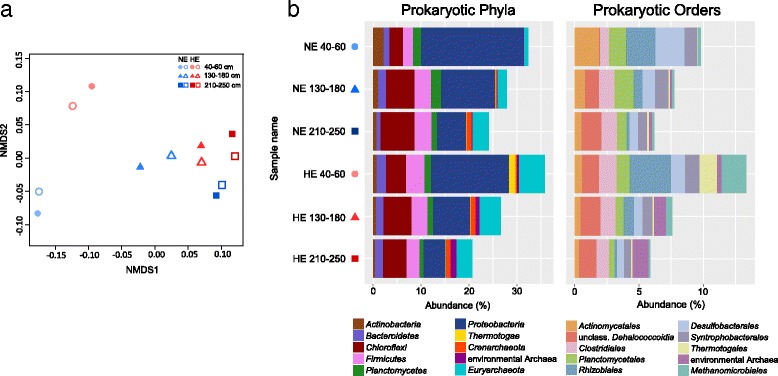
Natural oil seeps offer the opportunity to study the adaptation of ecosystems and the associated microbiota to long-term oil exposure. In the current study, we investigated a land-to-sea transition ecosystem called "Keri Lake" in Zakynthos Island, Greece. This ecosystem is unique due to asphalt oil springs found at several sites, a phenomenon already reported 2500 years ago. Sediment microbiomes at Keri Lake were studied, and their structure and functional potential were compared to other ecosystems with oil exposure histories of various time periods.
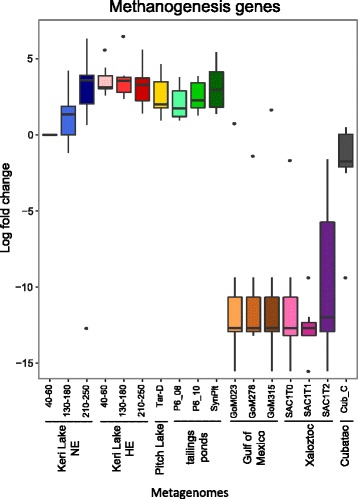
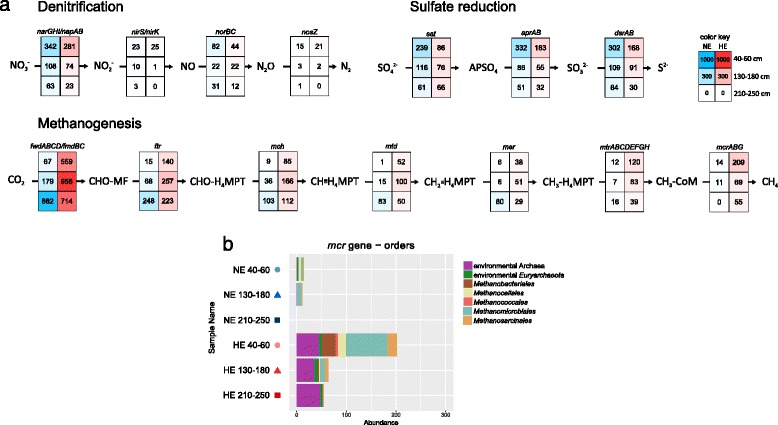
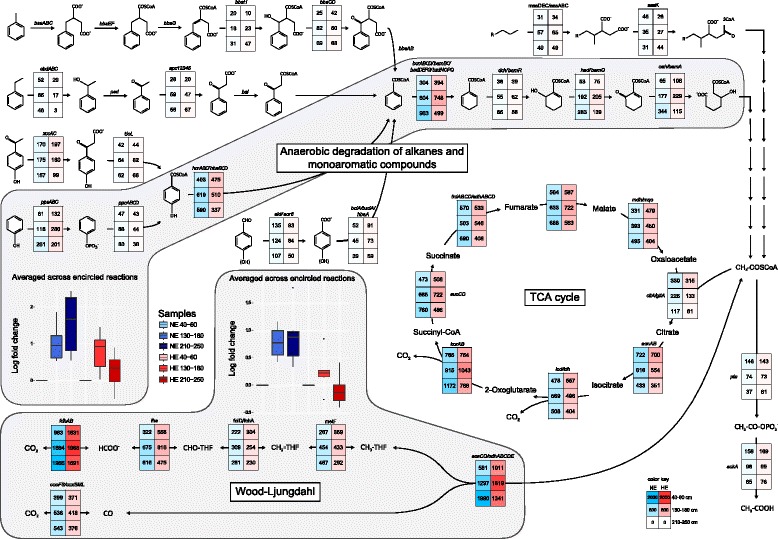
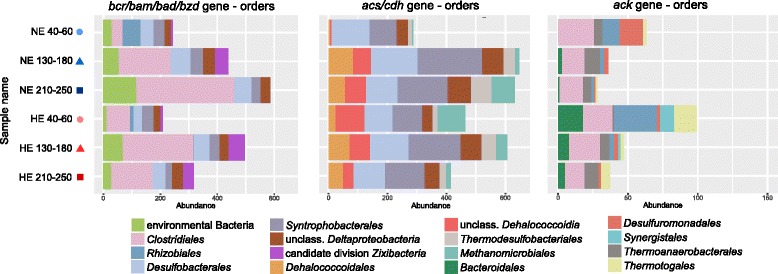
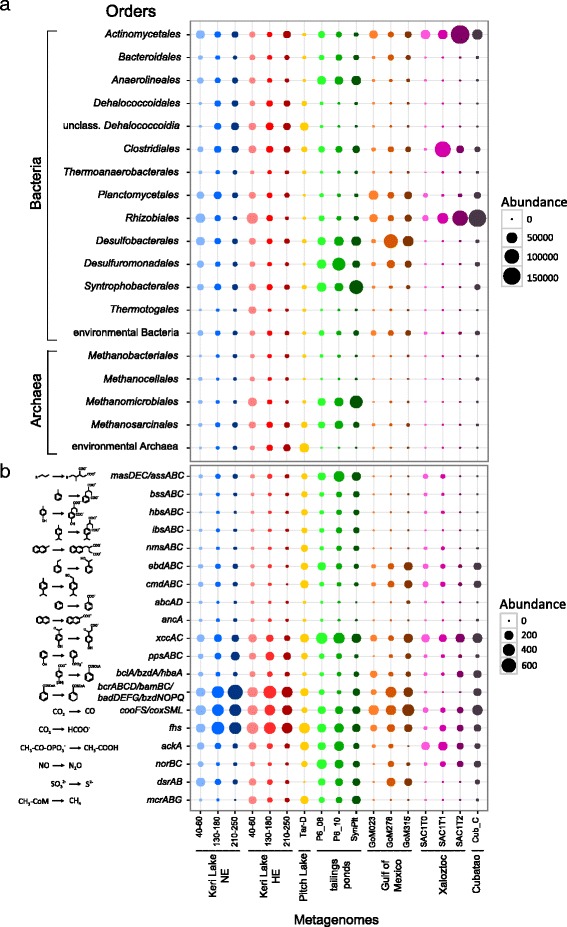
Replicate sediment cores (up to 3-m depth) were retrieved from one site exposed to oil as well as a non-exposed control site. Samples from three different depths were subjected to chemical analysis and metagenomic shotgun sequencing. At the oil-exposed site, we observed high amounts of asphalt oil compounds and a depletion of sulfate compared to the non-exposed control site. The numbers of reads assigned to genes involved in the anaerobic degradation of hydrocarbons were similar between the two sites. The numbers of denitrifiers and sulfate reducers were clearly lower in the samples from the oil-exposed site, while a higher abundance of methanogens was detected compared to the non-exposed site. Higher abundances of the genes of methanogenesis were also observed in the metagenomes from other ecosystems with a long history of oil exposure, compared to short-term exposed environments.
The analysis of Keri Lake metagenomes revealed that microbiomes in the oil-exposed sediment have a higher potential for methanogenesis over denitrification/sulfate reduction, compared to those in the non-exposed site. Comparison with metagenomes from various oil-impacted environments suggests that syntrophic interactions of hydrocarbon degraders with methanogens are favored in the ecosystems with a long-term presence of oil.
自然石油渗漏为研究生态系统及其相关微生物群落对长期石油暴露的适应提供了机会。在本研究中,我们调查了希腊扎金索斯岛一个被称为“克里湖”的陆海过渡生态系统。由于在多个地点发现了沥青油泉,该生态系统具有独特性,这种现象早在 2500 年前就已经有报道。对克里湖的沉积物微生物组进行了研究,并将其结构和功能潜力与具有不同石油暴露历史的其他生态系统进行了比较。
从一个暴露于石油的地点和一个未暴露的对照地点采集了多个(最多 3 米深)沉积物岩芯进行重复采集。对来自三个不同深度的样品进行了化学分析和宏基因组 shotgun 测序。在暴露于石油的地点,我们观察到与未暴露的对照地点相比,沥青油化合物的含量很高,而硫酸盐的含量却很低。参与烃类厌氧降解的基因的读数数量在两个地点之间相似。在暴露于石油的地点的样本中,反硝化菌和硫酸盐还原菌的数量明显减少,而与未暴露的地点相比,产甲烷菌的丰度更高。与短期暴露环境相比,在具有长期石油暴露历史的其他生态系统的宏基因组中,也观察到更多的甲烷生成基因的丰度。
克里湖宏基因组的分析表明,与未暴露的地点相比,暴露于石油的沉积物微生物组中甲烷生成的潜力高于反硝化/硫酸盐还原。与各种受石油影响的环境的宏基因组进行比较表明,在长期存在石油的生态系统中,烃类降解物与产甲烷物之间的共生相互作用更为有利。