• 文献检索
  • 文档翻译
  • 深度研究
  • 学术资讯
  • Suppr Zotero 插件Zotero 插件
  • 邀请有礼
  • 套餐&价格
  • 历史记录
应用&插件
Suppr Zotero 插件Zotero 插件浏览器插件Mac 客户端Windows 客户端微信小程序
定价
高级版会员购买积分包购买API积分包
服务
文献检索文档翻译深度研究API 文档MCP 服务
关于我们
关于 Suppr公司介绍联系我们用户协议隐私条款
关注我们

Suppr 超能文献

核心技术专利:CN118964589B侵权必究
粤ICP备2023148730 号-1Suppr @ 2026

文献检索

告别复杂PubMed语法,用中文像聊天一样搜索,搜遍4000万医学文献。AI智能推荐,让科研检索更轻松。

立即免费搜索

文件翻译

保留排版,准确专业,支持PDF/Word/PPT等文件格式,支持 12+语言互译。

免费翻译文档

深度研究

AI帮你快速写综述,25分钟生成高质量综述,智能提取关键信息,辅助科研写作。

立即免费体验

一种从头生成亚结构算法,用于鉴定肝 X 受体β激动剂的优势化学片段。

A de novo substructure generation algorithm for identifying the privileged chemical fragments of liver X receptorβ agonists.

机构信息

Research Center for Drug Discovery, School of Pharmaceutical Sciences and School of Life Sciences, Sun Yat-Sen University, 132 East Circle at University City, Guangzhou, 510006, China.

出版信息

Sci Rep. 2017 Sep 11;7(1):11121. doi: 10.1038/s41598-017-08848-4.

DOI:10.1038/s41598-017-08848-4
PMID:28894088
原文链接:https://pmc.ncbi.nlm.nih.gov/articles/PMC5593923/
Abstract

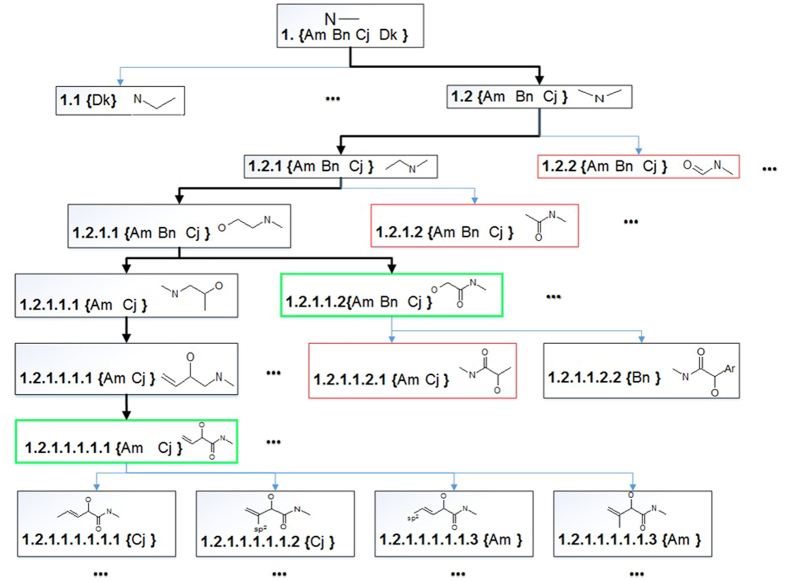
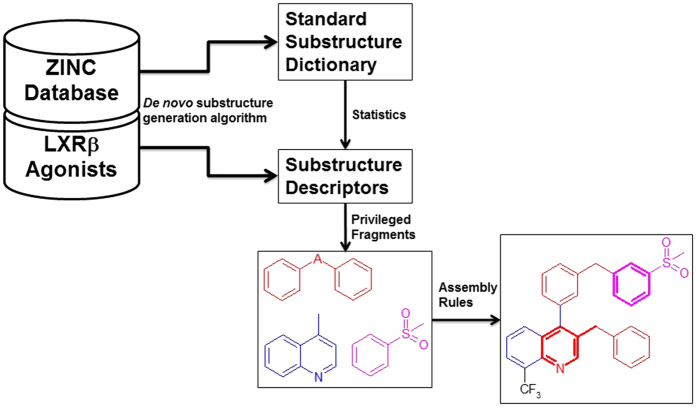
Liver X receptorβ (LXRβ) is a promising therapeutic target for lipid disorders, atherosclerosis, chronic inflammation, autoimmunity, cancer and neurodegenerative diseases. Druggable LXRβ agonists have been explored over the past decades. However, the pocket of LXRβ ligand-binding domain (LBD) is too large to predict LXRβ agonists with novel scaffolds based on either receptor or agonist structures. In this paper, we report a de novo algorithm which drives privileged LXRβ agonist fragments by starting with individual chemical bonds (de novo) from every molecule in a LXRβ agonist library, growing the bonds into substructures based on the agonist structures with isomorphic and homomorphic restrictions, and electing the privileged fragments from the substructures with a popularity threshold and background chemical and biological knowledge. Using these privileged fragments as queries, we were able to figure out the rules to reconstruct LXRβ agonist molecules from the fragments. The privileged fragments were validated by building regularized logistic regression (RLR) and supporting vector machine (SVM) models as descriptors to predict a LXRβ agonist activities.

摘要

肝 X 受体β(LXRβ)是治疗脂质代谢紊乱、动脉粥样硬化、慢性炎症、自身免疫、癌症和神经退行性疾病的有希望的靶点。在过去几十年中,人们一直在探索可成药的 LXRβ 激动剂。然而,LXRβ 配体结合域(LBD)的口袋太大,无法基于受体或激动剂结构来预测具有新型骨架的 LXRβ 激动剂。在本文中,我们报告了一种从头开始的算法,该算法从 LXRβ 激动剂库中的每个分子的单个化学键(从头开始)开始,根据具有同构和同态限制的激动剂结构将化学键扩展成亚结构,并从具有流行阈值和背景化学和生物学知识的亚结构中选择特权片段。使用这些特权片段作为查询,我们能够从片段中找出重建 LXRβ 激动剂分子的规则。通过构建正则化逻辑回归(RLR)和支持向量机(SVM)模型作为描述符来验证特权片段,以预测 LXRβ 激动剂的活性。
https://cdn.ncbi.nlm.nih.gov/pmc/blobs/fcf7/5593923/71bf428cede2/41598_2017_8848_Fig18_HTML.jpg
https://cdn.ncbi.nlm.nih.gov/pmc/blobs/fcf7/5593923/b4435094b981/41598_2017_8848_Fig1_HTML.jpg
https://cdn.ncbi.nlm.nih.gov/pmc/blobs/fcf7/5593923/33e3365d4fa6/41598_2017_8848_Fig2_HTML.jpg
https://cdn.ncbi.nlm.nih.gov/pmc/blobs/fcf7/5593923/cc91813875ed/41598_2017_8848_Fig3_HTML.jpg
https://cdn.ncbi.nlm.nih.gov/pmc/blobs/fcf7/5593923/10d1af4819d2/41598_2017_8848_Fig4_HTML.jpg
https://cdn.ncbi.nlm.nih.gov/pmc/blobs/fcf7/5593923/a1a6afa446ab/41598_2017_8848_Fig5_HTML.jpg
https://cdn.ncbi.nlm.nih.gov/pmc/blobs/fcf7/5593923/4d8efd633db3/41598_2017_8848_Fig6_HTML.jpg
https://cdn.ncbi.nlm.nih.gov/pmc/blobs/fcf7/5593923/a3605454cd2b/41598_2017_8848_Fig7_HTML.jpg
https://cdn.ncbi.nlm.nih.gov/pmc/blobs/fcf7/5593923/6981017b3c01/41598_2017_8848_Fig8_HTML.jpg
https://cdn.ncbi.nlm.nih.gov/pmc/blobs/fcf7/5593923/746519c40b76/41598_2017_8848_Fig9_HTML.jpg
https://cdn.ncbi.nlm.nih.gov/pmc/blobs/fcf7/5593923/857e0c2b9ff2/41598_2017_8848_Fig10_HTML.jpg
https://cdn.ncbi.nlm.nih.gov/pmc/blobs/fcf7/5593923/c96ca6c54dab/41598_2017_8848_Fig11_HTML.jpg
https://cdn.ncbi.nlm.nih.gov/pmc/blobs/fcf7/5593923/5247dda36f76/41598_2017_8848_Fig12_HTML.jpg
https://cdn.ncbi.nlm.nih.gov/pmc/blobs/fcf7/5593923/e3b7c438c7bf/41598_2017_8848_Fig13_HTML.jpg
https://cdn.ncbi.nlm.nih.gov/pmc/blobs/fcf7/5593923/b99630194897/41598_2017_8848_Fig14_HTML.jpg
https://cdn.ncbi.nlm.nih.gov/pmc/blobs/fcf7/5593923/2cc94ab1b400/41598_2017_8848_Fig15_HTML.jpg
https://cdn.ncbi.nlm.nih.gov/pmc/blobs/fcf7/5593923/1cb9e6c22dcb/41598_2017_8848_Fig16_HTML.jpg
https://cdn.ncbi.nlm.nih.gov/pmc/blobs/fcf7/5593923/767a363d30cd/41598_2017_8848_Fig17_HTML.jpg
https://cdn.ncbi.nlm.nih.gov/pmc/blobs/fcf7/5593923/71bf428cede2/41598_2017_8848_Fig18_HTML.jpg
https://cdn.ncbi.nlm.nih.gov/pmc/blobs/fcf7/5593923/b4435094b981/41598_2017_8848_Fig1_HTML.jpg
https://cdn.ncbi.nlm.nih.gov/pmc/blobs/fcf7/5593923/33e3365d4fa6/41598_2017_8848_Fig2_HTML.jpg
https://cdn.ncbi.nlm.nih.gov/pmc/blobs/fcf7/5593923/cc91813875ed/41598_2017_8848_Fig3_HTML.jpg
https://cdn.ncbi.nlm.nih.gov/pmc/blobs/fcf7/5593923/10d1af4819d2/41598_2017_8848_Fig4_HTML.jpg
https://cdn.ncbi.nlm.nih.gov/pmc/blobs/fcf7/5593923/a1a6afa446ab/41598_2017_8848_Fig5_HTML.jpg
https://cdn.ncbi.nlm.nih.gov/pmc/blobs/fcf7/5593923/4d8efd633db3/41598_2017_8848_Fig6_HTML.jpg
https://cdn.ncbi.nlm.nih.gov/pmc/blobs/fcf7/5593923/a3605454cd2b/41598_2017_8848_Fig7_HTML.jpg
https://cdn.ncbi.nlm.nih.gov/pmc/blobs/fcf7/5593923/6981017b3c01/41598_2017_8848_Fig8_HTML.jpg
https://cdn.ncbi.nlm.nih.gov/pmc/blobs/fcf7/5593923/746519c40b76/41598_2017_8848_Fig9_HTML.jpg
https://cdn.ncbi.nlm.nih.gov/pmc/blobs/fcf7/5593923/857e0c2b9ff2/41598_2017_8848_Fig10_HTML.jpg
https://cdn.ncbi.nlm.nih.gov/pmc/blobs/fcf7/5593923/c96ca6c54dab/41598_2017_8848_Fig11_HTML.jpg
https://cdn.ncbi.nlm.nih.gov/pmc/blobs/fcf7/5593923/5247dda36f76/41598_2017_8848_Fig12_HTML.jpg
https://cdn.ncbi.nlm.nih.gov/pmc/blobs/fcf7/5593923/e3b7c438c7bf/41598_2017_8848_Fig13_HTML.jpg
https://cdn.ncbi.nlm.nih.gov/pmc/blobs/fcf7/5593923/b99630194897/41598_2017_8848_Fig14_HTML.jpg
https://cdn.ncbi.nlm.nih.gov/pmc/blobs/fcf7/5593923/2cc94ab1b400/41598_2017_8848_Fig15_HTML.jpg
https://cdn.ncbi.nlm.nih.gov/pmc/blobs/fcf7/5593923/1cb9e6c22dcb/41598_2017_8848_Fig16_HTML.jpg
https://cdn.ncbi.nlm.nih.gov/pmc/blobs/fcf7/5593923/767a363d30cd/41598_2017_8848_Fig17_HTML.jpg
https://cdn.ncbi.nlm.nih.gov/pmc/blobs/fcf7/5593923/71bf428cede2/41598_2017_8848_Fig18_HTML.jpg

相似文献

1
A de novo substructure generation algorithm for identifying the privileged chemical fragments of liver X receptorβ agonists.一种从头生成亚结构算法,用于鉴定肝 X 受体β激动剂的优势化学片段。
Sci Rep. 2017 Sep 11;7(1):11121. doi: 10.1038/s41598-017-08848-4.
2
Predicting selective liver X receptor β agonists using multiple machine learning methods.使用多种机器学习方法预测选择性肝脏X受体β激动剂
Mol Biosyst. 2015 May;11(5):1241-50. doi: 10.1039/c4mb00718b.
3
Identifying selective agonists targeting LXRβ from terpene compounds of alismatis rhizoma.从泽泻根茎的萜类化合物中鉴定靶向 LXRβ 的选择性激动剂。
J Mol Model. 2021 Feb 22;27(3):91. doi: 10.1007/s00894-021-04699-z.
4
Structurally Selective Mechanism of Liver X Receptor Ligand: and Studies.肝 X 受体配体的结构选择性机制: 和 研究。
J Chem Inf Model. 2019 Jul 22;59(7):3277-3290. doi: 10.1021/acs.jcim.9b00292. Epub 2019 Jun 26.
5
Development of Tetrachlorophthalimides as Liver X Receptor β (LXRβ)-Selective Agonists.四氯邻苯二甲酰亚胺作为肝脏X受体β(LXRβ)选择性激动剂的开发。
ChemMedChem. 2016 Oct 19;11(20):2347-2360. doi: 10.1002/cmdc.201600305. Epub 2016 Sep 30.
6
Identify liver X receptor β modulator building blocks by developing a fluorescence polarization-based competition assay.通过开发基于荧光偏振的竞争测定法,鉴定肝 X 受体 β 调节剂构建模块。
Eur J Med Chem. 2019 Sep 15;178:458-467. doi: 10.1016/j.ejmech.2019.06.011. Epub 2019 Jun 10.
7
Structural development of tetrachlorophthalimides as liver X receptor β (LXRβ)-selective agonists with improved aqueous solubility.四氯邻苯二甲酰亚胺作为具有改善水溶性的肝脏X受体β(LXRβ)选择性激动剂的结构开发。
Bioorg Med Chem Lett. 2018 Feb 15;28(4):796-801. doi: 10.1016/j.bmcl.2017.12.024. Epub 2017 Dec 13.
8
Discovery of Spiro[pyrrolidine-3,3'-oxindole] LXRβ Agonists for the Treatment of Osteoporosis.用于治疗骨质疏松症的螺环[吡咯烷-3,3'-吲哚酮]类肝脏X受体β激动剂的发现
J Med Chem. 2023 Jan 12;66(1):752-765. doi: 10.1021/acs.jmedchem.2c01661. Epub 2022 Dec 20.
9
Identfication of Potent LXRβ-Selective Agonists without LXRα Activation by In Silico Approaches.通过计算机模拟方法鉴定强效 LXRβ 选择性激动剂而不激活 LXRα。
Molecules. 2018 Jun 4;23(6):1349. doi: 10.3390/molecules23061349.
10
Discovery of new LXRβ agonists as glioblastoma inhibitors.发现新的 LXRβ 激动剂作为脑胶质瘤抑制剂。
Eur J Med Chem. 2020 May 15;194:112240. doi: 10.1016/j.ejmech.2020.112240. Epub 2020 Mar 17.

引用本文的文献

1
LSA: a local-weighted structural alignment tool for pharmaceutical virtual screening.LSA:一种用于药物虚拟筛选的局部加权结构比对工具。
RSC Adv. 2019 Jan 29;9(7):3912-3917. doi: 10.1039/c8ra08915a. eCollection 2019 Jan 25.
2
Identfication of Potent LXRβ-Selective Agonists without LXRα Activation by In Silico Approaches.通过计算机模拟方法鉴定强效 LXRβ 选择性激动剂而不激活 LXRα。
Molecules. 2018 Jun 4;23(6):1349. doi: 10.3390/molecules23061349.

本文引用的文献

1
Discriminating agonist and antagonist ligands of the nuclear receptors using 3D-pharmacophores.利用三维药效团区分核受体的激动剂和拮抗剂配体。
J Cheminform. 2016 Sep 6;8(1):43. doi: 10.1186/s13321-016-0154-2. eCollection 2016.
2
The Development of Novel Chemical Fragment-Based Descriptors Using Frequent Common Subgraph Mining Approach and Their Application in QSAR Modeling.基于频繁公共子图挖掘方法的新型化学片段描述符的开发及其在定量构效关系建模中的应用。
Mol Inform. 2014 Mar;33(3):201-15. doi: 10.1002/minf.201300165. Epub 2014 Mar 11.
3
Design Principles for Fragment Libraries: Maximizing the Value of Learnings from Pharma Fragment-Based Drug Discovery (FBDD) Programs for Use in Academia.
片段库的设计原则:最大化从制药行业基于片段的药物发现(FBDD)项目中获得的知识价值以应用于学术界。
J Med Chem. 2016 Sep 22;59(18):8189-206. doi: 10.1021/acs.jmedchem.6b00197. Epub 2016 May 16.
4
The emerging roles of liver X receptors and their ligands in cancer.肝脏X受体及其配体在癌症中的新作用。
Expert Opin Ther Targets. 2016;20(1):61-71. doi: 10.1517/14728222.2015.1081169. Epub 2015 Aug 26.
5
Mining Discriminative Patterns from Graph Data with Multiple Labels and Its Application to Quantitative Structure-Activity Relationship (QSAR) Models.从具有多个标签的图数据中挖掘判别模式及其在定量构效关系 (QSAR) 模型中的应用。
J Chem Inf Model. 2015 Dec 28;55(12):2519-27. doi: 10.1021/acs.jcim.5b00376. Epub 2015 Dec 10.
6
Predicting selective liver X receptor β agonists using multiple machine learning methods.使用多种机器学习方法预测选择性肝脏X受体β激动剂
Mol Biosyst. 2015 May;11(5):1241-50. doi: 10.1039/c4mb00718b.
7
ChemStable: a web server for rule-embedded naïve Bayesian learning approach to predict compound stability.ChemStable:一个用于基于规则的朴素贝叶斯学习方法预测化合物稳定性的网络服务器。
J Comput Aided Mol Des. 2014 Sep;28(9):941-50. doi: 10.1007/s10822-014-9778-3. Epub 2014 Jul 17.
8
Atom pair 2D-fingerprints perceive 3D-molecular shape and pharmacophores for very fast virtual screening of ZINC and GDB-17.原子对二维指纹图谱可识别三维分子形状和药效基团,用于对ZINC和GDB - 17进行非常快速的虚拟筛选。
J Chem Inf Model. 2014 Jul 28;54(7):1892-907. doi: 10.1021/ci500232g. Epub 2014 Jul 2.
9
Liver X receptors in lipid metabolism: opportunities for drug discovery.肝脏 X 受体在脂代谢中的作用:药物研发的机遇。
Nat Rev Drug Discov. 2014 Jun;13(6):433-44. doi: 10.1038/nrd4280. Epub 2014 May 16.
10
Predicting mTOR inhibitors with a classifier using recursive partitioning and Naïve Bayesian approaches.使用递归划分和朴素贝叶斯方法的分类器预测mTOR抑制剂。
PLoS One. 2014 May 12;9(5):e95221. doi: 10.1371/journal.pone.0095221. eCollection 2014.