Forest Pathology Laboratory, Forestry and Forest Products Research Institute, 1 Matsunosato, Tsukuba, Ibaraki, 305-8687, Japan.
Department of Biology, New York University, 100 Washington Square E., New York, NY, 10003, USA.
Sci Rep. 2017 Sep 11;7(1):11135. doi: 10.1038/s41598-017-09871-1.
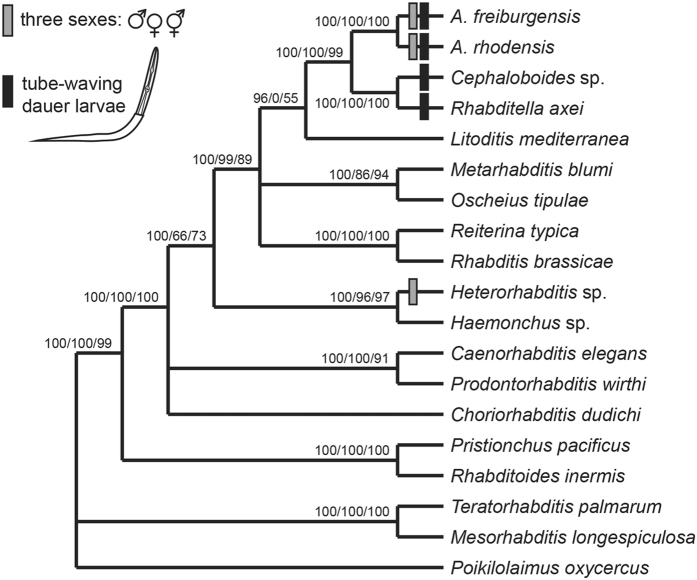
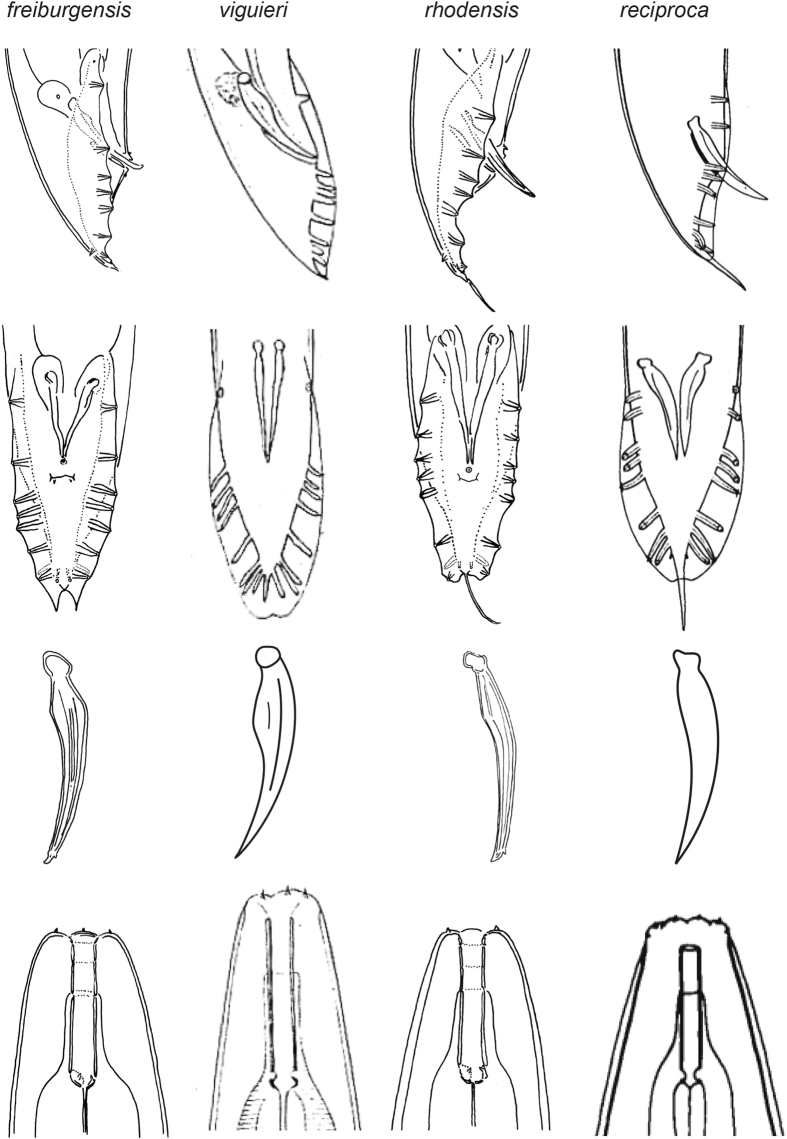
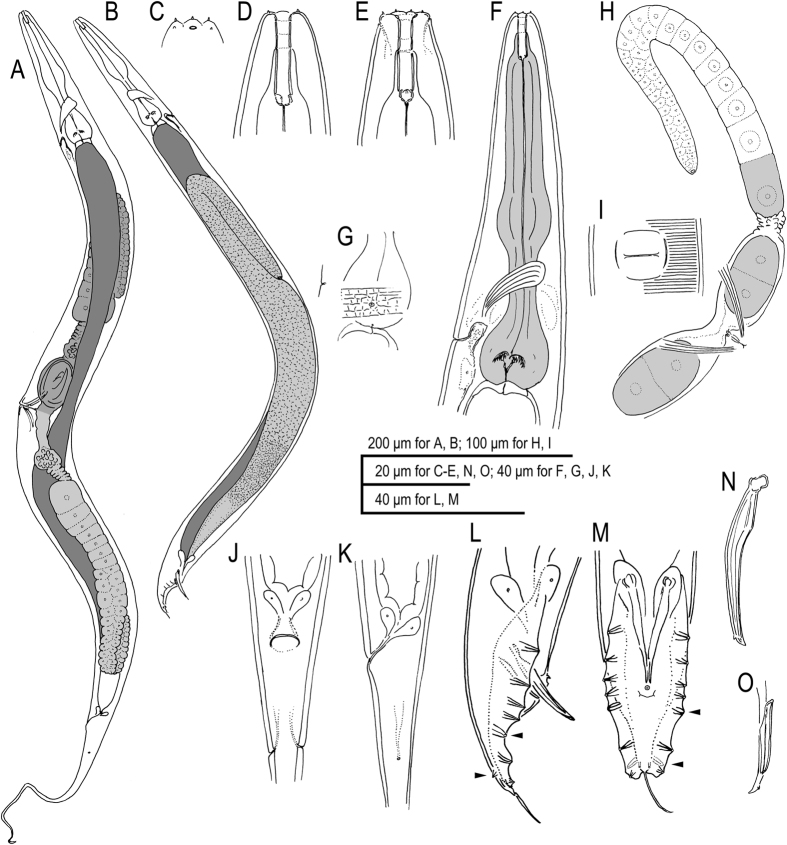
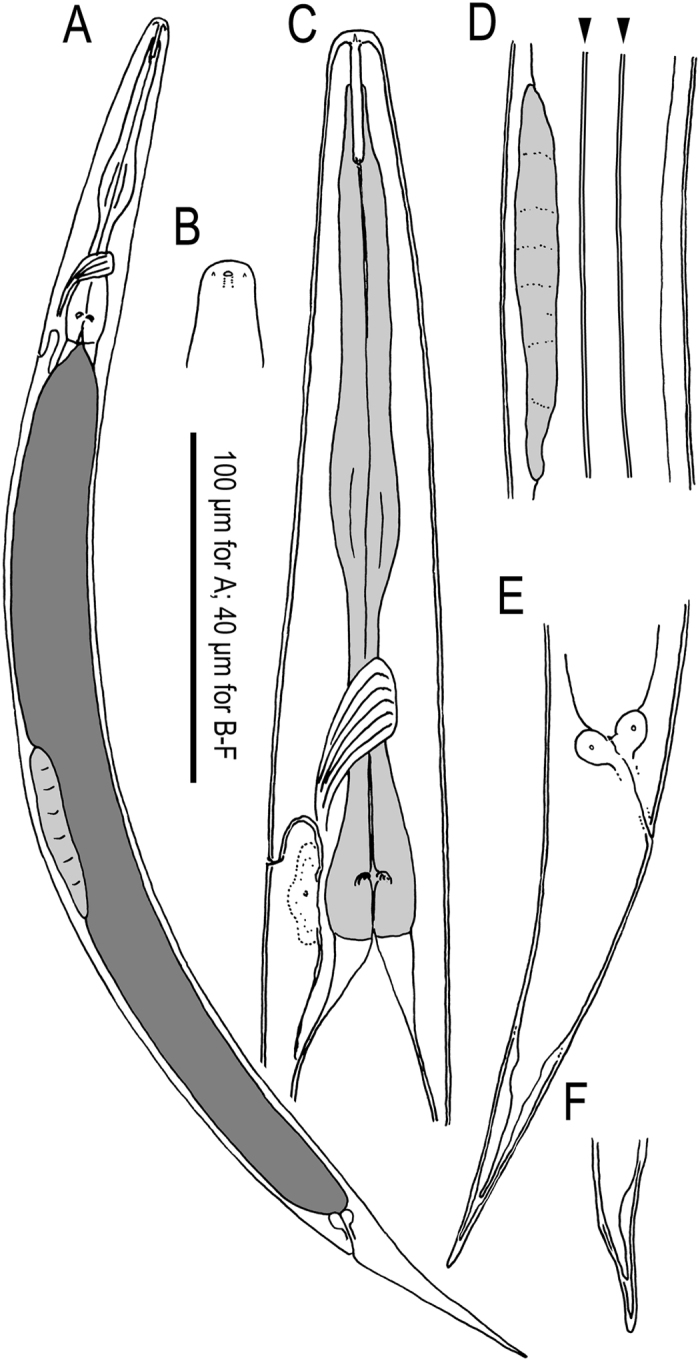
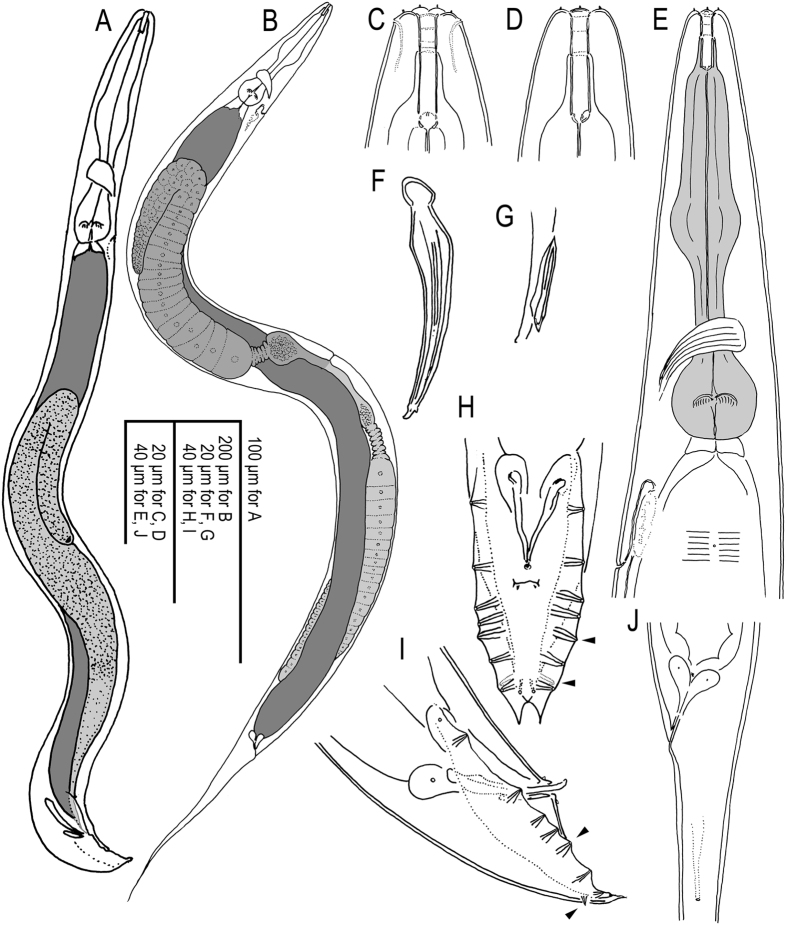
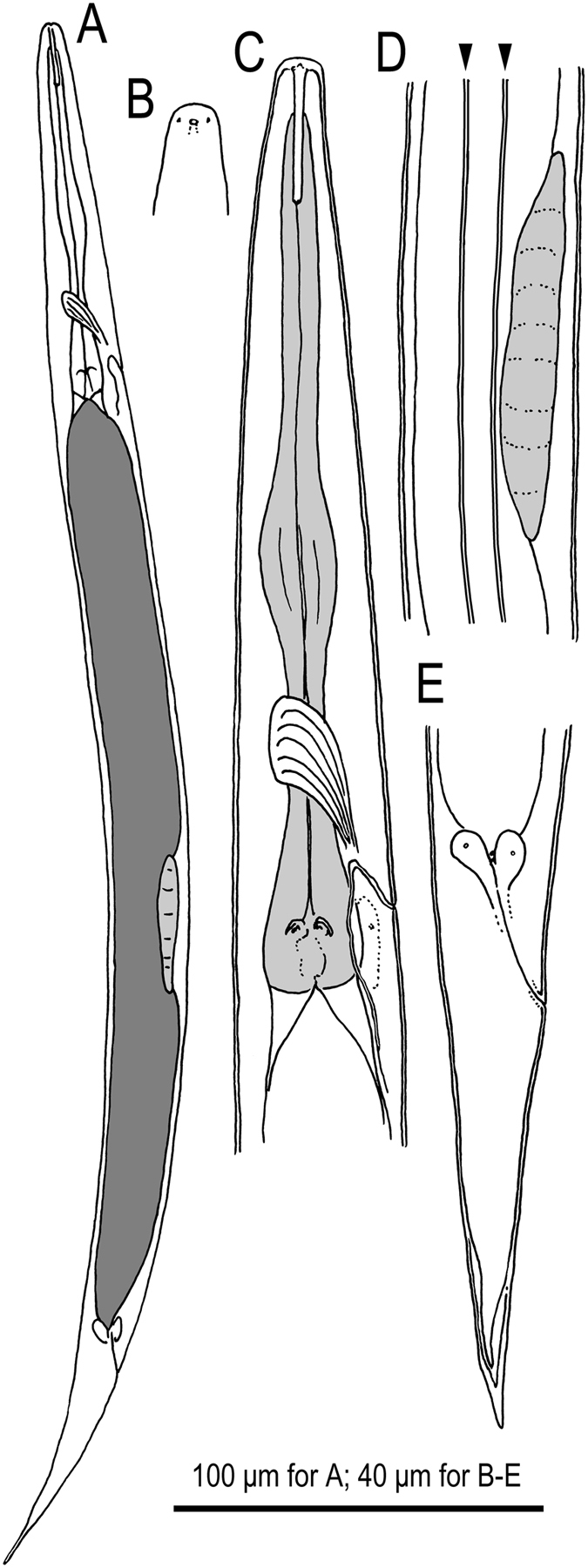
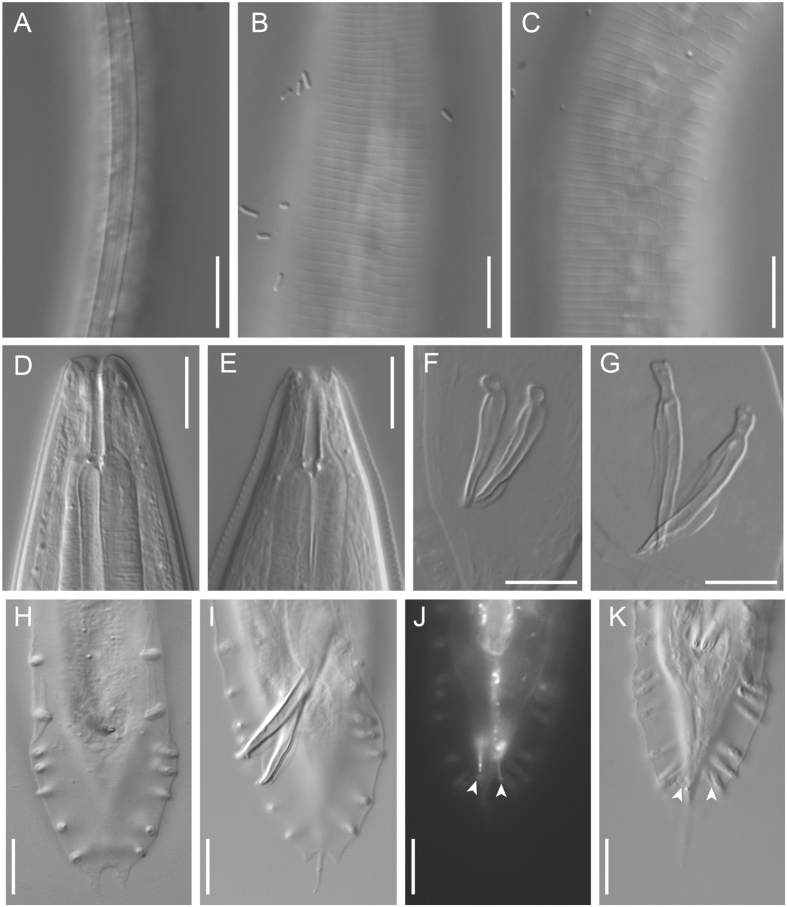
The co-existence of males, females and hermaphrodites, a rare mating system known as trioecy, has been considered as an evolutionarily transient state. In nematodes, androdioecy (males/hermaphrodites) as found in Caenorhabditis elegans, is thought to have evolved from dioecy (males/females) through a trioecious intermediate. Thus, trioecious species are good models to understand the steps and requirements for the evolution of new mating systems. Here we describe two new species of nematodes with trioecy, Auanema rhodensis and A. freiburgensis. Along with molecular barcodes, we provide a detailed analysis of the morphology of these species, and document it with drawings and light and SEM micrographs. Based on morphological data, these free-living nematodes were assigned to a new genus, Auanema, together with three other species described previously. Auanema species display convergent evolution in some features with parasitic nematodes with complex life cycles, such as the production of few males after outcrossing and the obligatory development of dauers into self-propagating adults.
雄性、雌性和雌雄同体共存,这是一种罕见的交配系统,称为三雌同体,被认为是一种进化上的暂态。在线虫中,与秀丽隐杆线虫中发现的雄性雌雄同体(androdioecy)一样,雄性/雌性(dioecy)被认为是通过三雌同体中间阶段进化而来的。因此,三雌同体物种是研究新交配系统进化的步骤和要求的良好模型。在这里,我们描述了两种具有三雌同体的线虫新物种,即罗德线虫(Auanema rhodensis)和弗莱堡线虫(A. freiburgensis)。除了分子条形码外,我们还对这些物种的形态进行了详细分析,并通过绘图和光镜及扫描电镜照片进行了记录。基于形态学数据,这些自由生活的线虫与先前描述的三个其他物种一起被归入一个新属,即 Auanema。Auanema 物种在一些特征上与具有复杂生命周期的寄生线虫表现出趋同进化,例如在杂交后产生很少的雄性,以及休眠体必须发育成自我繁殖的成虫。