Heineman Thomas E, Widman Adam, Kuan Edward C, St John Maie
UCLA Department of Head and Neck Surgery Los Angeles California USA.
UCLA Jonsson Comprehensive Cancer Center California USA.
Laryngoscope Investig Otolaryngol. 2017 May 17;2(3):99-103. doi: 10.1002/lio2.79. eCollection 2017 Jun.
Nivolumab has recently been shown in the phase III clinical trial CheckMate-141 to have superior survival rates compared to the current standard of care chemotherapy for recurrent or metastatic platinum-resistant head and neck squamous cell carcinoma (HNSCC). Nivolumab targets the immune inhibitory receptor programmed cell death 1 (PD-1). Programmed cell death ligand 1 (PD-L1) genomics have been poorly characterized in the context of HNSCC, including expression levels of PD-L1 in individual tumors as well as related up or down-regulated genes that might function as co-targets.
Data mining of The Cancer Genome Atlas (TCGA).
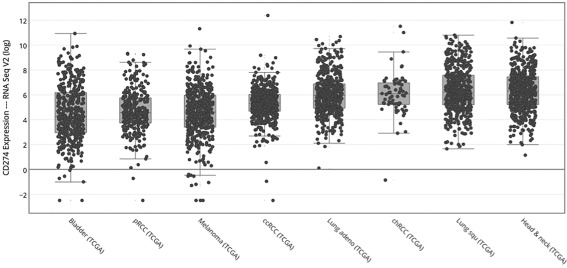
530 patients with HNSCC were pulled from the TCGA using cBioPortal. Primary tumor site data was available in 279 of the samples (52.6%), of which oral cavity was the most common site (61.6%) followed by larynx (25.8%). Other PD-1-sensitive tumors were analyzed to compare PD-L1 expression in HNSCC relative to other tumors including bladder, renal cell carcinoma, melanoma, and lung carcinomas.
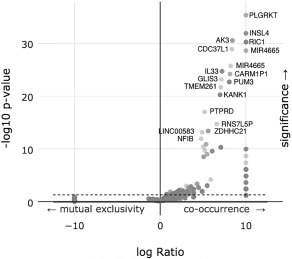
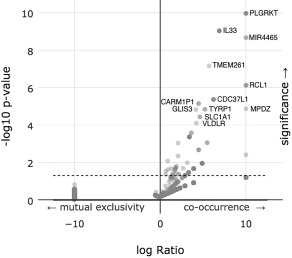
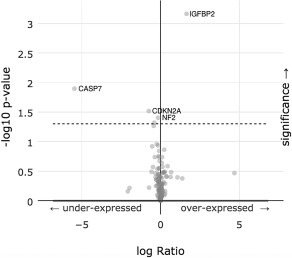
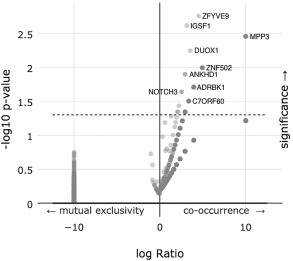
A significant fraction of HNSCC tumors have genetic alterations in PD-L1 (6.2%). HNSCC has the highest PD-L1 expression of all of the tumor types examined, with a median 60-fold increase. Several important genes were identified in this study including Caspase 7, ZFYVE9, and Plg-R(KT) that have a strong relationship with alterations in PD-L1.
In light of the role of PD-1 and PD-L1 as key immunotherapy targets in HNSCC, several potential co-targets identified in this study warrant further investigation. Further, while the number of genetic alterations were small in head and neck carcinomas, alterations in PD-L1 expression were highly significant.
NA.
在III期临床试验CheckMate-141中,与目前用于复发或转移性铂耐药头颈部鳞状细胞癌(HNSCC)的标准护理化疗相比,纳武单抗最近显示出更高的生存率。纳武单抗靶向免疫抑制受体程序性细胞死亡蛋白1(PD-1)。在HNSCC背景下,程序性细胞死亡配体1(PD-L1)基因组学特征尚不明确,包括单个肿瘤中PD-L1的表达水平以及可能作为共同靶点的相关上调或下调基因。
对癌症基因组图谱(TCGA)进行数据挖掘。
使用cBioPortal从TCGA中提取530例HNSCC患者的数据。279个样本(52.6%)提供了原发肿瘤部位数据,其中口腔是最常见的部位(61.6%),其次是喉(25.8%)。分析其他对PD-1敏感的肿瘤,以比较HNSCC中PD-L1表达与其他肿瘤(包括膀胱癌、肾细胞癌、黑色素瘤和肺癌)的差异。
相当一部分HNSCC肿瘤存在PD-L1基因改变(6.2%)。在所有检测的肿瘤类型中,HNSCC的PD-L1表达最高,中位数增加了60倍。本研究确定了几个重要基因,包括半胱天冬酶7、锌指FYVE结构域蛋白9和纤溶酶原受体(KT),它们与PD-L1改变密切相关。
鉴于PD-1和PD-L1作为HNSCC关键免疫治疗靶点的作用,本研究中确定的几个潜在共同靶点值得进一步研究。此外,虽然头颈部癌的基因改变数量较少,但PD-L1表达的改变非常显著。
无。