Hayashi Yoshikazu, Kawakubo-Yasukochi Tomoyo, Mizokami Akiko, Hazekawa Mai, Yakura Tomiko, Naito Munekazu, Takeuchi Hiroshi, Nakamura Seiji, Hirata Masato
Laboratory of Molecular and Cellular Biochemistry, Faculty of Dental Science, Kyushu University, Fukuoka 812-8582, Japan.
Section of Oral and Maxillofacial Oncology, Faculty of Dental Science, Kyushu University, Fukuoka 812-8582, Japan.
J Cancer. 2017 Aug 2;8(13):2478-2486. doi: 10.7150/jca.18648. eCollection 2017.
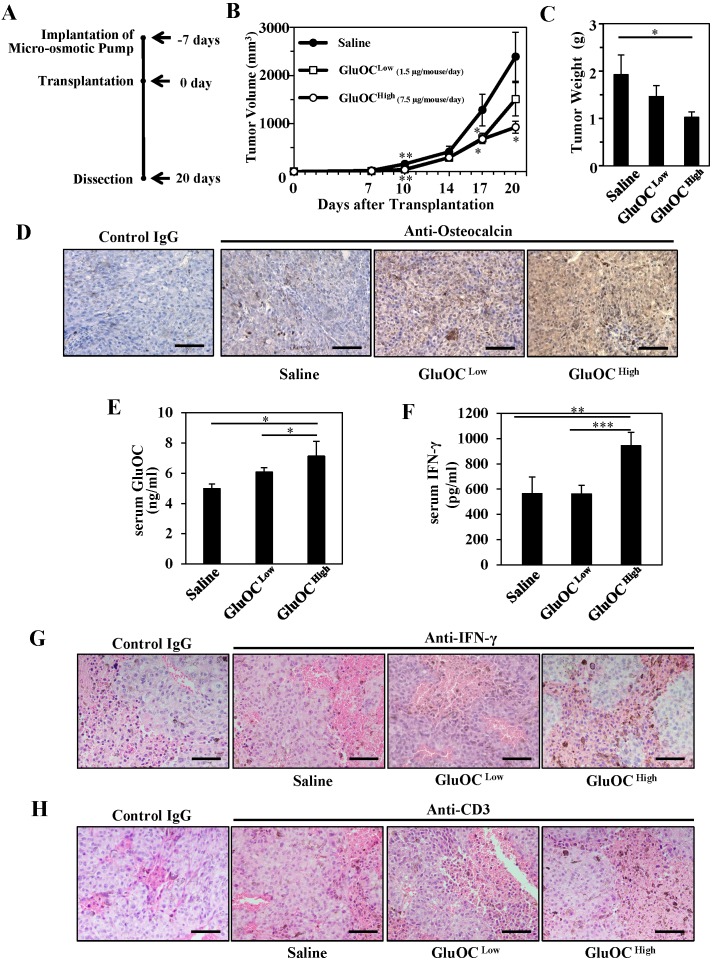
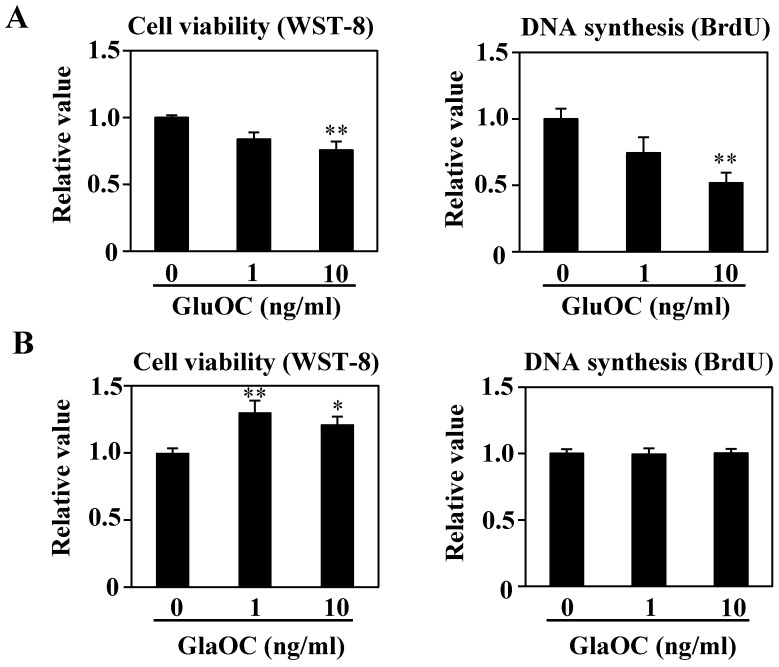
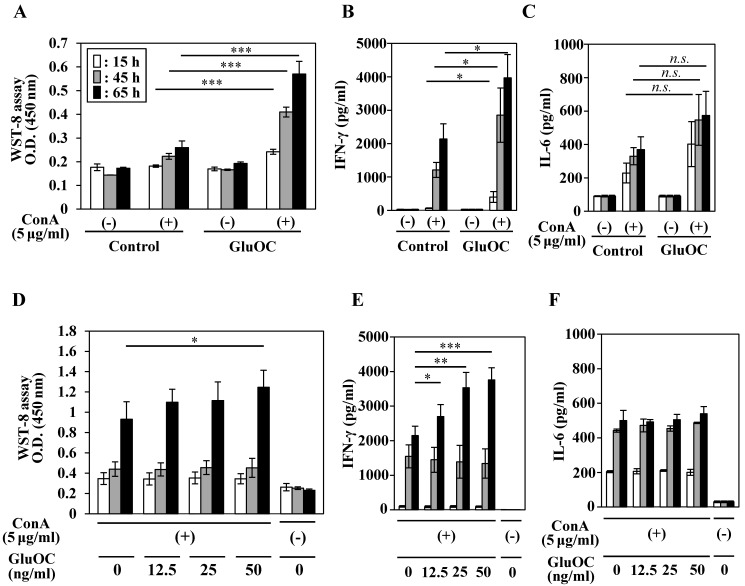
Because of the poor response to chemotherapy and radiation therapy, new treatment approaches by immune-based therapy involving activated T cells are required for melanoma. We previously reported that the uncarboxylated form of osteocalcin (GluOC), derived from osteoblasts, potentially suppresses human prostate cancer cell proliferation by direct suppression of cell growth. However, the mechanisms have not been elucidated. In this study, we found that GluOC suppressed tumor growth of B16 mouse melanoma transplants in C57Bl/6N wild-type mice. Our data demonstrated that GluOC suppressed cell growth by downregulating phosphorylation levels of receptor tyrosine kinases and inducing apoptosis . Additionally, stimulation of primary mouse splenocytes with concanavalin A, a polyclonal T-cell mitogen, in the presence of GluOC increased T cell proliferation and their interferon-γ production. Taken together, we demonstrate that GluOC exerts multiple antitumor effects not only , but also through cellular immunostimulatory effects against B16 mouse melanoma cells.
由于黑色素瘤对化疗和放疗反应不佳,因此需要采用基于免疫的疗法,激活T细胞,以开发新的治疗方法。我们之前报道过,成骨细胞来源的未羧化骨钙素(GluOC)可能通过直接抑制细胞生长来抑制人前列腺癌细胞增殖。然而,其机制尚未阐明。在本研究中,我们发现GluOC可抑制C57Bl/6N野生型小鼠体内B16小鼠黑色素瘤移植瘤的生长。我们的数据表明,GluOC通过下调受体酪氨酸激酶的磷酸化水平和诱导细胞凋亡来抑制细胞生长。此外,在存在GluOC的情况下,用刀豆球蛋白A(一种多克隆T细胞有丝分裂原)刺激原代小鼠脾细胞,可增加T细胞增殖及其γ干扰素的产生。综上所述,我们证明GluOC不仅具有多种抗肿瘤作用,还通过对B16小鼠黑色素瘤细胞的细胞免疫刺激作用发挥抗肿瘤作用。