State Key Laboratory of Natural and Biomimetic Drugs, School of Pharmaceutical Sciences, Peking University, Beijing 100191, China.
Beijing Key Laboratory of Molecular Pharmaceutics, School of Pharmaceutical Sciences, Peking University, Beijing 100191, China.
Theranostics. 2017 Jul 23;7(13):3306-3318. doi: 10.7150/thno.20242. eCollection 2017.
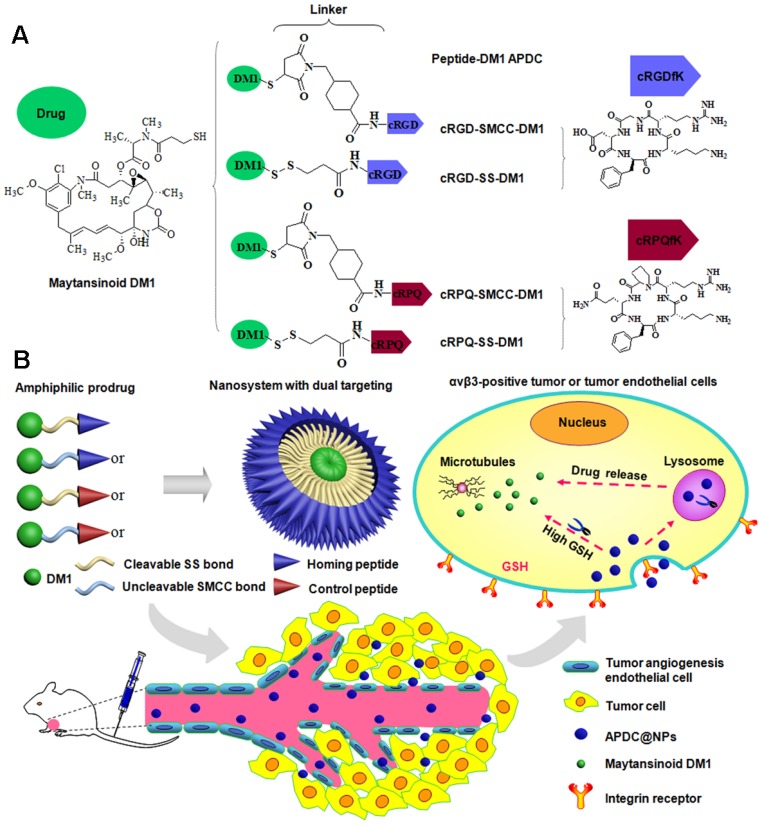
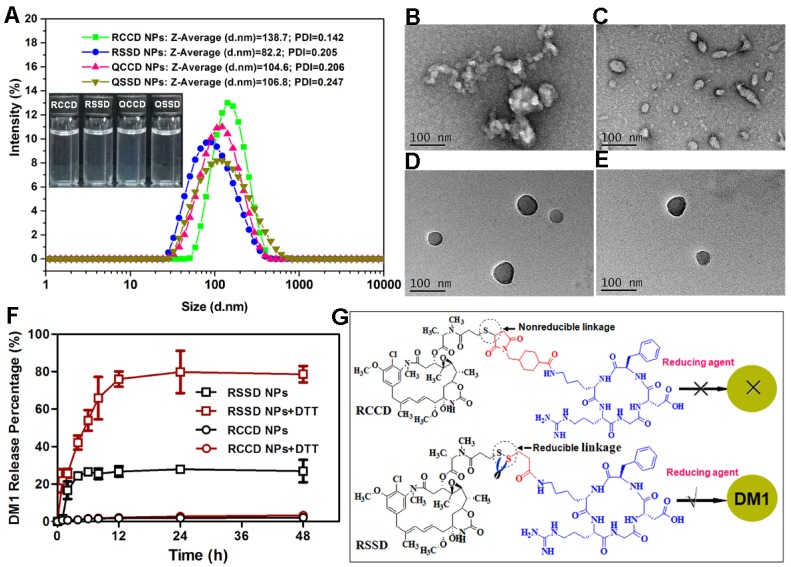
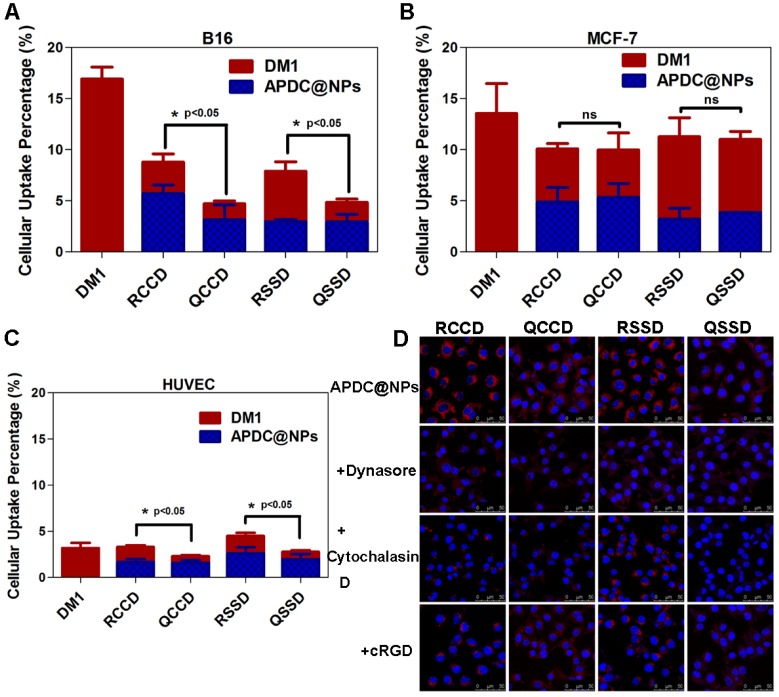
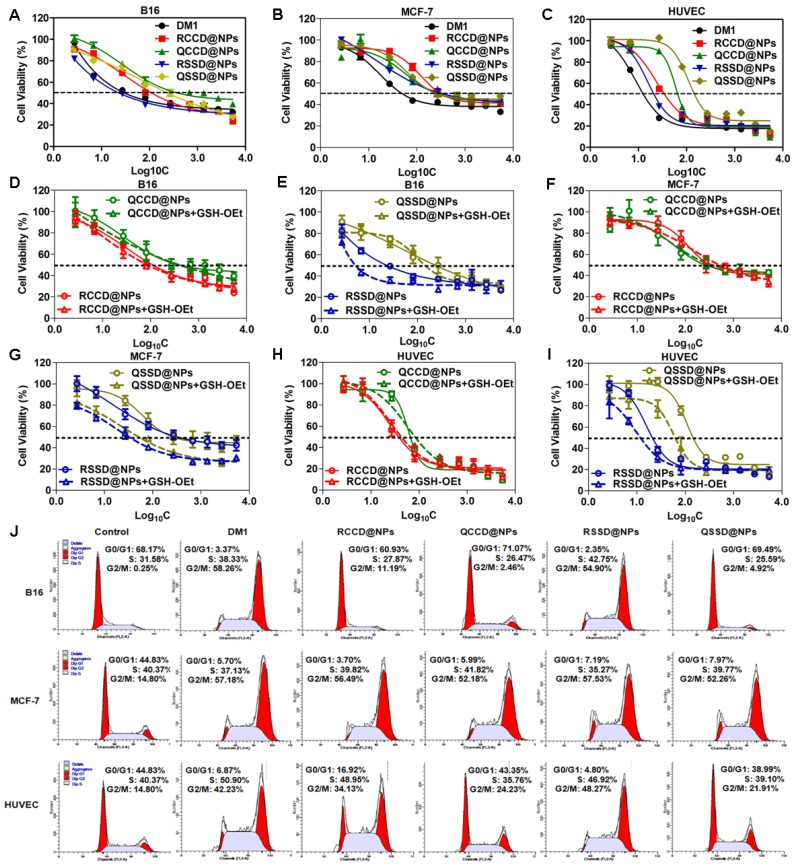
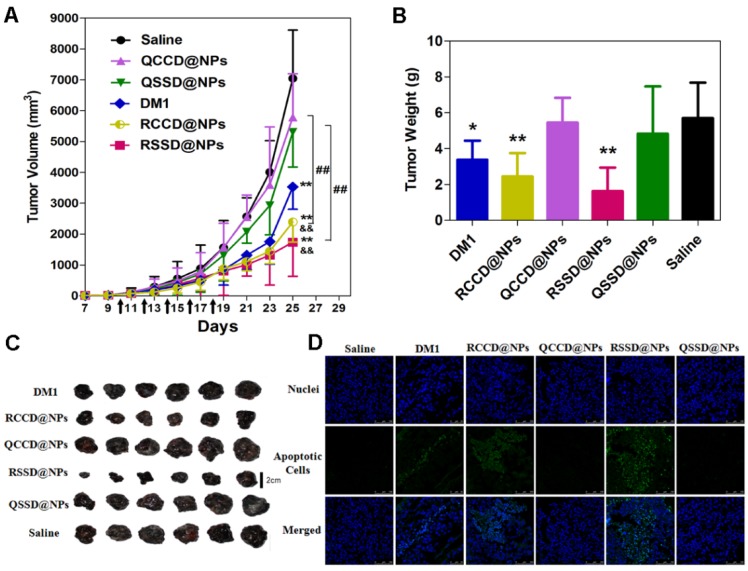
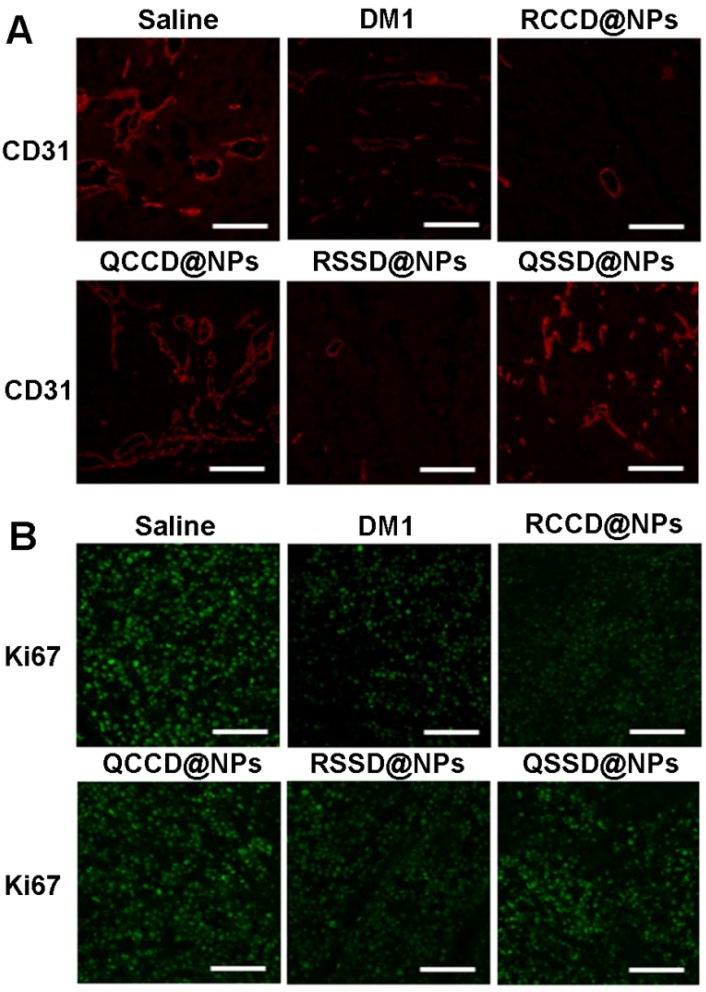
To design a prodrug-based self-assembling nanosystem with both ligand targeting and stimuli-responsive features, and elucidate the superiority of each targeting strategy and the synergistic effect between them, we synthesized four small molecule amphiphilic peptide-drug conjugates (APDCs) using maytansinoid (DM1) as a cytotoxic agent, cRGDfK as a homing peptide, and disulfide (SS) or thioether (SMCC) as linker. Owing to their amphiphilicity, the APDCs could self-assemble into nanoparticles (APDC@NPs) which were evaluated in three different cell lines and in tumor-bearing C57BL/6 mice. The RSSD@NPs showed the strongest interaction with αvβ3 integrin, highest cell uptake and intracellular free drug level, and best antitumor efficacy and , while it shared the same goodness with other test nanosystems in terms of high drug loading, EPR effect and free of potentially toxic polymers. Especially, the efficacy of RSSD@NPs was 2 fold of free DM1 which is too cytotoxic to be a drug, while the active targeted APDC@NPs demonstrated acceptable system, tissue and blood compatibility. In αvβ3-positive cells or tumors, the RGD targeting contributed much more than disulfide in anticancer effect. The maximum synergism of the two strategies reached to 22 fold and 3 fold . Generally, the active targeting, prodrug and nanosystem could significantly decrease the toxicity of free DM1 and improve its therapy outcome via combining active targeting, prodrug and nanopreparation, especially the dual targeting strategies and their synergism.
为设计具有配体靶向和刺激响应特性的前药自组装纳米系统,并阐明每种靶向策略的优势及其协同作用,我们合成了四种小分子两亲性肽-药物偶联物(APDCs),以美登素(DM1)为细胞毒性剂,cRGDfK 为归巢肽,二硫键(SS)或硫醚(SMCC)为连接子。由于其两亲性,APDC 可以自组装成纳米颗粒(APDC@NPs),并在三种不同的细胞系和荷瘤 C57BL/6 小鼠中进行了评估。RSSD@NPs 与αvβ3 整合素具有最强的相互作用、最高的细胞摄取和细胞内游离药物水平以及最佳的抗肿瘤效果,而在载药、EPR 效应和无潜在毒性聚合物方面与其他测试纳米系统具有相同的优势。特别是,RSSD@NPs 的疗效是游离 DM1 的 2 倍,游离 DM1 的细胞毒性太大,不能作为药物,而主动靶向 APDC@NPs 表现出可接受的系统、组织和血液相容性。在αvβ3 阳性细胞或肿瘤中,RGD 靶向在抗癌效果方面的贡献远远超过二硫键。两种策略的最大协同作用达到 22 倍和 3 倍。一般来说,主动靶向、前药和纳米系统可以通过结合主动靶向、前药和纳米制剂,特别是双重靶向策略及其协同作用,显著降低游离 DM1 的毒性并提高其治疗效果。