• 文献检索
  • 文档翻译
  • 深度研究
  • 学术资讯
  • Suppr Zotero 插件Zotero 插件
  • 邀请有礼
  • 套餐&价格
  • 历史记录
应用&插件
Suppr Zotero 插件Zotero 插件浏览器插件Mac 客户端Windows 客户端微信小程序
定价
高级版会员购买积分包购买API积分包
服务
文献检索文档翻译深度研究API 文档MCP 服务
关于我们
关于 Suppr公司介绍联系我们用户协议隐私条款
关注我们

Suppr 超能文献

核心技术专利:CN118964589B侵权必究
粤ICP备2023148730 号-1Suppr @ 2026

文献检索

告别复杂PubMed语法,用中文像聊天一样搜索,搜遍4000万医学文献。AI智能推荐,让科研检索更轻松。

立即免费搜索

文件翻译

保留排版,准确专业,支持PDF/Word/PPT等文件格式,支持 12+语言互译。

免费翻译文档

深度研究

AI帮你快速写综述,25分钟生成高质量综述,智能提取关键信息,辅助科研写作。

立即免费体验

从公元前9000年末期伊朗西部一只新石器时代犬类的生物遗骸中提取蛔虫和绦虫虫卵。

Retrieving ascarid and taeniid eggs from the biological remains of a Neolithic dog from the late 9th millennium BC in Western Iran.

作者信息

Paknezhad Niloofar, Mazdarani Farbod Haji, Hessari Morteza, Mobedi Iraj, Najafi Faezeh, Bizhani Negar, Makki Mahsasadat, Hassanpour Gholamreza, Mowlavi Gholamreza

机构信息

Tehran University of Medical Sciences, Department of Parasitology and Mycology, School of Public Health, Tehran, Iran.

Islamic Azad University, Pre-historic Archaeology, Central Tehran Branch, Tehran, Iran.

出版信息

Mem Inst Oswaldo Cruz. 2017 Sep;112(9):593-595. doi: 10.1590/0074-02760160420.

DOI:10.1590/0074-02760160420
PMID:28902284
原文链接:https://pmc.ncbi.nlm.nih.gov/articles/PMC5572444/
Abstract

BACKGROUND

Paleoparasitology reveals the status of parasitic infections in humans and animals in ancient times based on parasitic particles found in biological remains from archaeological excavations. This line of research emerged in Iran in 2013.

OBJECTIVE

The identification of parasites from Neolithic times is an attractive subject that shows the oldest origins of parasitic infections in a given geographical region. From an archaeological point of view, this archaeological site is well-known for animal domestication and agriculture in ancient Iran.

METHODS

In this study, soil deposited on the surface and in the pores of a dog pelvic bone was carefully collected and rehydrated using trisodium phosphate solution.

FINDINGS

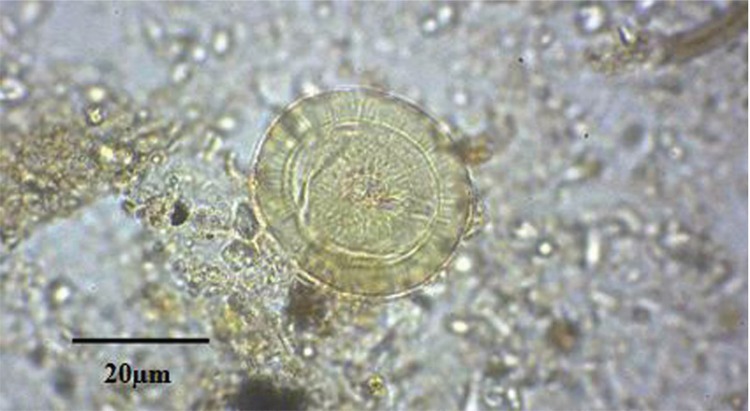
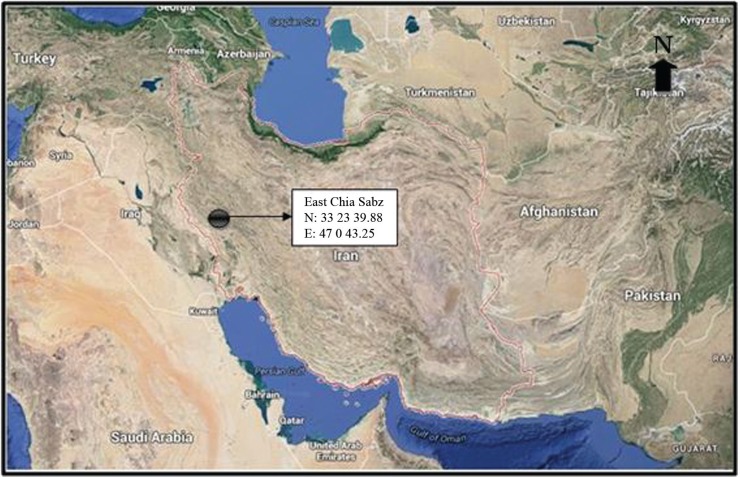
The results showed ascarid and taeniid eggs retrieved from the biological remains of a dog excavated at the East Chia Sabz archaeological site, which dates back to the Neolithic period (8100 BC).

MAIN CONCLUSION

The current findings clearly illustrate the natural circulation of nematode and cestode parasites among dogs at that time. These ancient helminth eggs can also be used to track the oldest parasitic infections in the Iranian plateau and contribute to the paleoparasitological documentation of the Fertile Crescent.

摘要

背景

古寄生虫学基于考古发掘的生物遗骸中发现的寄生虫颗粒,揭示古代人类和动物的寄生虫感染状况。这一研究领域于2013年在伊朗兴起。

目的

鉴定新石器时代的寄生虫是一个引人关注的课题,它能展现特定地理区域内寄生虫感染的最古老起源。从考古学角度来看,这个考古遗址在古代伊朗以动物驯化和农业而闻名。

方法

在本研究中,小心收集了沉积在狗骨盆骨表面和孔隙中的土壤,并用磷酸三钠溶液使其复水。

研究结果

结果显示,从东恰亚萨布兹考古遗址发掘的一只狗的生物遗骸中发现了蛔虫和带绦虫卵,该遗址可追溯到新石器时代(公元前8100年)。

主要结论

当前研究结果清楚地表明了当时线虫和绦虫寄生虫在狗之间的自然传播。这些古老的蠕虫卵还可用于追踪伊朗高原最古老的寄生虫感染情况,并有助于对新月沃地进行古寄生虫学记录。
https://cdn.ncbi.nlm.nih.gov/pmc/blobs/b381/5572444/4d010a78ff1b/0074-0276-mioc-112-9-0593-gf03.jpg
https://cdn.ncbi.nlm.nih.gov/pmc/blobs/b381/5572444/8638a5049ade/0074-0276-mioc-112-9-0593-gf01.jpg
https://cdn.ncbi.nlm.nih.gov/pmc/blobs/b381/5572444/5e00c9b1135e/0074-0276-mioc-112-9-0593-gf02.jpg
https://cdn.ncbi.nlm.nih.gov/pmc/blobs/b381/5572444/4d010a78ff1b/0074-0276-mioc-112-9-0593-gf03.jpg
https://cdn.ncbi.nlm.nih.gov/pmc/blobs/b381/5572444/8638a5049ade/0074-0276-mioc-112-9-0593-gf01.jpg
https://cdn.ncbi.nlm.nih.gov/pmc/blobs/b381/5572444/5e00c9b1135e/0074-0276-mioc-112-9-0593-gf02.jpg
https://cdn.ncbi.nlm.nih.gov/pmc/blobs/b381/5572444/4d010a78ff1b/0074-0276-mioc-112-9-0593-gf03.jpg

相似文献

1
Retrieving ascarid and taeniid eggs from the biological remains of a Neolithic dog from the late 9th millennium BC in Western Iran.从公元前9000年末期伊朗西部一只新石器时代犬类的生物遗骸中提取蛔虫和绦虫虫卵。
Mem Inst Oswaldo Cruz. 2017 Sep;112(9):593-595. doi: 10.1590/0074-02760160420.
2
Identification of Taenia sp. in a natural human mummy (third century BC) from the Chehrabad salt mine in Iran.在伊朗切赫拉巴德盐矿一具公元前三世纪的天然人类木乃伊中鉴定出带绦虫属物种。
J Parasitol. 2013 Jun;99(3):570-2. doi: 10.1645/12-113.1. Epub 2012 Dec 15.
3
Human spiruridiasis due to Physaloptera spp. (Nematoda: Physalopteridae) in a grave of the Shahr-e Sukhteh archeological site of the Bronze Age (2800-2500 BC) in Iran.伊朗青铜时代(公元前2800 - 2500年)舒赫特城考古遗址一座坟墓中由泡翼属线虫(线虫纲:泡翼科)引起的人体旋尾线虫病
Parasite. 2017;24:18. doi: 10.1051/parasite/2017019. Epub 2017 Jun 2.
4
Paleoparasitological finding of eggs of nematodes in rodent coprolites dated at the early Holocene from the archaeological site Cerro Casa de Piedra 7, Santa Cruz, Argentina.在阿根廷圣克鲁斯省塞罗卡萨德皮埃德拉7号考古遗址发现的、可追溯至全新世早期的啮齿动物粪化石中,发现了线虫卵的古寄生虫学证据。
J Parasitol. 2011 Dec;97(6):1184-7. doi: 10.1645/GE-2486.1. Epub 2011 Jun 14.
5
Discovery of taeniid eggs from a 17th century tomb in Korea.在韩国一座17世纪古墓中发现带绦虫卵。
Korean J Parasitol. 2011 Sep;49(3):327-9. doi: 10.3347/kjp.2011.49.3.327. Epub 2011 Sep 30.
6
First Paleoparasitological Report on the Animal Feces of Bronze Age Excavated from Shahr-e Sukhteh, Iran.关于从伊朗苏赫特古城出土的青铜时代动物粪便的首份古寄生虫学报告。
Korean J Parasitol. 2017 Apr;55(2):197-201. doi: 10.3347/kjp.2017.55.2.197. Epub 2017 Apr 30.
7
New record of anoplocephalid eggs (Cestoda: Anoplocephalidae) collected from rodent coprolites from archaeological and paleontological sites of Patagonia, Argentina.从阿根廷巴塔哥尼亚考古和古生物学遗址的啮齿动物粪便化石中采集到的裸头绦虫卵(绦虫纲:裸头绦虫科)新记录。
Parasitol Int. 2013 Oct;62(5):431-4. doi: 10.1016/j.parint.2013.04.004. Epub 2013 Apr 16.
8
Ancient Human Parasites in Ethnic Chinese Populations.华裔人群中的古代人类寄生虫
Korean J Parasitol. 2016 Oct;54(5):565-572. doi: 10.3347/kjp.2016.54.5.565. Epub 2016 Oct 31.
9
A new ascarid species in cynodont coprolite dated of 240 million years.一种来自2.4亿年前犬齿兽类粪便化石中的新蛔虫物种。
An Acad Bras Cienc. 2014 Mar;86(1):265-9. doi: 10.1590/0001-3765201320130036.
10
Paleoparasitological surveys for detection of helminth eggs in archaeological sites of Jeolla-do and Jeju-do.全罗道和济州道考古遗址中用于检测蠕虫卵的古寄生虫学调查。
Korean J Parasitol. 2013 Aug;51(4):489-92. doi: 10.3347/kjp.2013.51.4.489. Epub 2013 Aug 30.

引用本文的文献

1
Microparticles from dental calculus disclose paleoenvironmental and palaeoecological records.牙结石中的微粒揭示了古环境和古生态记录。
Ecol Evol. 2024 Feb 23;14(2):e11053. doi: 10.1002/ece3.11053. eCollection 2024 Feb.
2
Dual-Source Dual-Energy CT-Scan Confirms the Diagnosis of Ancient Hydatid Cysts Recovered from a Late Roman Burial in Amiens, France.双源双能CT扫描证实了从法国亚眠一处古罗马晚期墓葬中出土的古代包虫囊肿的诊断。
Iran J Parasitol. 2022 Apr-Jun;17(2):194-201. doi: 10.18502/ijpa.v17i2.9536.
3
Genomic palaeoparasitology traced the occurrence of Taenia asiatica in ancient Iran (Sassanid Empire, 2th cent. CE-6th cent. CE).

本文引用的文献

1
Paleoparasitological evidence of pinworm (Enterobius vermicularis) infection in a female adolescent residing in ancient Tehran (Iran) 7000 years ago.7000年前居住在古德黑兰(伊朗)的一名女性青少年感染蛲虫(蠕形住肠线虫)的古寄生虫学证据。
Parasit Vectors. 2016 Jan 22;9:33. doi: 10.1186/s13071-016-1322-y.
2
Human parasites in the Roman World: health consequences of conquering an empire.罗马世界中的人类寄生虫:征服帝国带来的健康后果
Parasitology. 2017 Jan;144(1):48-58. doi: 10.1017/S0031182015001651. Epub 2016 Jan 8.
3
Animal helminths in human archaeological remains: a review of zoonoses in the past.
古基因组寄生虫学追溯了亚洲带绦虫在古代伊朗(萨珊王朝,公元 2 世纪-6 世纪)的发生情况。
Sci Rep. 2022 Jul 14;12(1):12045. doi: 10.1038/s41598-022-10690-2.
人类考古遗骸中的动物寄生虫:过去人畜共患病综述
Rev Inst Med Trop Sao Paulo. 2009 May-Jun;51(3):119-30. doi: 10.1590/s0036-46652009000300001.
4
Old parasites for a new world: the future of paleoparasitological research. a review.新世界的古老寄生虫:古寄生虫学研究的未来。综述
J Parasitol. 2009 Apr;95(2):365-71. doi: 10.1645/GE-1676.1.
5
Paleoparasitological remains revealed by seven historic contexts from "Place d'Armes", Namur, Belgium.比利时那慕尔“武器广场”七个历史背景下揭示的古寄生虫学遗迹。
Mem Inst Oswaldo Cruz. 2006 Dec 5;101 Suppl 2:43-52. doi: 10.1590/s0074-02762006001000008.
6
Identification of taeniid eggs in the faeces from carnivores based on multiplex PCR using targets in mitochondrial DNA.基于线粒体DNA靶点的多重PCR技术鉴定食肉动物粪便中的带绦虫卵。
Parasitology. 2007 Jun;134(Pt 6):911-20. doi: 10.1017/S0031182007002235. Epub 2007 Feb 9.
7
The state of the art of paleoparasitological research in the Old World.旧世界古寄生虫学研究的现状。
Mem Inst Oswaldo Cruz. 2003;98 Suppl 1:95-101. doi: 10.1590/s0074-02762003000900015.
8
Evolution, consequences and future of plant and animal domestication.动植物驯化的演变、影响及未来
Nature. 2002 Aug 8;418(6898):700-7. doi: 10.1038/nature01019.