Liu Zhepeng, Chen Shuliang, Jin Xu, Wang Qiankun, Yang Kongxiang, Li Chenlin, Xiao Qiaoqiao, Hou Panpan, Liu Shuai, Wu Shaoshuai, Hou Wei, Xiong Yong, Kong Chunyan, Zhao Xixian, Wu Li, Li Chunmei, Sun Guihong, Guo Deyin
School of Basic Medical Sciences, Wuhan University, Wuhan, 430072 People's Republic of China.
Center for Retrovirus Research, Department of Veterinary Biosciences, The Ohio State University, Columbus, USA.
Cell Biosci. 2017 Sep 9;7:47. doi: 10.1186/s13578-017-0174-2. eCollection 2017.
The main approach to treat HIV-1 infection is combination antiretroviral therapy (cART). Although cART is effective in reducing HIV-1 viral load and controlling disease progression, it has many side effects, and is expensive for HIV-1 infected patients who must remain on lifetime treatment. HIV-1 gene therapy has drawn much attention as studies of genome editing tools have progressed. For example, zinc finger nucleases (ZFN), transcription activator like effector nucleases (TALEN) and clustered regularly interspaced short palindromic repeats (CRISPR)-Cas9 have been utilized to successfully disrupt the HIV-1 co-receptors CCR5 or CXCR4, thereby restricting HIV-1 infection. However, the effects of simultaneous genome editing of CXCR4 and CCR5 by CRISPR-Cas9 in blocking HIV-1 infection in primary CD4 T cells has been rarely reported. Furthermore, combination of different target sites of CXCR4 and CCR5 for disruption also need investigation.
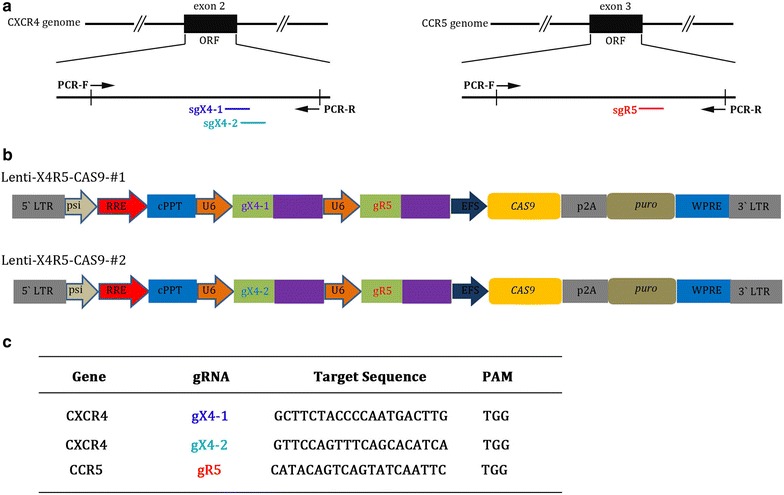
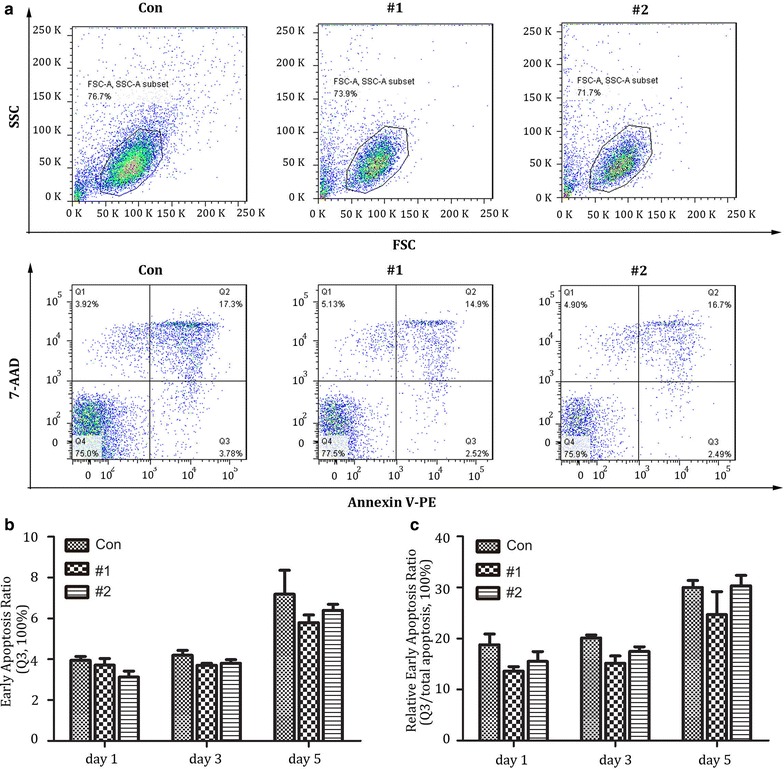
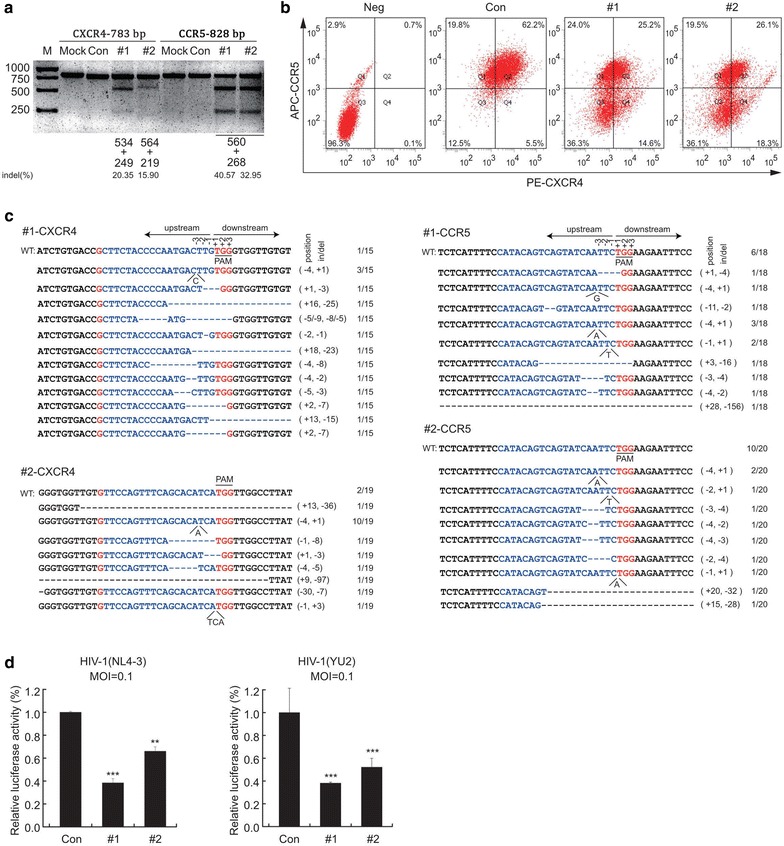
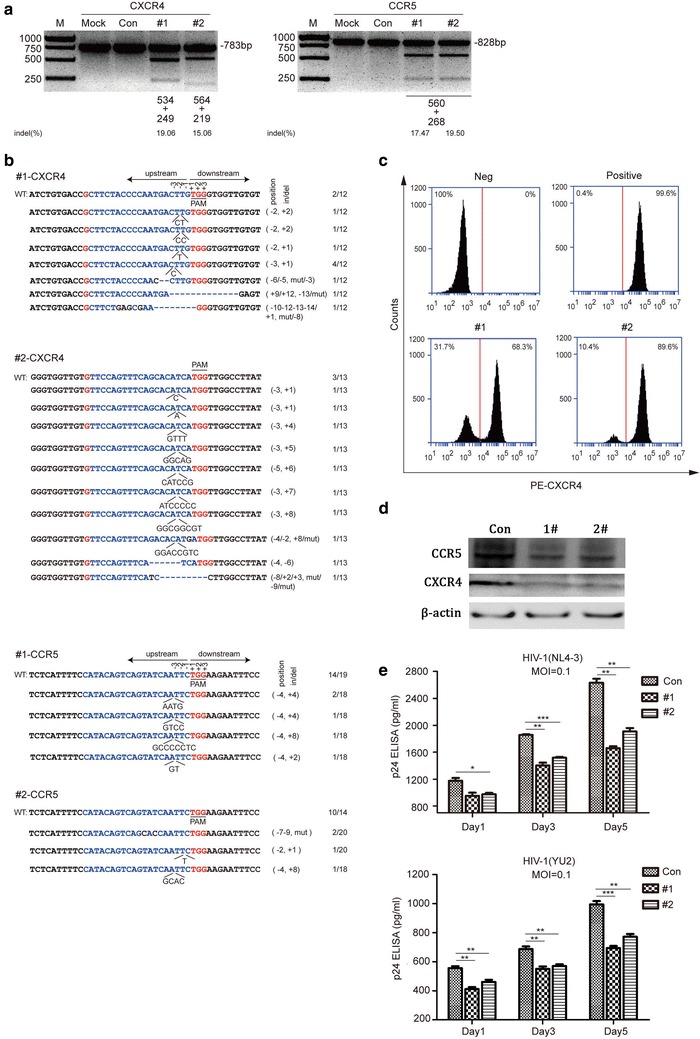
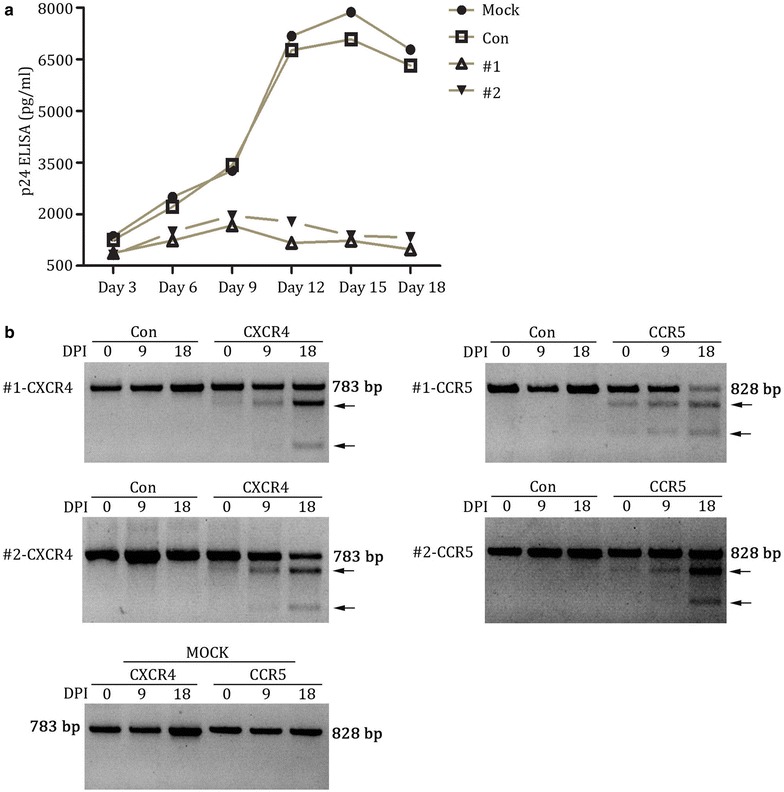
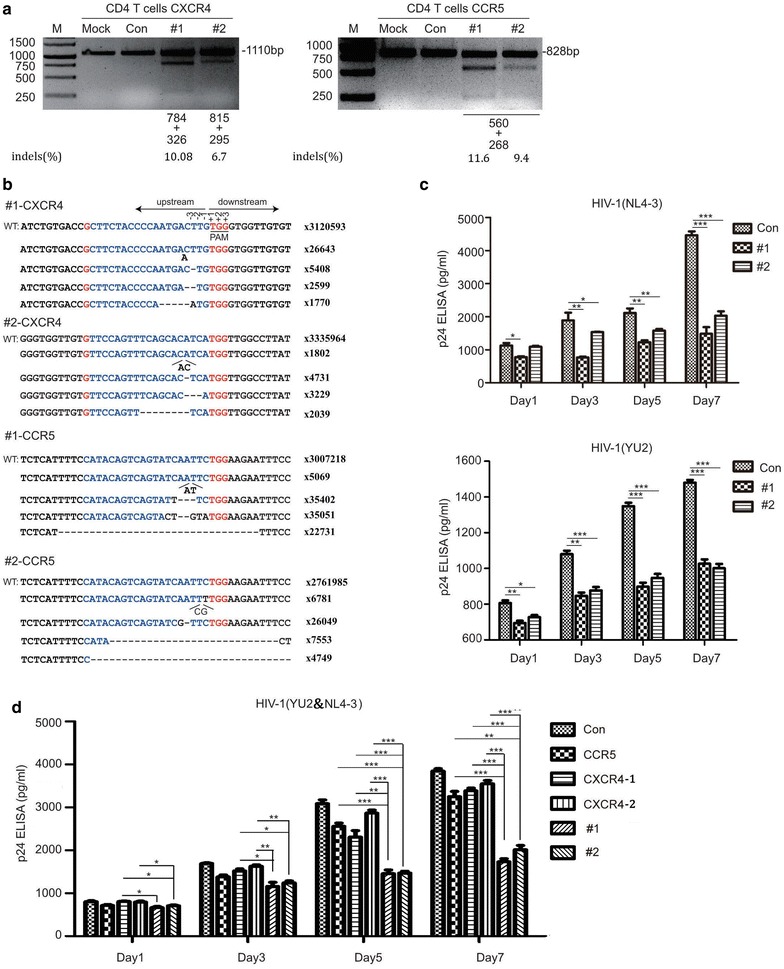
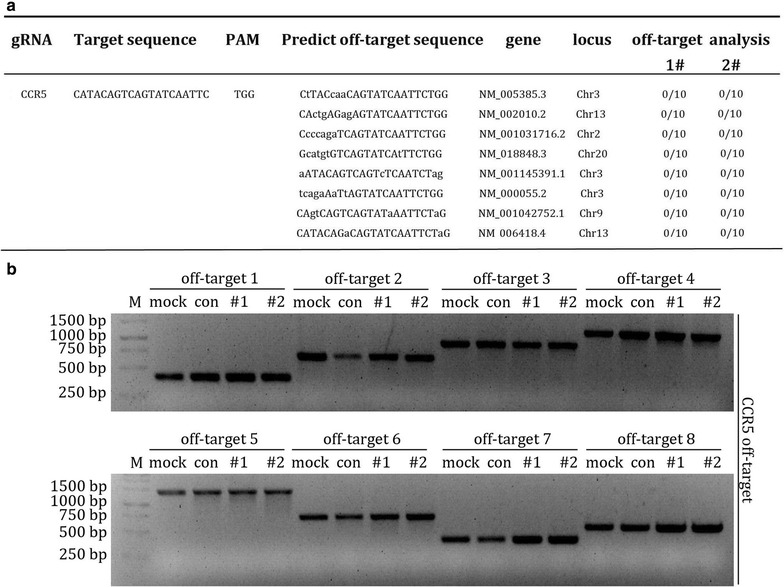
In this report, we designed two different gRNA combinations targeting both CXCR4 and CCR5, in a single vector. The CRISPR-sgRNAs-Cas9 could successfully induce editing of CXCR4 and CCR5 genes in various cell lines and primary CD4 T cells. Using HIV-1 challenge assays, we demonstrated that CXCR4-tropic or CCR5-tropic HIV-1 infections were significantly reduced in - and -modified cells, and the modified cells exhibited a selective advantage over unmodified cells during HIV-1 infection. The off-target analysis showed that no non-specific editing was identified in all predicted sites. In addition, apoptosis assays indicated that simultaneous disruption of CXCR4 and CCR5 in primary CD4 T cells by CRISPR-Cas9 had no obvious cytotoxic effects on cell viability.
Our results suggest that simultaneous genome editing of CXCR4 and CCR5 by CRISPR-Cas9 can potentially provide an effective and safe strategy towards a functional cure for HIV-1 infection.
治疗HIV-1感染的主要方法是联合抗逆转录病毒疗法(cART)。尽管cART在降低HIV-1病毒载量和控制疾病进展方面有效,但它有许多副作用,对于必须终身接受治疗的HIV-1感染患者来说费用高昂。随着基因组编辑工具研究的进展,HIV-1基因疗法备受关注。例如,锌指核酸酶(ZFN)、转录激活样效应核酸酶(TALEN)和成簇规律间隔短回文重复序列(CRISPR)-Cas9已被用于成功破坏HIV-1共受体CCR5或CXCR4,从而限制HIV-1感染。然而,关于CRISPR-Cas9同时对CXCR4和CCR5进行基因组编辑在阻断原代CD4 T细胞中HIV-1感染方面的效果鲜有报道。此外,针对CXCR4和CCR5不同靶位点的组合破坏也需要研究。
在本报告中,我们在单个载体中设计了两种针对CXCR4和CCR5的不同gRNA组合。CRISPR-sgRNAs-Cas9能够成功诱导多种细胞系和原代CD4 T细胞中CXCR4和CCR5基因的编辑。通过HIV-1攻击试验,我们证明在经过编辑的细胞中,X4嗜性或R5嗜性HIV-1感染显著减少,并且在HIV-1感染期间,经过编辑的细胞比未编辑的细胞表现出选择性优势。脱靶分析表明,在所有预测位点均未发现非特异性编辑。此外,凋亡试验表明,CRISPR-Cas9同时破坏原代CD4 T细胞中的CXCR4和CCR5对细胞活力没有明显的细胞毒性作用。
我们的结果表明,CRISPR-Cas9同时对CXCR4和CCR5进行基因组编辑可能为实现HIV-1感染的功能性治愈提供一种有效且安全的策略。