Institute of Physiotherapy, Faculty of Medicine, University of Rzeszow, Warszawska 26A Street, 35-205 Rzeszow, Poland.
Special Purpose School and Education Center, Mrowla 79C, 36-054 Mrowla, Poland.
Biomed Res Int. 2017;2017:7047468. doi: 10.1155/2017/7047468. Epub 2017 Aug 21.
Down syndrome (DS) is associated with numerous developmental abnormalities, some of which cause dysfunctions of the posture and the locomotor system. The analysis of selected features of the foot structure in boys with DS versus their peers without developmental disorders is done.
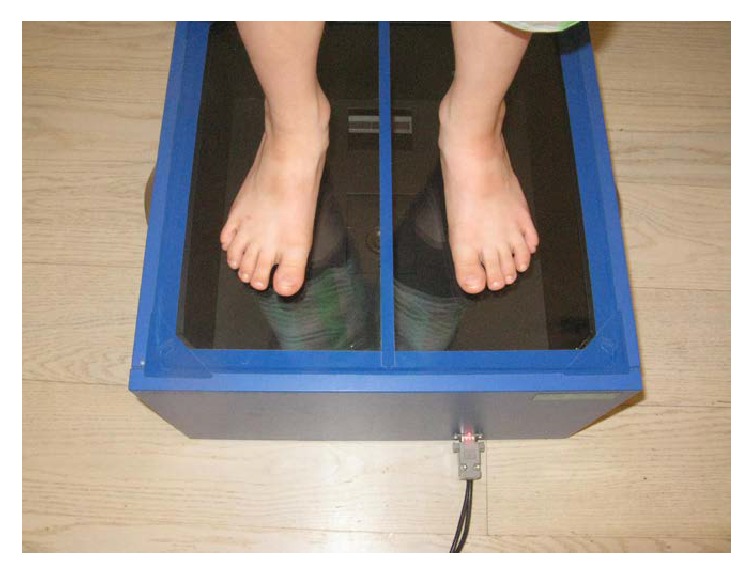
The podoscopic examination was performed on 30 boys with DS aged 14-15 years. A control group consisted of 30 age- and gender-matched peers without DS.
The feet of boys with DS are flatter compared to their healthy peers. The hallux valgus angle is not the most important feature differentiating the shape of the foot in the boys with DS and their healthy peers. In terms of the V toe setting, healthy boys had poorer results.
Specialized therapeutic treatment in individuals with DS should involve exercises to increase the muscle strength around the foot joints, enhancing the stabilization in the joints and proprioception. Introducing orthotics and proper footwear is also important. It is also necessary to monitor the state of the foot in order to modify undertaken therapies.
唐氏综合征(DS)与许多发育异常有关,其中一些会导致姿势和运动系统的功能障碍。我们对患有 DS 的男孩与无发育障碍的同龄男孩的足部结构的特定特征进行了分析。
对 30 名 14-15 岁患有 DS 的男孩进行了足印检查。对照组由 30 名年龄和性别匹配的无 DS 健康男孩组成。
与健康同龄人相比,患有 DS 的男孩的脚更平。拇外翻角度并不是区分 DS 男孩和他们健康同龄人足部形状的最重要特征。在 V 型脚趾设置方面,健康男孩的结果较差。
在 DS 患者中,专门的治疗应包括锻炼以增强足部关节周围的肌肉力量,增强关节的稳定性和本体感觉。引入矫形器和合适的鞋子也很重要。还需要监测足部状况,以便修改所采用的治疗方法。