Spackman Eldon, Haines-Saah Rebecca, Danthurebandara Vishva M, Dowsett Laura E, Noseworthy Tom, Clement Fiona M
O'Brien Institute for Public Health, Health Technology Assessment Unit, Department of Community Health Sciences, University of Calgary, Calgary, AB.
O'Brien Institute for Public Health, Department of Community Health Sciences, University of Calgary, Calgary, AB.
Healthc Policy. 2017 Aug;13(1):17-27. doi: 10.12927/hcpol.2017.25194.
To describe marijuana use by Canadians and their perceptions of risk and harm.
A cross-sectional, structured, online and telephone survey.
A nationally representative sample of Canadians.
This survey used random probability sampling and targeted respondents based on age, sex, region and their expected response rate.
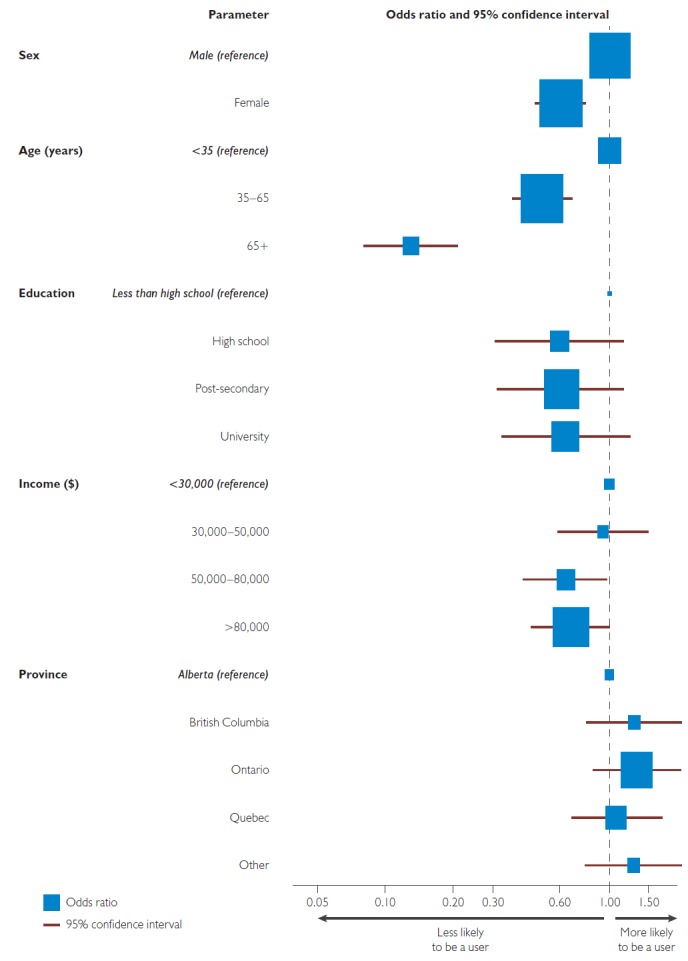
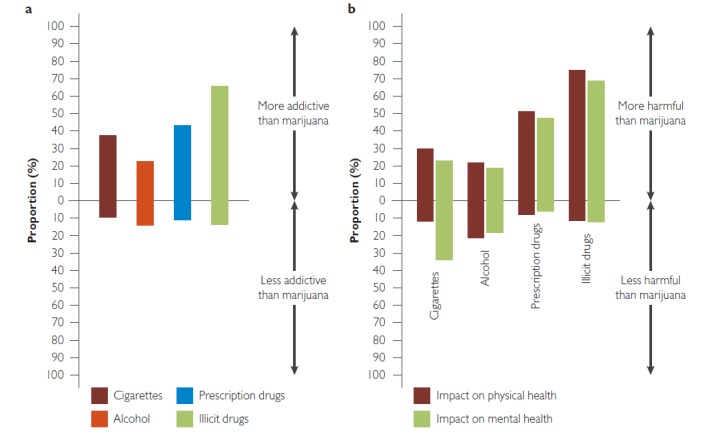
Of the 20% of respondents reporting marijuana use in the past 12 months, they were more likely to be younger and male. The most common form of use was smoking, 79%. When asked about harmfulness, 42% and 41% responded that they considered marijuana more harmful than helpful to mental health and to physical health, respectively. When asked about driving under the influence, 71% responded that it was the same as alcohol.
This research is important for health providers and policy makers seeking to maximize public health through clinical and legislative reform of non-medical use of marijuana.
描述加拿大人使用大麻的情况及其对风险和危害的认知。
一项横断面、结构化的在线和电话调查。
加拿大人具有全国代表性的样本。
本调查采用随机概率抽样,并根据年龄、性别、地区及其预期回复率确定目标受访者。
在过去12个月中报告使用过大麻的20%受访者中,他们更有可能是年轻人且为男性。最常见的使用形式是吸烟,占79%。当被问及危害性时,分别有42%和41%的受访者表示他们认为大麻对心理健康和身体健康有害而非有益。当被问及在受影响状态下驾驶时,71%的受访者表示这与酒后驾驶一样。
这项研究对于寻求通过大麻非医疗用途的临床和立法改革来最大化公共卫生的医疗服务提供者和政策制定者而言很重要。