van Buel Erin M, Sigrist Hannes, Seifritz Erich, Fikse Lianne, Bosker Fokko J, Schoevers Robert A, Klein Hans C, Pryce Christopher R, Eisel Ulrich Lm
Groningen Institute for Evolutionary Life Sciences (GELIFES), University of Groningen, Groningen, Netherlands.
University of Groningen, University Medical Centre Groningen, Dept of Nuclear Medicine & Molecular Imaging, Groningen, Netherlands.
PLoS One. 2017 Sep 14;12(9):e0184603. doi: 10.1371/journal.pone.0184603. eCollection 2017.
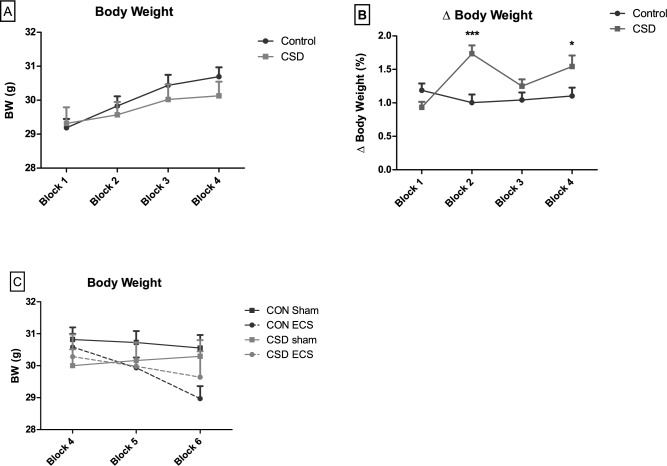
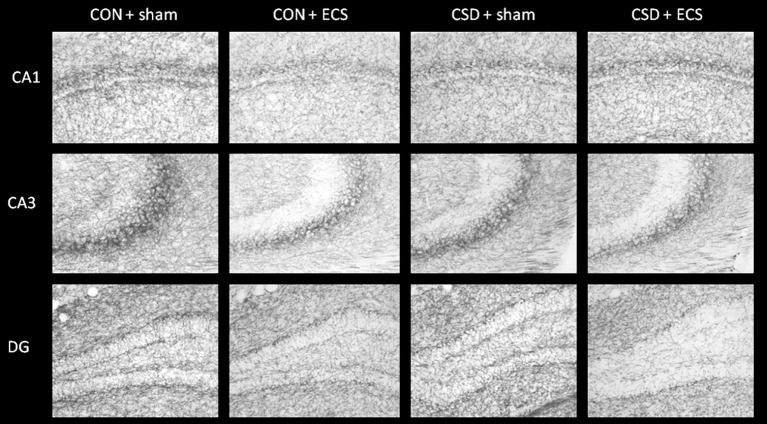
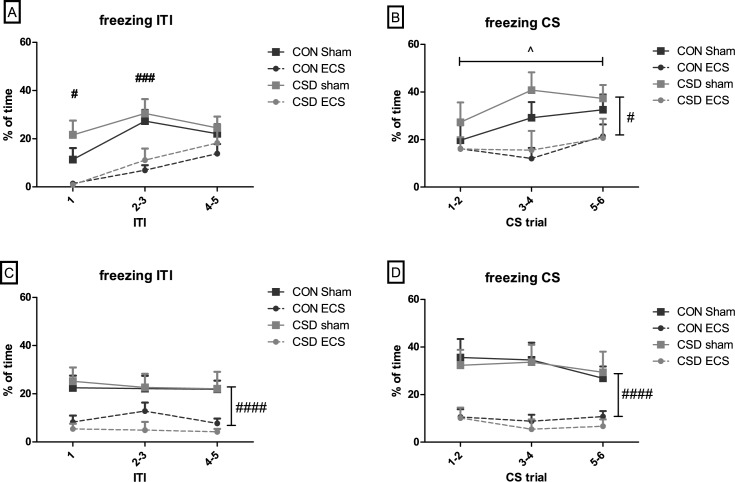
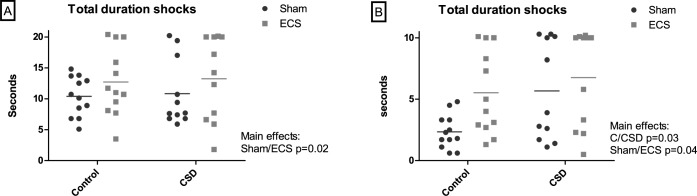
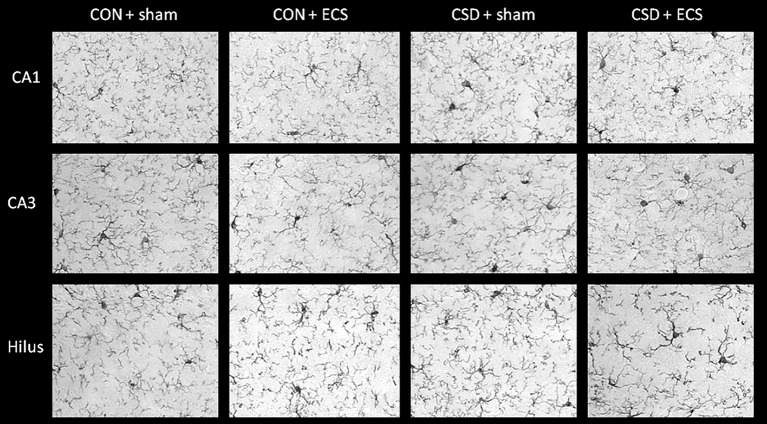
Electroconvulsive therapy (ECT) is an effective treatment for depression, but can have negative side effects including amnesia. The mechanisms of action underlying both the antidepressant and side effects of ECT are not well understood. An equivalent manipulation that is conducted in experimental animals is electroconvulsive seizure (ECS). Rodent studies have provided valuable insights into potential mechanisms underlying the antidepressant and side effects of ECT. However, relatively few studies have investigated the effects of ECS in animal models with a depression-relevant manipulation such as chronic stress. In the present study, mice were first exposed to chronic social stress (CSS) or a control procedure for 15 days followed by ECS or a sham procedure for 10 days. Behavioral effects were investigated using an auditory fear conditioning (learning) and expression (memory) test and a treadmill-running fatigue test. Thereafter, immunohistochemistry was conducted on brain material using the microglial marker Iba-1 and the cholinergic fibre marker ChAT. CSS did not increase fear learning and memory in the present experimental design; in both the control and CSS mice ECS reduced fear learning and fear memory expression. CSS induced the expected fatigue-like effect in the treadmill-running test; ECS induced increased fatigue in CSS and control mice. In CSS and control mice ECS induced inflammation in hippocampus in terms of increased expression of Iba-1 in radiatum of CA1 and CA3. CSS and ECS both reduced acetylcholine function in hippocampus as indicated by decreased expression of ChAT in several hippocampal sub-regions. Therefore, CSS increased fatigue and reduced hippocampal ChAT activity and, rather than reversing these effects, a repeated ECS regimen resulted in impaired fear learning-memory, increased fatigue, increased hippocampal Iba-1 expression, and decreased hippocampal ChAT expression. As such, the current model does not provide insights into the mechanism of ECT antidepressant function but does provide evidence for pathophysiological mechanisms that might contribute to important ECT side-effects.
电休克疗法(ECT)是治疗抑郁症的一种有效方法,但可能会产生包括失忆在内的负面副作用。ECT的抗抑郁作用机制和副作用的潜在机制尚未完全明确。在实验动物中进行的一种等效操作是电惊厥发作(ECS)。啮齿动物研究为ECT的抗抑郁作用和副作用的潜在机制提供了有价值的见解。然而,相对较少的研究调查了ECS在具有与抑郁症相关的操作(如慢性应激)的动物模型中的作用。在本研究中,小鼠首先暴露于慢性社会应激(CSS)或对照程序15天,然后接受ECS或假手术程序10天。使用听觉恐惧条件反射(学习)和表达(记忆)测试以及跑步机跑步疲劳测试来研究行为效应。此后,使用小胶质细胞标志物Iba-1和胆碱能纤维标志物ChAT对脑材料进行免疫组织化学分析。在本实验设计中,CSS并未增加恐惧学习和记忆;在对照小鼠和CSS小鼠中,ECS均降低了恐惧学习和恐惧记忆表达。CSS在跑步机跑步测试中诱导了预期的疲劳样效应;ECS在CSS小鼠和对照小鼠中均诱导了疲劳增加。在CSS小鼠和对照小鼠中,ECS诱导海马体炎症,表现为CA1和CA3辐射层中Iba-1表达增加。如几个海马亚区中ChAT表达降低所示,CSS和ECS均降低了海马体中的乙酰胆碱功能。因此,CSS增加了疲劳并降低了海马体ChAT活性,而重复的ECS方案非但没有逆转这些效应,反而导致恐惧学习记忆受损、疲劳增加、海马体Iba-1表达增加以及海马体ChAT表达降低。因此,当前模型并未提供关于ECT抗抑郁功能机制的见解,但确实为可能导致ECT重要副作用的病理生理机制提供了证据。