Naz Arshi, Biswas Arijit, Khan Tehmina Nafees, Goodeve Anne, Ahmed Nisar, Saqlain Nazish, Ahmed Shariq, Ujjan Ikram Din, Shamsi Tahir S, Oldenburg Johannes
National Institute of Blood Diseases and Bone Marrow Transplantation, Karachi University of Bonn, ST 2/A, Block-17, Gulshan-e-Iqbal KDA scheme, 24, Karachi, Pakistan.
Institute of Experimental Hematology and Transfusion Medicine, Bonn, Germany.
Thromb J. 2017 Sep 12;15:24. doi: 10.1186/s12959-017-0143-3. eCollection 2017.
Congenital afibrinogenemia (OMIM #202400) is a rare coagulation disorder that was first described in 1920. It is transmitted as an autosomal recessive trait that is characterized by absent levels of fibrinogen (factor I) in plasma. Consanguinity in Pakistan and its neighboring countries has resulted in a higher number of cases of congenital fibrinogen deficiency in their respective populations. This study focused on the detection of mutations in fibrinogen genes using DNA sequencing and molecular modeling of missense mutations in all three genes [Fibrinogen gene alpha (FGA), beta (FGB) and gamma (FGG)] in Pakistani patients.
This descriptive and cross sectional study was conducted in Karachi and Lahore and fully complied with the Declaration of Helsinki. Patients with fibrinogen deficiency were screened for mutations in the Fibrinogen alpha (), beta () and gamma () genes by direct sequencing. Molecular modeling was performed to predict the putative structure functional impact of the missense mutations identified in this study.
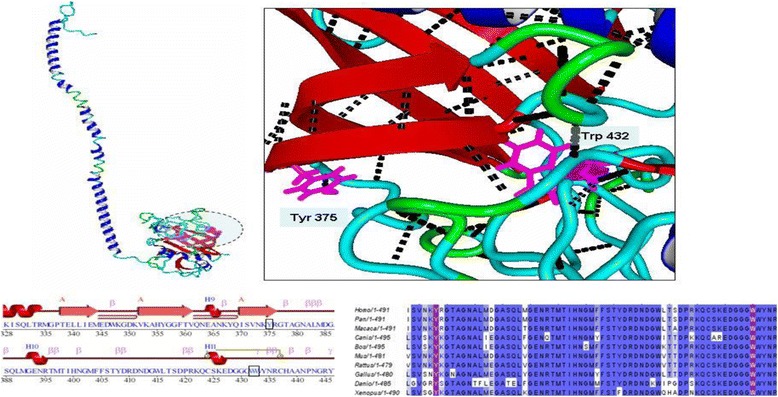
Ten patients had mutations in followed by three mutations in and three mutations in , respectively. Twelve of these mutations were novel. The missense mutations were predicted to result in a loss of stability because they break ordered regions and cause clashes in the hydrophobic core of the protein.
Congenital afibrinogenemia is a rapidly growing problem in regions where consanguinity is frequently practiced. This study illustrates that mutations in are relatively more common in Pakistani patients and molecular modeling of the missense mutations has shown damaging protein structures which has profounding effect on phenotypic bleeding manifestations in these patients.
先天性无纤维蛋白原血症(OMIM #202400)是一种罕见的凝血障碍,于1920年首次被描述。它作为常染色体隐性性状遗传,其特征是血浆中纤维蛋白原(因子I)水平缺失。巴基斯坦及其邻国的近亲结婚导致各自人群中先天性纤维蛋白原缺乏症的病例数较多。本研究聚焦于通过DNA测序检测纤维蛋白原基因的突变,并对巴基斯坦患者的所有三个基因[纤维蛋白原基因α(FGA)、β(FGB)和γ(FGG)]中的错义突变进行分子建模。
本描述性横断面研究在卡拉奇和拉合尔进行,并完全符合《赫尔辛基宣言》。通过直接测序对纤维蛋白原缺乏症患者的纤维蛋白原α()、β()和γ()基因中的突变进行筛查。进行分子建模以预测本研究中鉴定的错义突变对假定结构功能的影响。
10名患者在 中有突变,其次分别在 中有3个突变,在 中有3个突变。这些突变中有12个是新发现的。预测错义突变会导致稳定性丧失,因为它们破坏有序区域并在蛋白质的疏水核心中引起冲突。
在经常存在近亲结婚的地区,先天性无纤维蛋白原血症是一个迅速增长的问题。本研究表明,在巴基斯坦患者中, 中的突变相对更常见,并且错义突变的分子建模显示出对蛋白质结构有损害,这对这些患者的表型出血表现有深远影响。