Deng Lu, Liu Tang, Zhang Beibei, Wu Haishan, Zhao Jingping, Chen Jindong
Mental Health Institute, Second Xiangya Hospital of Central South University, Changsha, Hunan 410011, P.R. China.
Department of Orthopedics, Second Xiangya Hospital of Central South University, Changsha, Hunan 410011, P.R. China.
Exp Ther Med. 2017 Oct;14(4):2823-2830. doi: 10.3892/etm.2017.4870. Epub 2017 Aug 2.
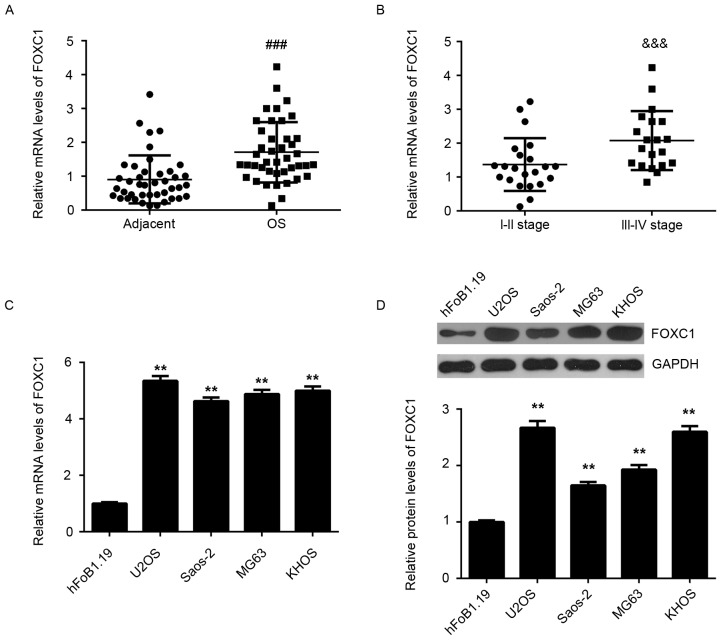
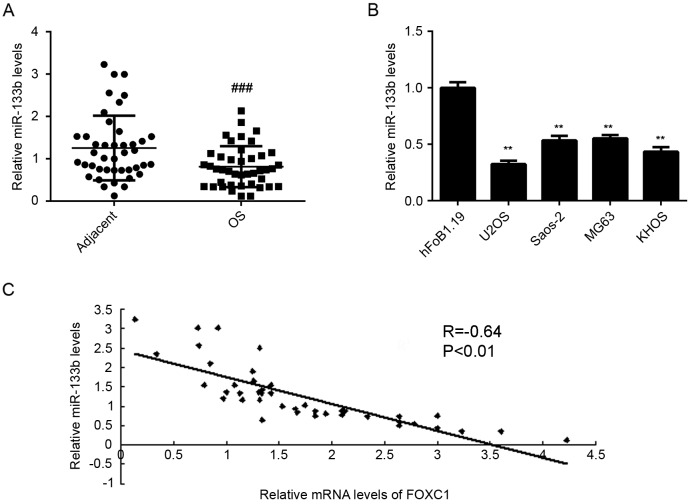
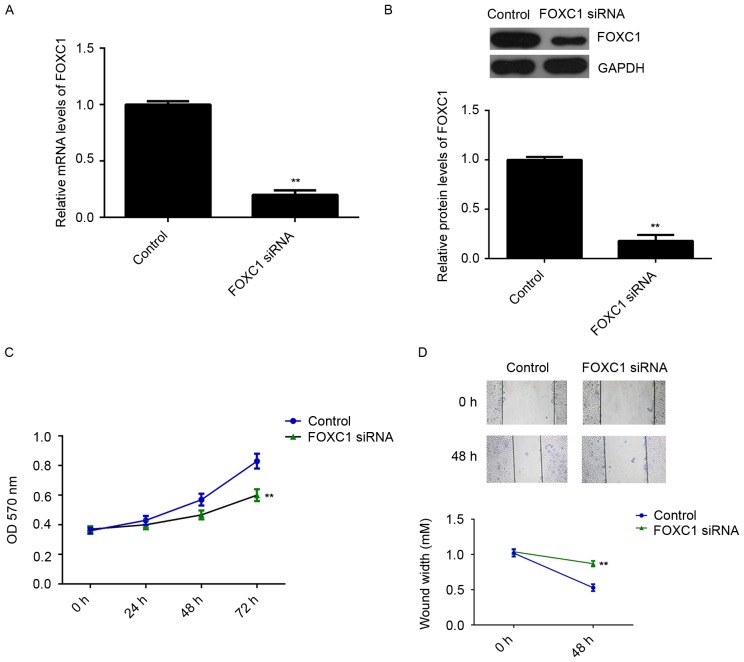
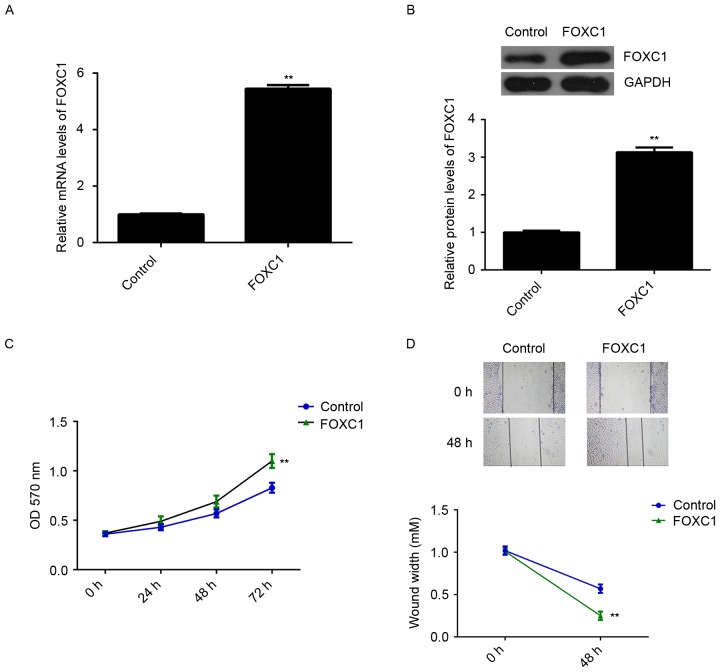
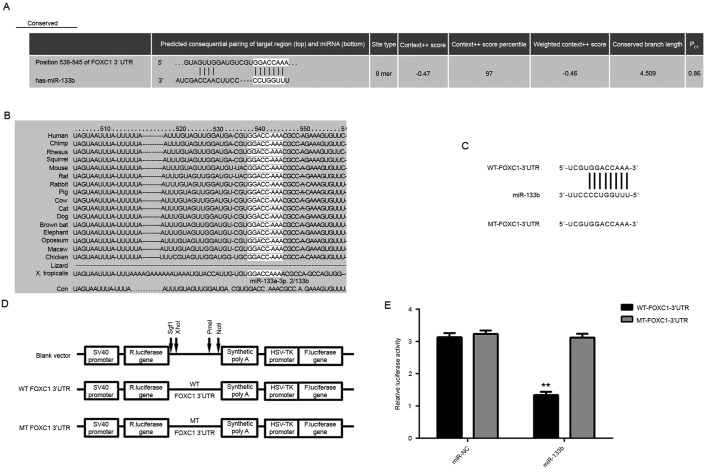
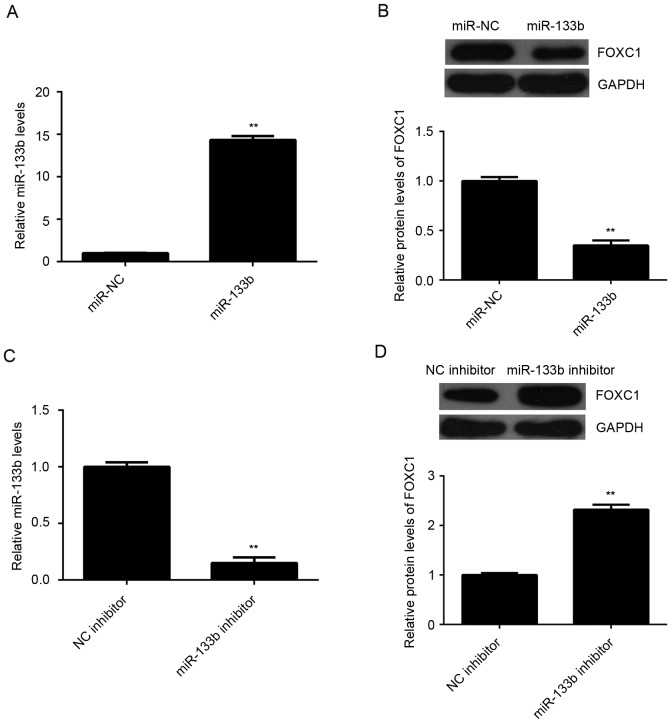
Forkhead box C1 (FOXC1) has been demonstrated to act as an oncogene in a number of malignant tumors, though its underlying mechanism of action in osteosarcoma (OS) remains unknown. The present study evaluated the expression and regulatory role of FOXC1 in OS. Reverse transcription-quantitative polymerase chain reaction and western blot data indicated that FOXC1 was significantly upregulated in OS tissues and cell lines when compared with adjacent non-tumor tissues (P<0.001) and normal human osteoblast cells (P<0.01), respectively. Moreover, levels of FOXC1 expression were significantly higher in OS at advanced clinical stage (III-IV) when compared with that at low clinical stage (I-II; P<0.001). Knockdown of FOXC1 expression caused a significant decrease in the proliferation and migration of OS U2OS cells (P<0.01), while overexpression of FOXC1 significantly promoted U2OS cell proliferation and migration (P<0.01), relative to control U2OS cells. Furthermore, FOXC1 was identified as a direct target of microRNA (miR)-133b, a reported tumor-suppressive miR in OS. The protein expression of FOXC1 was negatively regulated by miR-133b in U2OS cells (P<0.01), and miR-133b expression was inversely correlated with FOXC1 expression in OS. In conclusion, the present study demonstrated that FOXC1, targeted by miR-133b, may promote cell proliferation and migration in OS. Thus, FOXC1 may be a potential therapeutic target in the treatment of OS.
叉头框C1(FOXC1)已被证明在多种恶性肿瘤中作为癌基因发挥作用,但其在骨肉瘤(OS)中的潜在作用机制仍不清楚。本研究评估了FOXC1在骨肉瘤中的表达及调控作用。逆转录-定量聚合酶链反应和蛋白质印迹数据表明,与相邻非肿瘤组织(P<0.001)和正常人成骨细胞(P<0.01)相比,FOXC1在骨肉瘤组织和细胞系中显著上调。此外,与临床低分期(I-II期;P<0.001)相比,FOXC1在临床高分期(III-IV期)骨肉瘤中的表达水平显著更高。与对照U2OS细胞相比,敲低FOXC1表达导致骨肉瘤U2OS细胞的增殖和迁移显著降低(P<0.01),而FOXC1过表达则显著促进U2OS细胞增殖和迁移(P<0.01)。此外,FOXC1被确定为微小RNA(miR)-133b的直接靶点,miR-133b是一种已报道的在骨肉瘤中具有肿瘤抑制作用的微小RNA。在U2OS细胞中,FOXC1的蛋白表达受到miR-133b的负调控(P<0.01),且在骨肉瘤中miR-133b表达与FOXC1表达呈负相关。总之,本研究表明,受miR-133b靶向的FOXC1可能促进骨肉瘤细胞的增殖和迁移。因此,FOXC1可能是骨肉瘤治疗中的一个潜在治疗靶点。