Woo Soo Hyun, Kim Woo Seob, Kim Han Koo, Bae Tae Hui
Department of Plastic and Reconstructive Surgery, Chung-Ang University Hospital, Chung-Ang University College of Medicine, Seoul, Korea.
Arch Craniofac Surg. 2017 Mar;18(1):59-61. doi: 10.7181/acfs.2017.18.1.59. Epub 2017 Mar 25.
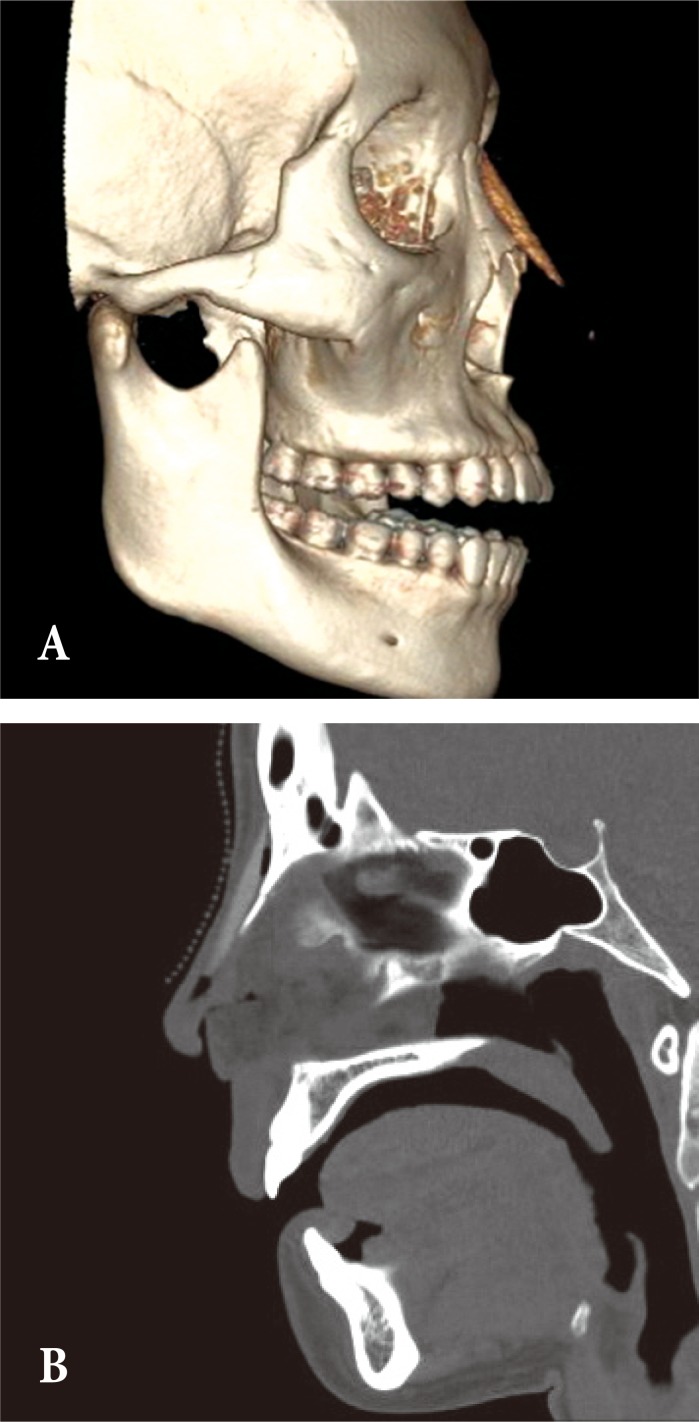
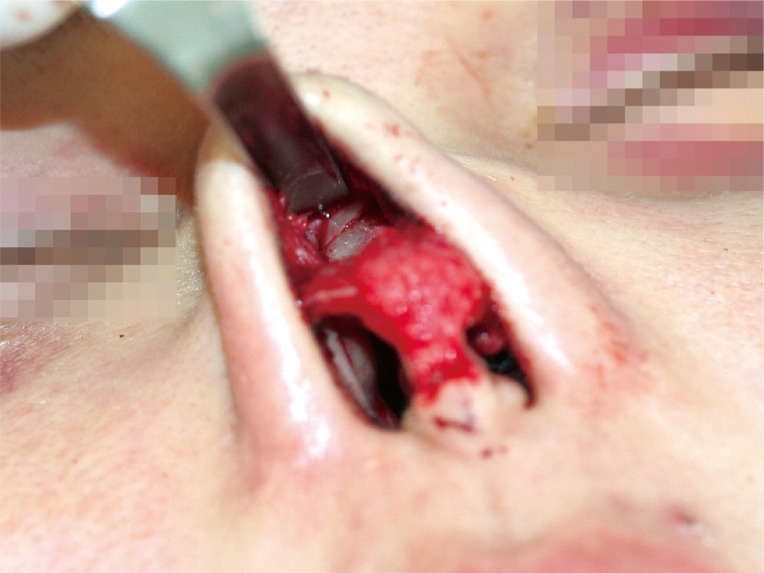
As the number of people who have undergone augmentation rhinoplasty has increased recently, nasal fractures are becoming more common after rhinoplasty. A silicone implant can affect the nasal fracture pattern, but there is no significant difference in treatment methods commonly. A 28-year-old female who had undergone augmentation visited our clinic with a nasal fracture. Computed tomography revealed that the silicone implant was sandwiched between the intact nasal bones with fractured bone fragments. In this case, open reduction was inevitable and a new silicone implant was inserted after reduction. Migration of the silicone implant beneath the nasal bone is a very rare phenomenon, but its accurate prevention and diagnosis is important because a closed reduction is impossible.
近年来,随着接受隆鼻手术的人数增加,隆鼻术后鼻骨骨折变得越来越常见。硅胶植入物会影响鼻骨骨折的类型,但通常治疗方法上没有显著差异。一名接受过隆鼻手术的28岁女性因鼻骨骨折前来我院就诊。计算机断层扫描显示硅胶植入物夹在完整的鼻骨之间,伴有骨折碎片。在这种情况下,切开复位是不可避免的,复位后植入了新的硅胶植入物。硅胶植入物在鼻骨下方移位是一种非常罕见的现象,但其准确的预防和诊断很重要,因为无法进行闭合复位。