Ricci Francesca, Salomone Fabrizio, Kuypers Elke, Ophelders Daan, Nikiforou Maria, Willems Monique, Krieger Tobias, Murgia Xabier, Hütten Matthias, Kramer Boris W, Bianco Federico
Department of Preclinical Pharmacology, R&D, Chiesi Farmaceutici S.p.A., Parma, Italy.
Department of Paediatrics, Maastricht University Medical Center, Maastricht, Netherlands.
Front Pediatr. 2017 Aug 31;5:186. doi: 10.3389/fped.2017.00186. eCollection 2017.
Poractant alfa (Curosurf) and Bovactant (Alveofact) are two animal-derived pulmonary surfactants preparations approved for the treatment of neonatal respiratory distress syndrome (nRDS). They differ in their source, composition, pharmaceutical form, and clinical dose. How much these differences affect the acute pulmonary response to treatment is unknown.
Comparing these two surfactant preparations in two different animal models of respiratory distress focusing on the short-term response to treatment.
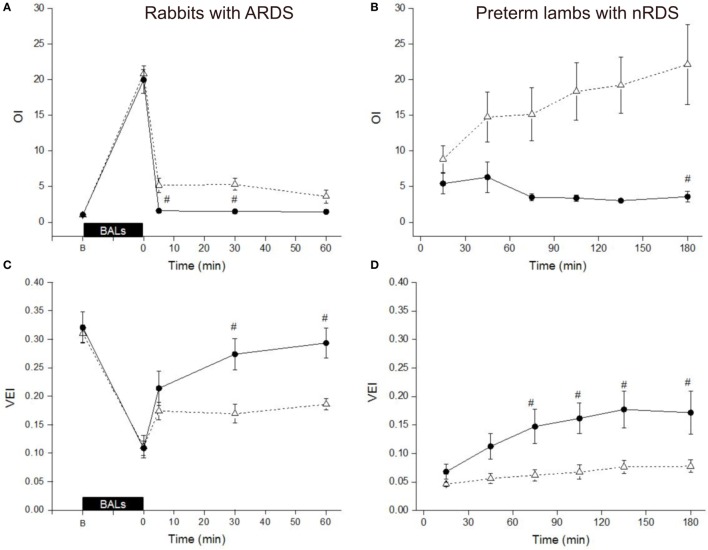
Poractant alfa and Bovactant were administered in a 50-200 mg/kg dose range to surfactant-depleted adult rabbits with acute respiratory distress syndrome induced by lavage and to preterm lambs (127-129 days gestational age) with nRDS induced by developmental immaturity. The acute impact of surfactant therapy on gas exchange and pulmonary mechanics was assessed for 1 h in surfactant-depleted rabbits and for 3 h in preterm lambs.
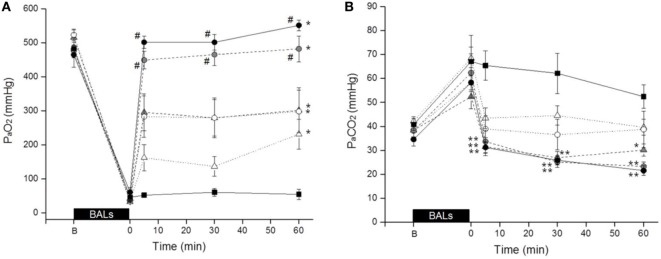
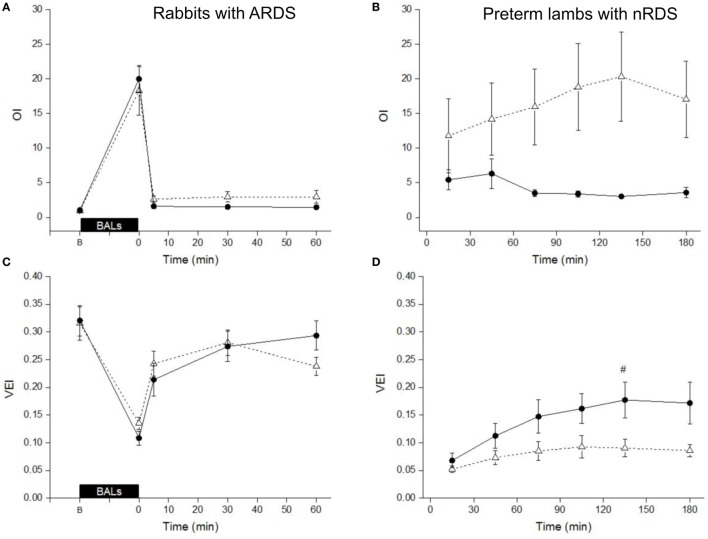
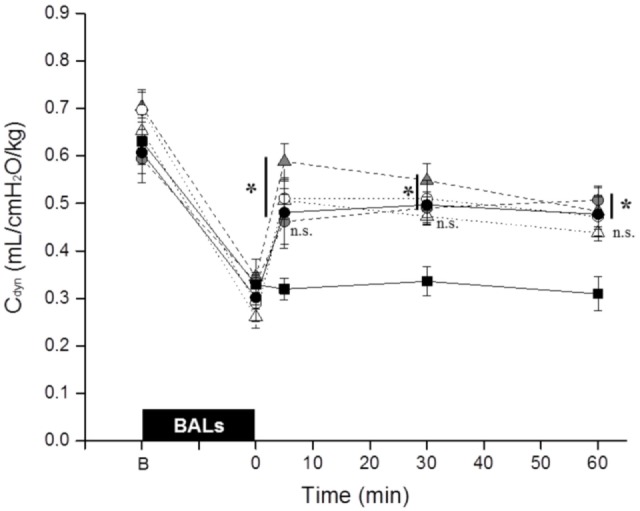
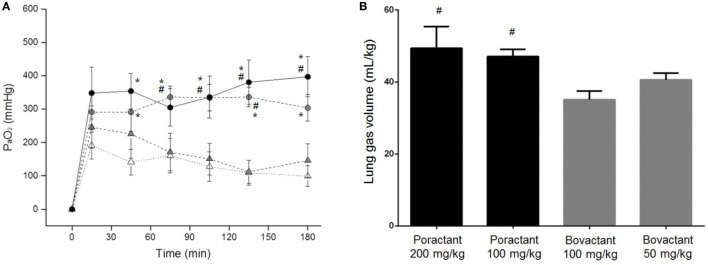
Overall, treatment with Bovactant 50 mg/kg or Poractant alfa 50 mg/kg did not achieve full recovery of the rabbits' respiratory conditions, as indicated by significantly lower arterial oxygenation and carbon dioxide values. By contrast, the two approved doses for clinical use of Poractant alfa (100 and 200 mg/kg) achieved a rapid and sustained recovery in both animal models. The comparison of the ventilation indices of the licensed doses of Bovactant (50 mg/kg) and Poractant alfa (100 mg/kg) showed a superior performance of the latter preparation in both animal models. At equal phospholipid doses, Poractant alfa was superior to Bovactant in terms of arterial oxygenation in both animal models. In preterm lambs, surfactant replacement therapy with Poractant alfa at either 100 or 200 mg/kg was associated with significantly higher lung gas volumes compared to Bovactant treatment with 100 mg/kg.
At the licensed doses, the acute pulmonary response to Poractant alfa was significantly better than the one observed after Bovactant treatment, either at 50 or at 100 mg/kg dose, in two animal models of pulmonary failure.
肺泡表面活性物质α(珂立苏)和牛肺表面活性剂(固尔苏)是两种获批用于治疗新生儿呼吸窘迫综合征(nRDS)的动物源性肺表面活性剂制剂。它们在来源、成分、剂型和临床剂量方面存在差异。这些差异对治疗的急性肺部反应有多大影响尚不清楚。
在两种不同的呼吸窘迫动物模型中比较这两种表面活性剂制剂,重点关注治疗的短期反应。
将肺泡表面活性物质α和牛肺表面活性剂以50 - 200mg/kg的剂量范围给予通过灌洗诱导急性呼吸窘迫综合征的表面活性剂缺乏的成年兔,以及给予因发育不成熟诱导nRDS的早产羔羊(胎龄127 - 129天)。在表面活性剂缺乏的兔中评估表面活性剂治疗对气体交换和肺力学的急性影响1小时,在早产羔羊中评估3小时。
总体而言,50mg/kg的牛肺表面活性剂或50mg/kg的肺泡表面活性物质α治疗未能使兔的呼吸状况完全恢复,动脉氧合和二氧化碳值显著降低表明了这一点。相比之下,肺泡表面活性物质α临床使用的两种获批剂量(100和200mg/kg)在两种动物模型中均实现了快速且持续的恢复。牛肺表面活性剂(50mg/kg)和肺泡表面活性物质α(100mg/kg)许可剂量的通气指标比较显示,后一种制剂在两种动物模型中表现更优。在相等磷脂剂量下,在两种动物模型中,肺泡表面活性物质α在动脉氧合方面优于牛肺表面活性剂。在早产羔羊中,与100mg/kg的牛肺表面活性剂治疗相比,100或200mg/kg的肺泡表面活性物质α替代治疗与显著更高的肺气体量相关。
在许可剂量下,在两种肺衰竭动物模型中,肺泡表面活性物质α的急性肺部反应明显优于50或100mg/kg剂量的牛肺表面活性剂治疗后的反应。