Moniz Sheldon, Hodgkinson Sean, Yates Piers
Department of Orthopaedics, Fiona Stanley Hospital, Murdoch, Perth, WA, Australia.
Arthroplast Today. 2017 Mar 11;3(3):151-153. doi: 10.1016/j.artd.2017.01.005. eCollection 2017 Sep.
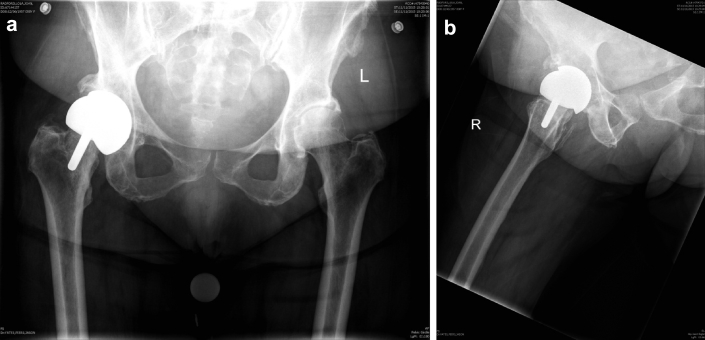
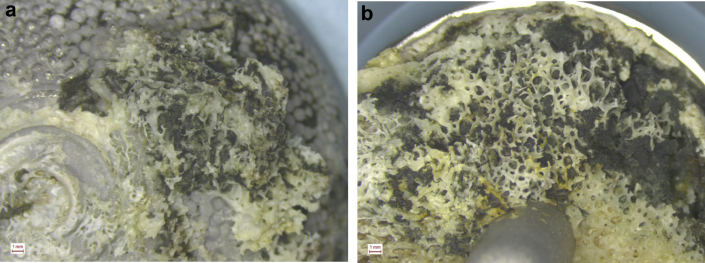
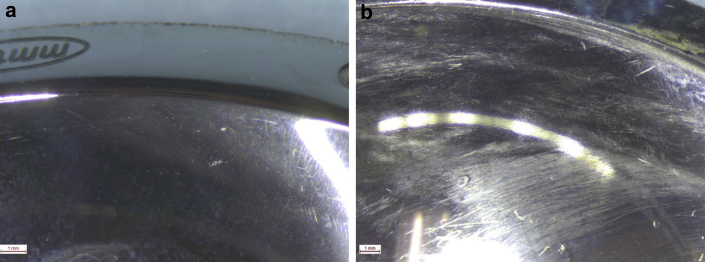
Concerns regarding metal-on-metal (MoM) bearing couples in total hip arthroplasty are well documented in the literature with cobalt (Co) and chromium (Cr) toxicity causing a range of both local and systemic adverse reactions. We describe the case of a patient undergoing cardiac transplantation as a direct result of Co and Cr toxicity following a MoM hip replacement. Poor implant positioning led to catastrophic wear generating abundant wear particles leading to Co and Cr toxicity, metallosis, bony destruction, elevated metal ion levels, and adverse biological responses. Systemic symptoms continued for 3 years following cardiac transplantation with resolution only after revision hip arthroplasty. There was no realization in the initial cardiac assessment and subsequent transplant workup that the hip replacement was the likely cause of the cardiac failure, and the hip replacement was not recognized as the cause until years after the heart transplant. This case highlights the need for clinicians to be aware of systemic MoM complications as well as the importance of positioning when using these prostheses.
全髋关节置换术中金属对金属(MoM)轴承对的相关问题在文献中有充分记载,钴(Co)和铬(Cr)毒性会引发一系列局部和全身不良反应。我们描述了一例患者,在接受MoM髋关节置换术后,因Co和Cr毒性直接导致心脏移植。植入物位置不佳导致灾难性磨损,产生大量磨损颗粒,进而导致Co和Cr毒性、金属沉着症、骨质破坏、金属离子水平升高以及不良生物学反应。心脏移植后全身症状持续了3年,仅在翻修髋关节置换术后才得以缓解。在最初的心脏评估和随后的移植检查中,均未意识到髋关节置换可能是心力衰竭的原因,直到心脏移植多年后才认识到髋关节置换是病因。该病例凸显了临床医生了解MoM系统并发症的必要性以及使用这些假体时正确定位的重要性。