Anokhin Boris A, Stribinskis Vilius, Dean William L, Maurer Muriel C
Department of Chemistry, University of Louisville, KY, USA.
Brown Cancer Center, University of Louisville School of Medicine, KY, USA.
FEBS J. 2017 Nov;284(22):3849-3861. doi: 10.1111/febs.14272. Epub 2017 Oct 3.
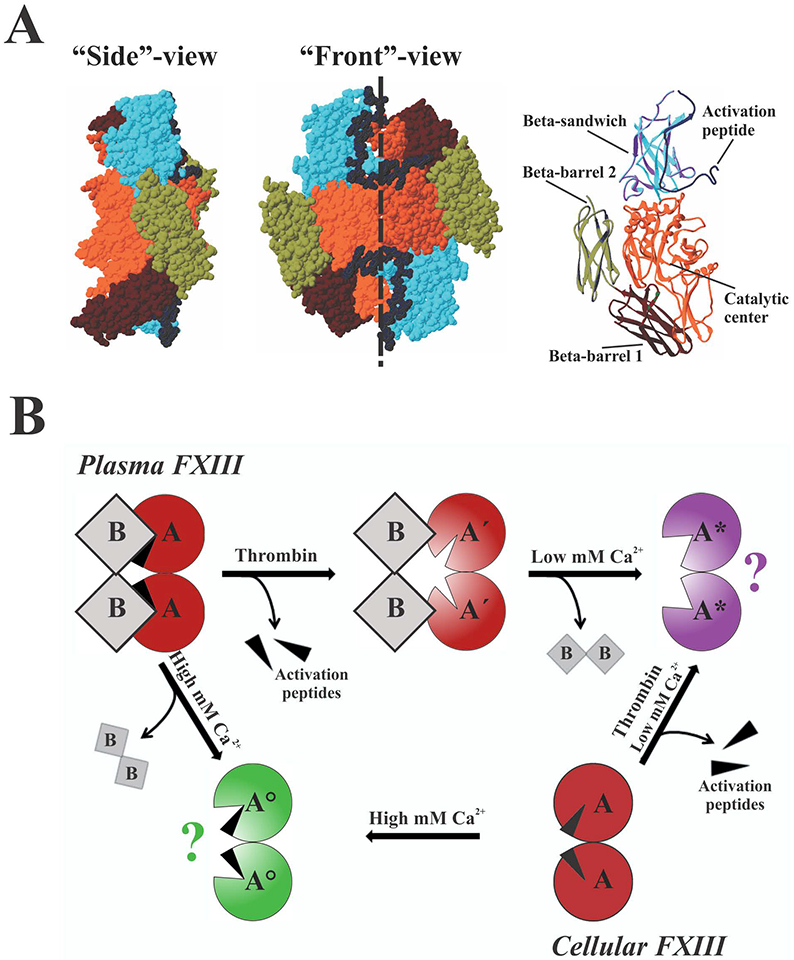
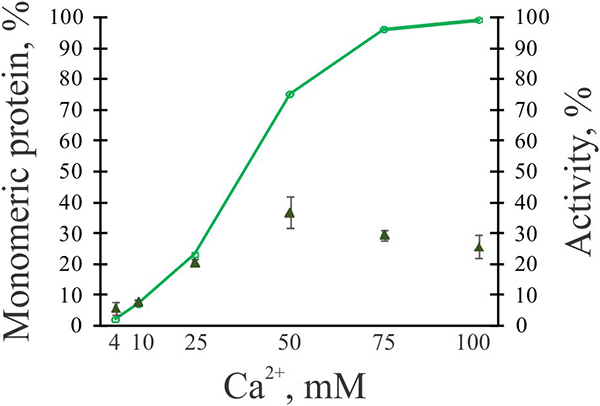
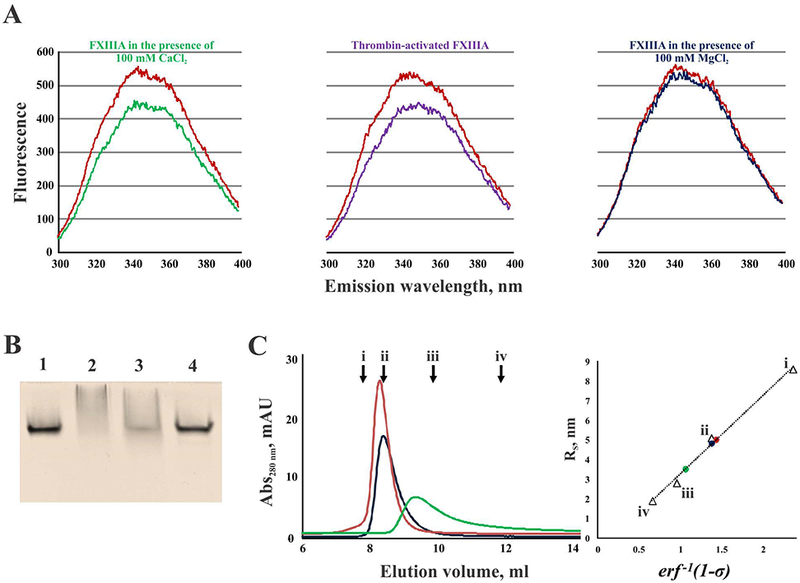
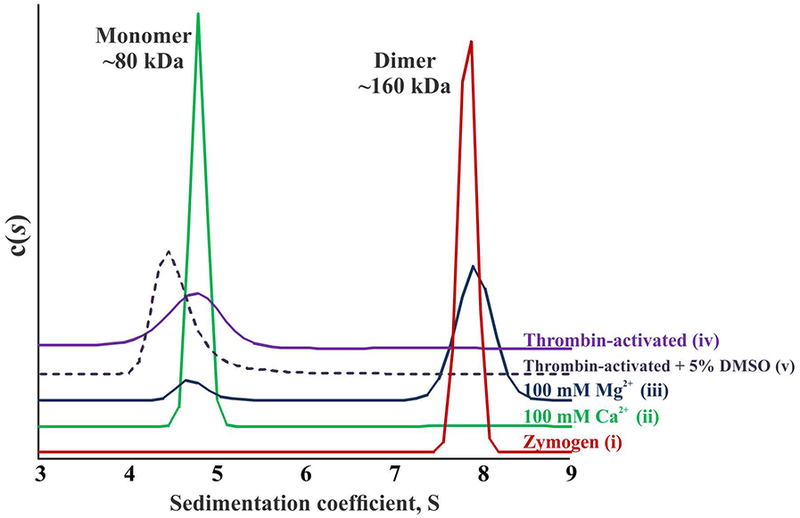
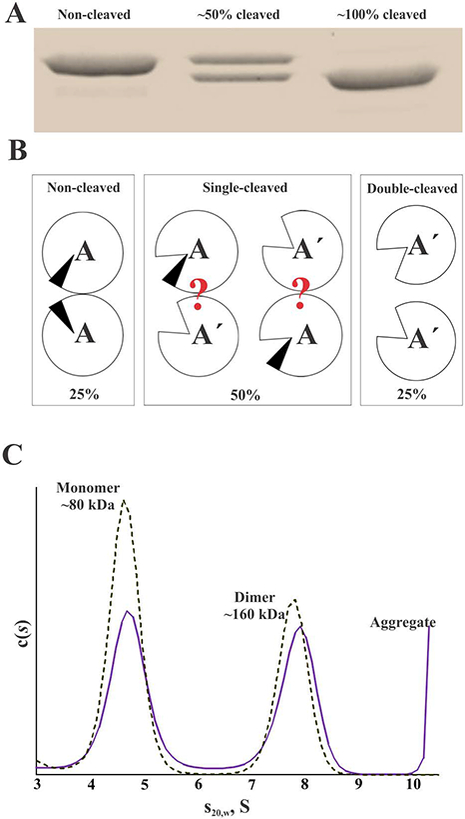
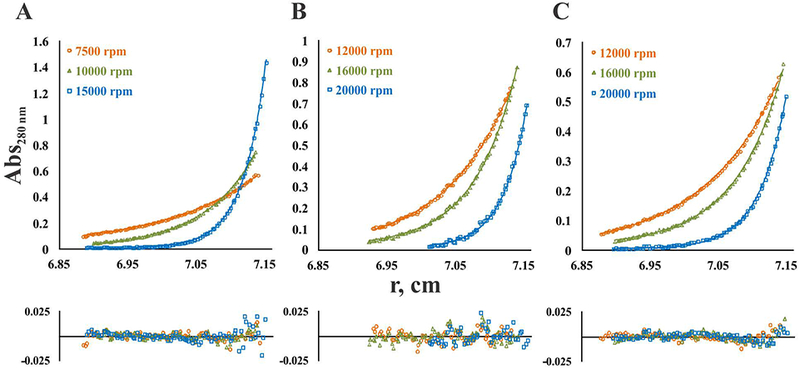
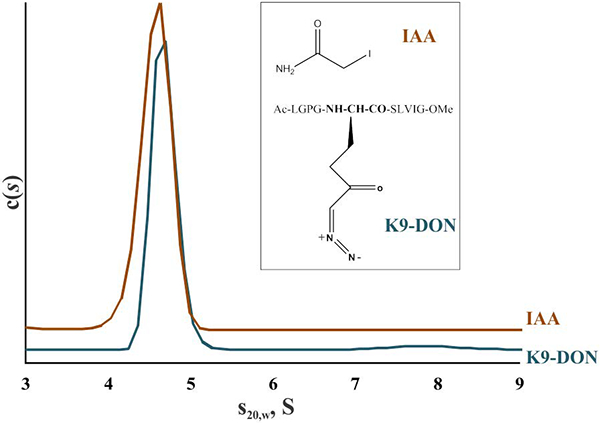
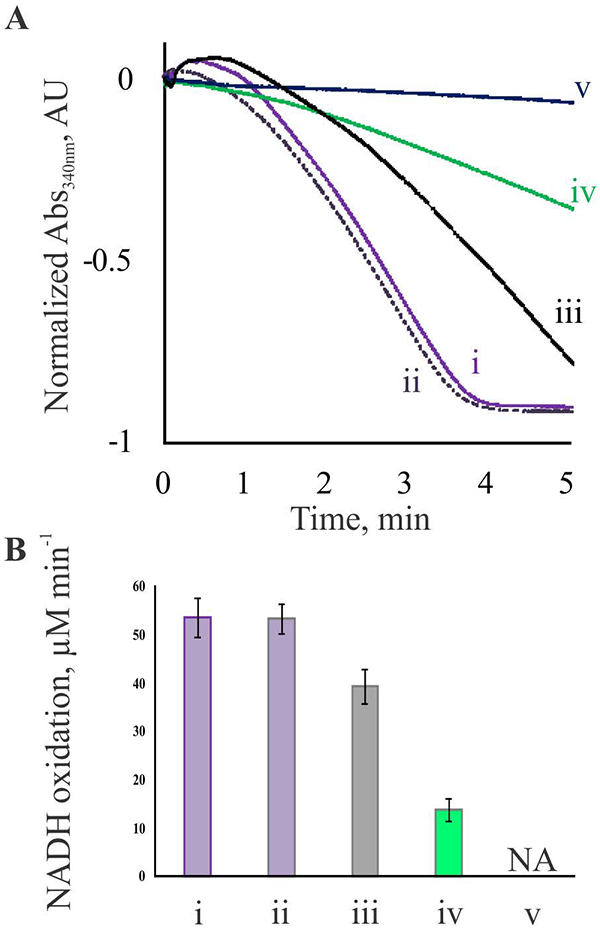
Factor XIII A (FXIIIA) is a member of the transglutaminase enzyme family that cross-links both intra- and extracellular protein substrates. To prevent undesired cross-linking, FXIIIA is expressed as an inactive zymogen and exists intracellularly as an A homodimer. In plasma, FXIII A is complexed with two protective factor XIII B subunits (A B ) that dissociate upon activation of the zymogen. Based on limited experimental data, activated FXIII was considered a dimer of two catalytically active A subunits. However, accumulating but indirect evidence has suggested activation may lead to a monomeric state instead. In the present study, we employed analytical ultracentrifugation (AUC) to directly explore the oligomerization state of zymogen as well as active FXIIIA in solution. We first confirmed that the zymogen was a FXIIIA dimer. When we activated FXIIIA nonproteolytically (by high mm Ca ), the protein dissociated to monomers. More importantly, FXIIIA incubation with its physiological partner, the protease thrombin, led to a monomeric state as well. AUC studies of partially cleaved FXIIIA further suggested that thrombin cleavage of a single activation peptide in a zymogen dimer is sufficient to weaken intersubunit interactions, initiating the transition to monomer. The enzymatic activity of the thrombin-cleaved species was higher than nonproteolytically activated enzyme, suggesting that displacement of the activation peptide renders the FXIIIA more accessible to substrates. Thus, results provide evidence that FXIII undergoes a change in oligomerization state as part of the activation process, and emphasize the role of the activation peptide in preventing FXIIIA catalytic activity.
Factor XIIIA (EC2.3.2.13).
因子 XIII A(FXIIIA)是转谷氨酰胺酶家族的成员,可使细胞内和细胞外蛋白质底物发生交联。为防止不必要的交联,FXIIIA 以无活性的酶原形式表达,并以 A 同型二聚体的形式存在于细胞内。在血浆中,FXIII A 与两个保护性因子 XIII B 亚基(A₂B₂)形成复合物,该复合物在酶原激活时解离。基于有限的实验数据,活化的 FXIII 被认为是两个具有催化活性的 A 亚基的二聚体。然而,越来越多的间接证据表明,激活可能导致单体状态。在本研究中,我们采用分析超速离心法(AUC)直接探究酶原以及溶液中活性 FXIIIA 的寡聚化状态。我们首先证实酶原是 FXIIIA 二聚体。当我们通过高浓度钙离子非蛋白水解性激活 FXIIIA 时,该蛋白解离为单体。更重要的是,FXIIIA 与它的生理伴侣蛋白酶凝血酶孵育也会导致单体状态。对部分裂解的 FXIIIA 的 AUC 研究进一步表明,酶原二聚体中单个激活肽的凝血酶裂解足以削弱亚基间相互作用,引发向单体的转变。凝血酶裂解产物的酶活性高于非蛋白水解性激活的酶,这表明激活肽的置换使 FXIIIA 更容易接近底物。因此,结果提供了证据表明 FXIII 在激活过程中会发生寡聚化状态的变化,并强调了激活肽在抑制 FXIIIA 催化活性中的作用。
因子 XIIIA(EC2.3.2.13)