Department of Pathology and Laboratory Medicine and UNC Blood Research Center, University of North Carolina, Chapel Hill.
Arterioscler Thromb Vasc Biol. 2022 Aug;42(8):931-941. doi: 10.1161/ATVBAHA.122.317164. Epub 2022 Jun 2.
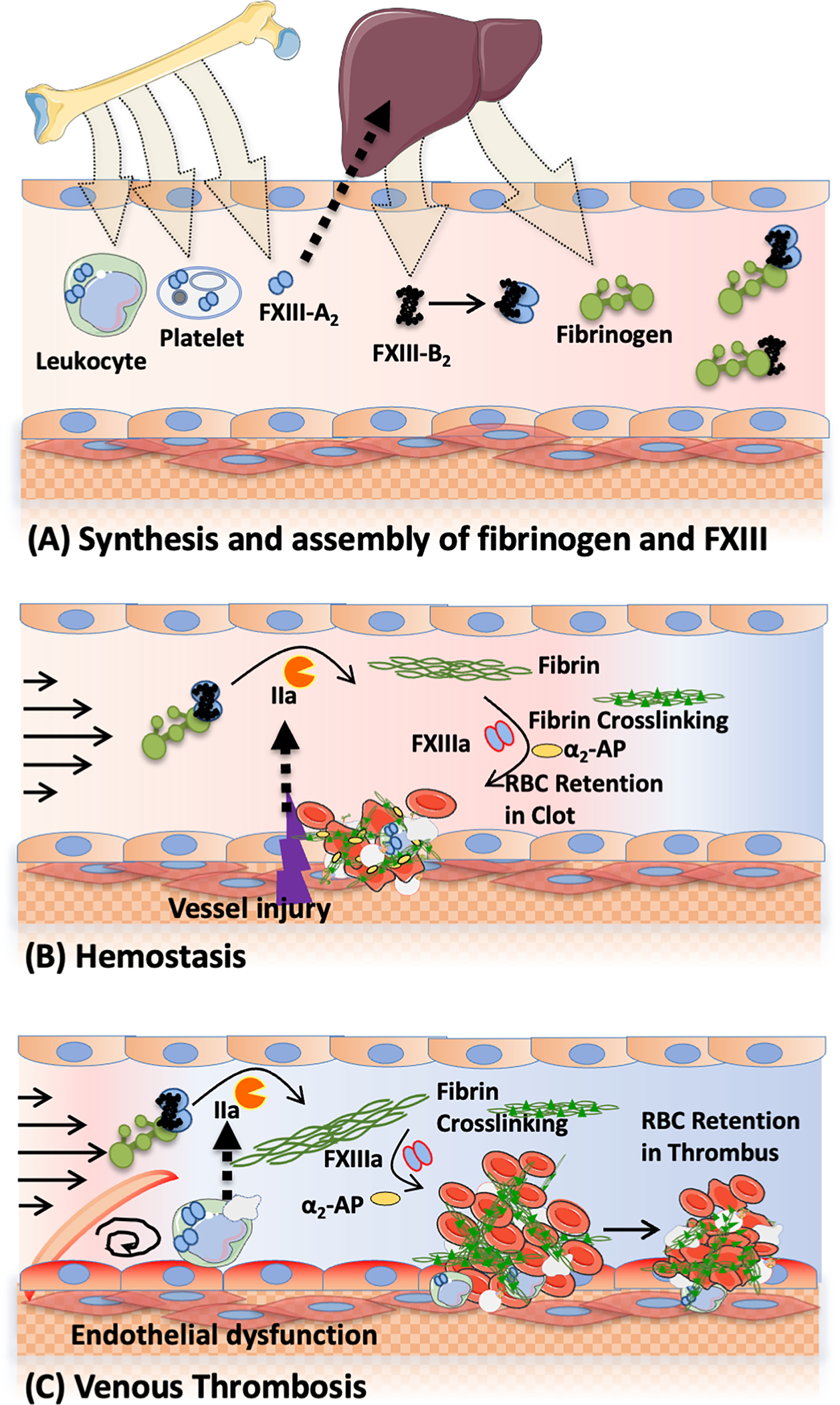
As the third most common vascular disease, venous thromboembolism is associated with significant mortality and morbidity. Pathogenesis underlying venous thrombosis is still not fully understood. Accumulating data suggest fibrin network structure and factor XIII-mediated crosslinking are major determinants of venous thrombus mass, composition, and stability. Understanding the cellular and molecular mechanisms mediating fibrin(ogen) and factor XIII production and function and their ability to influence venous thrombosis and resolution may inspire new anticoagulant strategies that target these proteins to reduce or prevent venous thrombosis in certain at-risk patients. This article summarizes fibrinogen and factor XIII biology and current knowledge of their function during venous thromboembolism.
作为第三大常见血管疾病,静脉血栓栓塞症与显著的死亡率和发病率相关。静脉血栓形成的发病机制尚不完全清楚。越来越多的数据表明,纤维蛋白网络结构和因子 XIII 介导的交联是静脉血栓质量、组成和稳定性的主要决定因素。了解介导纤维蛋白(原)和因子 XIII 产生和功能的细胞和分子机制,以及它们影响静脉血栓形成和溶解的能力,可能会激发新的抗凝策略,针对这些蛋白质减少或预防某些高危患者的静脉血栓形成。本文总结了纤维蛋白原和因子 XIII 的生物学特性,以及它们在静脉血栓栓塞症中的功能的现有知识。